VIZIO vs Polk Audio: Overview
Comparing VIZIO and Polk Audio helps you determine which brand is best suited for your needs in Home Theaters. Both brands offer strong choices depending on your budget and key feature requirements.
Key Features & Comparison
Evaluate factors such as build quality, warranty, customer satisfaction, and total value before making your final purchase choice between VIZIO and Polk Audio.
Features
VIZIO packages modern digital convenience directly into their home theater lineups, focusing heavily on streamlined integration with modern display ecosystems. Their popular soundbar arrays frequently incorporate built-in voice assistant passthrough, wireless subwoofers that act as wired breakout hubs for rear satellite speakers, and HDMI eARC connectivity for effortless TV-remote synchronization. High-end models in the M-Series and Elevate lines introduce automated mechanical features, such as motorized height drivers that physically rotate to optimize Dolby Atmos and DTS:X directional audio, demonstrating VIZIO's innovative approach to technical feature sets designed to maximize immersion in compact formats.
Polk Audio approaches features through the lens of acoustic optimization and flexible connectivity. In their soundbar offerings, Polk leverages proprietary innovations like VoiceAdjust technology, which allows independent control of center-channel dialogue frequencies without altering the ambient surround mix, alongside integrated wireless streaming protocols like Google Chromecast and Apple AirPlay 2. In their dedicated component systems, Polk's features center on acoustic engineering, such as their patented Power Port bass venting technology that minimizes port turbulence, and dual five-way binding posts for bi-amping or bi-wiring. While VIZIO excels in packaged digital plug-and-play convenience, Polk offers deeper feature sets for tailoring the acoustic profile to the room's physical traits.
Performance
In terms of performance, VIZIO punches significantly above its weight class in dynamic range and spatial processing relative to its compact footprints. By leveraging advanced digital signal processing (DSP) and computational acoustics, VIZIO systems manage to extract aggressive soundstages, punchy low-end impact, and convincing spatial imaging from relatively small driver arrays. For movie watching and gaming, VIZIO provides a visceral, cinematic punch that dramatically outperforms standard television speakers, though high-volume playback can occasionally reveal cabinet resonance, strained mid-ranges, and compression when demanding orchestral scores or complex musical passages push the limits of their digital amplifiers.
Polk Audio delivers an audibly superior performance in musicality, tonal balance, and raw acoustic headroom. Thanks to the use of higher-grade materials like dynamic balance mica-reinforced polypropylene cones and terylene dome tweeters, Polk systems reproduce sound with lifelike warmth, exceptional micro-detail, and transparent mid-range clarity. Polk’s subwoofers prioritize musical accuracy and low distortion over exaggerated digital boom, resulting in tighter, more controlled bass reproduction. Whether driven by standalone high-current amplifiers or integrated amplification in their MagniFi series, Polk exhibits higher acoustic efficiency, effortless dynamic shifts, and virtually no distortion at elevated listening volumes, making it the clear winner for authentic fidelity.
Design
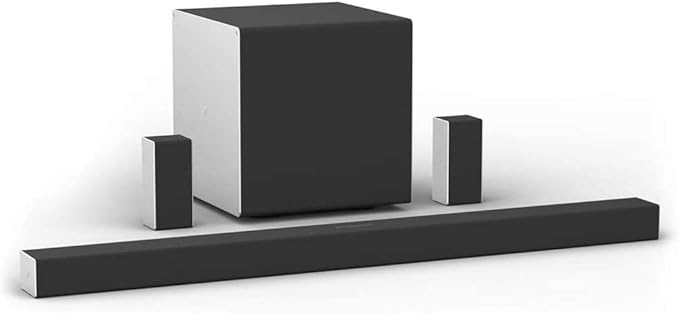
VIZIO's design ethos centers on modern minimalism, compact dimensions, and visual cohesion with contemporary ultra-thin televisions. Their soundbars and satellite speakers feature low-profile silhouettes wrapped in clean acoustic fabric and dark matte plastics, engineered specifically to sit beneath TV bezels without obstructing screens or IR receivers. The engineering highlight of their industrial design is seen in systems like the VIZIO Elevate, where motorized cylindrical side elements rotate upward gracefully when immersive audio codecs are detected. VIZIO relies heavily on molded plastics and practical manufacturing efficiencies, which prioritize lightweight, discreet placement over luxury materials.
Polk Audio champions classic acoustic enclosure design, heavily favoring dense, acoustically inert MDF cabinetry, real wood veneers, and reinforced internal bracing to eliminate unwanted resonances. Their traditional speakers—such as the Reserve and Signature Elite series—are furniture-grade centerpieces meant to be showcased rather than concealed, boasting clean lines, precision-machined driver surrounds, and magnetic anti-diffraction grilles. Even Polk's dedicated soundbars feature robust, tactile build qualities and premium textured fabrics that communicate longevity and acoustic purpose. While VIZIO emphasizes utilitarian discretion and space-saving forms, Polk emphasizes tactile durability and acoustically advantageous structural design.