Sony vs Definitive Technology: Overview
Comparing Sony and Definitive Technology helps you determine which brand is best suited for your needs in Home Theaters. Both brands offer strong choices depending on your budget and key feature requirements.
Key Features & Comparison
Evaluate factors such as build quality, warranty, customer satisfaction, and total value before making your final purchase choice between Sony and Definitive Technology.
Features
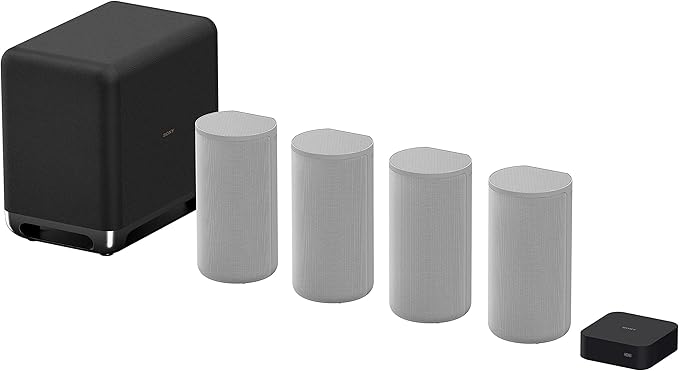
Sony leads aggressively in cutting-edge digital processing, wireless interoperability, and automated calibration features. Flagship offerings like the HT-A9 system and STR-AZ series receivers leverage proprietary 360 Spatial Sound Mapping, utilizing advanced microphone arrays to measure room dimensions and synthesize phantom speakers beyond physical driver boundaries. Furthermore, Sony integrates native HDMI 2.1 throughput supporting 4K 120Hz, Variable Refresh Rate (VRR), and Auto Low Latency Mode (ALLM) alongside seamless Google Assistant, Apple AirPlay 2, and exclusive synchronization with Sony BRAVIA televisions via Acoustic Center Sync.
Definitive Technology shifts the feature focus from software interfaces to electro-acoustic innovations within the speaker enclosures themselves. Their defining technical achievement is Forward-Focused Bipolar Array (FFBA) topology, which radiates sound front and rear to widen the sweet spot while maintaining pinpoint center imaging. Many of their premium floorstanding towers feature built-in powered subwoofers driven by internal Class D digital amplifiers paired with passive radiators (Intelligent Bass Control), eliminating the need for standalone subwoofers. While they lack the algorithmic smart-home ecosystem depth of Sony, Definitive Technology provides unmatched structural and driver features, such as Balanced Double Surround System (BDSS) midranges and pure aluminum dome tweeters.
Performance
From an acoustic output perspective, Definitive Technology offers superior physical scale, dynamic impact, and analog fidelity. The incorporation of powered subwoofers directly into rigid, low-resonance MDF floorstanding cabinets ensures deep, effortless bass extension reaching well below 30Hz without muddying the midrange. Their bipolar driver configuration creates an expansive, three-dimensional soundstage that envelopes the listener organically through physical reflection and dispersion. This gives Definitive Technology an undeniable edge in high-SPL home theater playback and two-channel critical stereo listening where raw clarity and uncompressed dynamics are vital.
Sony counters by delivering extraordinary spatial accuracy and immersive object tracking through digital psychoacoustics and DSP calibration. While Sony’s compact satellite drivers and standalone wireless subwoofers cannot match the continuous output or tactile low-end punch of Definitive Technology's large-format towers, Sony excels at rendering pinpoint Dolby Atmos and DTS:X height cues in challenging, non-dedicated rooms. Sony’s Sound Field Optimization corrects for irregular wall reflections and non-symmetrical seating layouts with remarkable sophistication, resulting in an exceptionally coherent surround sound bubble that often outperforms traditional stereo-aligned setups in reverberant spaces.
Design
Sony champions a modern, lifestyle-friendly aesthetic characterized by sleek, minimalist profiles, rounded edges, and neutral matte or textured fabric finishes. Products like the HT-A7000 or HT-A9 are engineered to blend seamlessly into contemporary minimalist decor, often relying on wireless signal distribution between channels to eliminate unsightly speaker cables. Their components prioritize compact footprints and unobtrusive profiles that easily integrate directly beneath shallow-depth televisions or mount discreetly onto drywall surfaces without requiring dedicated floor real estate.
Definitive Technology adopts a more imposing, high-end architectural language designed to make an assertive statement in dedicated media rooms. Their BP9000 and Dymension series feature monolithic, tower-style silhouettes wrapped in acoustically transparent black cloth, anchored by cast-aluminum base plates with precision spikes for carpet decoupling. Premium brushed aluminum accents and top-firing Atmos integration modules communicate meticulous craftsmanship. However, this level of acoustic mass demands substantial physical floor space, rigid wire management, and dedicated placement away from boundary walls to fully realize its design potential.