VIZIO vs Bose: Overview
Comparing VIZIO and Bose helps you determine which brand is best suited for your needs in Home Theaters. Both brands offer strong choices depending on your budget and key feature requirements.
Key Features & Comparison
Evaluate factors such as build quality, warranty, customer satisfaction, and total value before making your final purchase choice between VIZIO and Bose.
Features
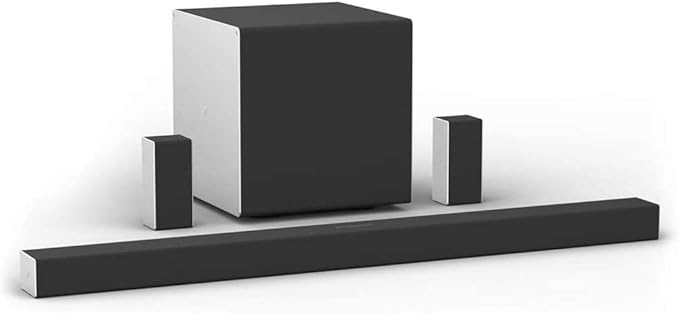
From a feature and format support perspective, VIZIO tends to lead on broad standard compliance at lower cost tiers. Most mid-range to high-end VIZIO systems offer dedicated eARC ports, 4K HDR passthrough via secondary HDMI inputs, and native onboard decoding for both Dolby Atmos and DTS:X. The inclusion of physical surround satellites linked directly to the wireless subwoofer provides true discrete multichannel panning without requiring proprietary software upmixing. However, VIZIO systems lack robust networking capabilities; Wi-Fi connectivity is often reserved for basic firmware updates or Google Cast, and their companion app offers utilitarian calibration rather than deep smart-home functionality.
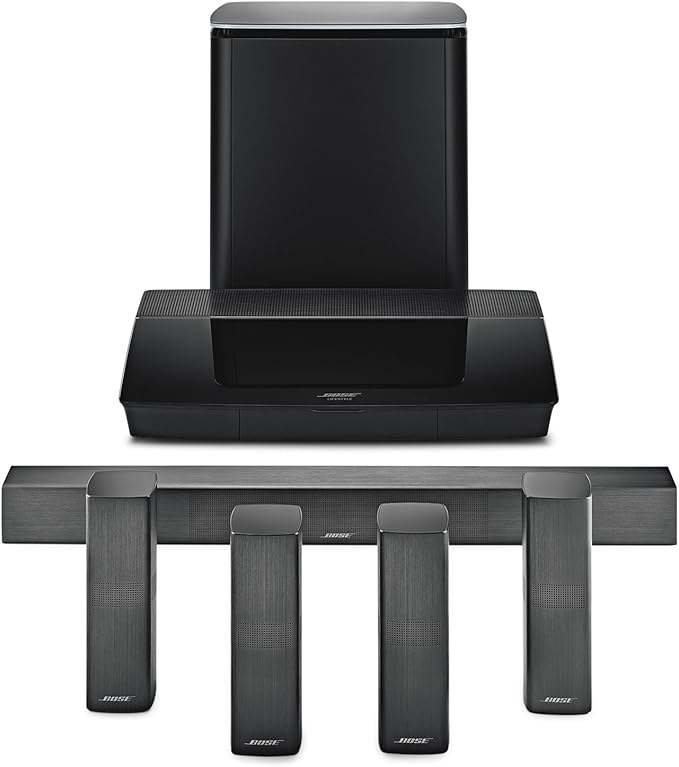
Bose approaches features through an advanced software-driven, networked architecture. Bose soundbars feature built-in Wi-Fi, Apple AirPlay 2, Spotify Connect, and integrated voice control with Amazon Alexa and Google Assistant, augmented by proprietary Bose Voice4Video technology that allows consolidated control over TVs and cable boxes. Although Bose often omits secondary HDMI passthrough inputs and historically eschews DTS formats in favor of Dolby, its ADAPTiQ room calibration system and proprietary TrueSpace processing dynamically remap stereo and 5.1 content to exploit height channels effectively, delivering an intelligent, highly cohesive smart home feature suite.
Performance
In terms of acoustic performance, VIZIO capitalizes on physical speaker placement to deliver cinematic impact. Because many VIZIO packages include dedicated rear satellites and robust subwoofers, the listener benefits from genuine rear-sound localization and punchy, low-end bass extension that handles action movie dynamics with authority. The technical trade-off lies in tonal refinement: VIZIO drivers often display a slightly scooped frequency response with emphasized bass and aggressive highs, which can lead to vocal muddiness or mid-range harshness during complex orchestral passages or dialogue-heavy scenes.
Bose performance is defined by acoustic transparency, exceptional vocal clarity, and uncanny spatial dispersion. Utilizing phase-guide technology and dedicated center tweeters, Bose soundbars render dialogue with immaculate precision, isolating speech frequencies even amidst chaotic audio mixes. The bass reproduction from standalone Bose bars is remarkably deep for their enclosure volume, though reaching true sub-bass depths requires purchasing an expensive separate Bass Module. While Bose relies on psychoacoustic virtual surround rather than physical rears in base configurations, the resulting soundstage is remarkably wide, distortion-free at high volumes, and tonally balanced across both cinema and high-fidelity music playback.
Design
Aesthetic and industrial design highlights a stark contrast between VIZIO's utilitarian practicality and Bose's luxury minimalism. VIZIO soundbars are built primarily with plastic housings wrapped in dark fabric grilles. While modern VIZIO hardware is slim and unobtrusive—often engineered specifically to nestle cleanly between the legs of matching VIZIO televisions—the tactile feel of the plastics, the standard remote control, and the thin gauge of the satellite speaker wiring clearly reflect cost-engineered manufacturing designed to hit competitive price targets.
Bose treats its home theater components as focal pieces of interior decor, utilizing premium materials such as impact-resistant tempered glass tops, wraparound aluminum grilles, and seamless finishes. The attention to industrial design extends to the physical interface, which eliminates cluttered LED displays in favor of subtle light bars, and includes premium contextual remotes. Furthermore, Bose's modular form factor allows users to maintain a clutter-free aesthetic without trailing speaker wires across the living room floor, appealing directly to consumers who prioritize architectural elegance and high-end fit and finish.
Compare current retail pricing, active promotions, and verified stock availability directly from authorized stores: