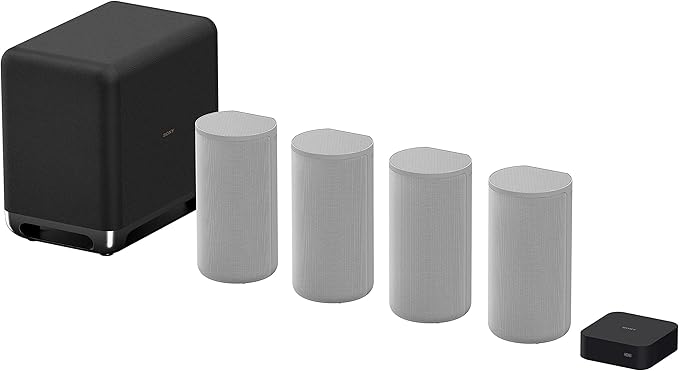
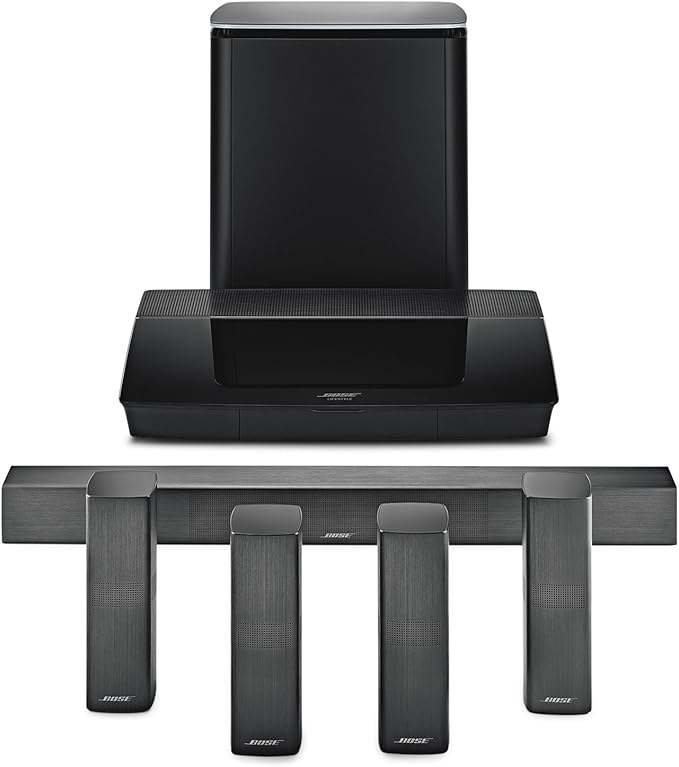
Sony vs Bose: Overview
Comparing Sony and Bose helps you determine which brand is best suited for your needs in Home Theaters. Both brands offer strong choices depending on your budget and key feature requirements.
Key Features & Comparison
Evaluate factors such as build quality, warranty, customer satisfaction, and total value before making your final purchase choice between Sony and Bose.
Features
In terms of feature sets and connectivity, Sony takes a decisive lead for technologically demanding home entertainment setups. Flagship Sony soundbars and component systems frequently incorporate multiple HDMI 2.1 inputs supporting 4K at 120Hz, Variable Refresh Rate (VRR), and Auto Low Latency Mode (ALLM), making them exceptionally suited for modern gaming consoles like the PlayStation 5. Furthermore, Sony offers extensive spatial format compatibility, decoding both Dolby Atmos and DTS:X, along with proprietary enhancements such as 360 Spatial Sound Mapping and Acoustic Center Sync, which turns a compatible Sony Bravia TV into the center-channel speaker. Their ecosystems also provide substantial flexibility, allowing users to pair different tiers of wireless subwoofers and satellite surround speakers to suit their exact spatial requirements.
Bose approaches feature development through a lens of curation and frictionless usability rather than spec-sheet dominance. Bose smart soundbars and systems integrate seamlessly with voice assistants like Amazon Alexa and Google Assistant, bolstered by Bose Voice4Video technology, which enables granular voice control over both the soundbar and connected media hardware. While Bose supports Dolby Atmos via eARC and uses its proprietary TrueSpace technology to upmix non-Atmos signals, it historically omits support for DTS formats, which can be a significant drawback for physical Blu-ray collectors. Additionally, Bose systems typically feature only a single HDMI eARC port without auxiliary HDMI inputs, requiring all external sources to route through the television first and potentially limiting multi-device setups.
Performance
Acoustic performance reflects the distinct sound signatures and architectural philosophies of each brand. Sony prioritizes dynamic range, overhead immersion, and transient impact, delivering a sound profile that closely mirrors modern cinema post-production environments. Their higher-end configurations utilize discrete physical drivers combined with psychoacoustic phantom speaker synthesis to generate pinpoint object localization across a wide sound field. Low-frequency output from Sony's dedicated subwoofers is punchy and deep, capable of handling rapid structural bass transitions during action sequences without muddying mid-range frequencies, while dialogue remains clear and natural, particularly on models equipped with dedicated center drivers or beam tweeters.
Bose relies heavily on proprietary digital signal processing (DSP) and custom transducer arrangements, such as PhaseGuide arrays, to cast sound far beyond the physical boundaries of the enclosure. The result is an exceptionally wide, ambient soundstage that makes compact bars sound like full multi-speaker systems. Bose is renowned for its vocal intelligibility; its Dialogue Mode clarifies spoken frequencies with surgical precision, making it an outstanding choice for dramas, news, and ambient room listening. However, Bose systems tend to roll off the deepest sub-bass frequencies and exhibit a more sculpted, consumer-tuned EQ compared to the neutral, high-impact cinema dynamics produced by Sony's advanced speaker arrays.
Design
From an industrial design standpoint, Sony balances consumer electronics utilitarianism with premium aesthetics. Their soundbars and speaker modules often feature textured, matte-black composite enclosures, perforated metal grilles, and robust geometric silhouettes designed to complement modern large-format televisions. While some of Sony's higher-end units are physically substantial and demand considerable media console depth, their premium finishes resist fingerprints and minimize visual reflections in darkened viewing environments. Additionally, Sony's wireless surround modules feature thoughtful, freestanding or wall-mountable architectures with integrated battery options on select lifestyle models, offering adaptable placement flexibility.
Bose stands as an industry benchmark for luxury lifestyle aesthetics, emphasizing minimalism and discreet form factors. Their soundbars, such as the Smart Ultra Soundbar, showcase seamless polished glass tops, wraparound metal grilles, and ultra-low-profile vertical heights that easily clear the bottom bezel of almost any television without obstructing IR sensors. The minimalist aesthetic extends to the accompanying subwoofers and omnidirectional surround modules, which are intentionally engineered to disappear into high-end interior decors. For consumers seeking architectural elegance and premium tactile materials that elevate living spaces rather than dominate them, Bose holds a noticeable edge in fit and finish.
Compare current retail pricing, active promotions, and verified stock availability directly from authorized stores: