Polk Audio vs Bose: Overview
Comparing Polk Audio and Bose helps you determine which brand is best suited for your needs in Home Theaters. Both brands offer strong choices depending on your budget and key feature requirements.
Key Features & Comparison
Evaluate factors such as build quality, warranty, customer satisfaction, and total value before making your final purchase choice between Polk Audio and Bose.
Features
Polk Audio focuses its feature set on traditional audio fidelity, structural engineering, and system interoperability. Across lines like the Reserve and Signature Elite, Polk incorporates specialized acoustic tech such as patented Power Port bass venting, Pinnacle ring-radiator tweeters, and Turbine Cone midrange drivers to minimize distortion mechanically. In the wireless and soundbar space, Polk offers systems equipped with Dolby Atmos, DTS:X, and its proprietary VoiceAdjust technology, which lets users isolate and boost dialogue channels independently. However, Polk largely expects the AV receiver to handle heavy processing, room correction, and modern smart-home connectivity, leaving pure speaker packages functionally passive.
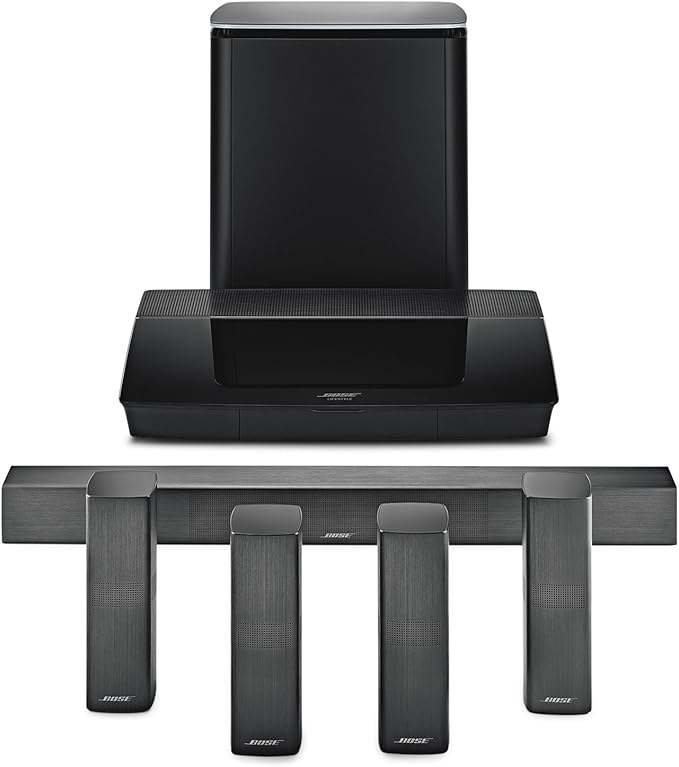
Bose, on the other hand, excels in cutting-edge software integration, active processing, and wireless multi-room networking. Modern Bose setups, anchored by products like the Smart Ultra Soundbar and Bass Module arrays, feature ADAPTiQ room calibration that automatically optimizes frequency output to the room's geometry. Bose systems natively support Amazon Alexa, Google Assistant, Apple AirPlay 2, and Spotify Connect, alongside proprietary technologies like PhaseGuide and TrueSpace processing that upmix non-Atmos signals to create spatial depth. While Bose restricts users to its closed wireless ecosystem and offers fewer manual EQ controls, its feature set delivers unmatched automation, voice clarity, and connected-home synergy.
Performance
In terms of acoustic performance, Polk Audio delivers an authentic, high-impact cinematic experience marked by broad dynamic range and raw physical power. Because Polk relies on larger physical cabinets and traditional driver displacement, it excels in rendering high-energy movie sequences where explosive mid-bass and sudden transient attacks are critical. The timbre across Polk's higher-tier speakers is neutral to slightly warm, delivering uncolored midrange frequencies that keep orchestral scores and sound effects grounded in reality. Paired with a capable subwoofer, a Polk system moves genuine air, creating an immersive physical presence that small-footprint lifestyle systems struggle to duplicate.
Bose approaches performance through technological sleight of hand, producing an extraordinarily wide and airy soundstage that defies its compact dimensions. Thanks to aggressive real-time equalization and omnidirectional driver placement, Bose systems excel at dialogue intelligibility, vocal projection, and ambient surround steering, ensuring that speech remains crisp even at lower listening volumes. However, Bose falls short in critical two-channel musicality and ultra-low bass authority; its compact subwoofers often rely on high-excursion ports that can sound boomy or thin when pushed to reference cinema levels. Bose offers pristine clarity for daily television and modern films, while Polk offers greater depth, headroom, and acoustic fidelity for high-decibel cinema and music reproduction.
Design
Aesthetically, Polk Audio embraces traditional loudspeaker architecture, utilizing substantial MDF cabinets wrapped in real wood veneers, high-grade vinyl, or matte finishes. While collections like the Reserve series exhibit sleek, rounded corners and magnetic grilles that blend comfortably into modern living rooms, Polk speakers inevitably occupy significant physical real estate. Dedicated floorstanding towers, chunky center channels, and hefty surround satellites require thoughtful room planning, cable concealment, and dedicated floor space. This utilitarian design language serves acoustic resonance first and visual minimalism second, making Polk systems unmistakable focal points in a media room.
Bose takes the polar opposite path, championing ultra-compact luxury and discreet living space integration. Utilizing premium materials like thermal-tempered glass tops, seamless anodized aluminum grilles, and soft-touch plastics, Bose hardware resembles high-end lifestyle electronics rather than audio gear. Its speakers and wireless surround modules are intentionally designed to disappear into existing home decor, mounting flush to walls or resting unobtrusively atop credenzas. The trade-off is that Bose’s sealed, compact form factors limit physical air movement, but for homeowners who refuse to compromise room aesthetics for the sake of bulky black boxes, Bose represents the pinnacle of modern design elegance.