Sony vs Yamaha: Overview
Comparing Sony and Yamaha helps you determine which brand is best suited for your needs in Home Theaters. Both brands offer strong choices depending on your budget and key feature requirements.
Key Features & Comparison
Evaluate factors such as build quality, warranty, customer satisfaction, and total value before making your final purchase choice between Sony and Yamaha.
Features
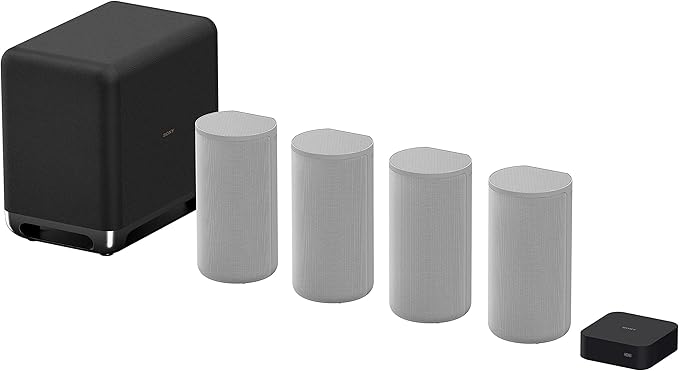
In terms of feature sets, Sony champions bleeding-edge connectivity and spatial audio innovation designed to complement modern visual media. Sony's premium receivers and sound systems heavily incorporate 360 Spatial Sound Mapping, a proprietary technology that synthesizes phantom speakers to envelope the listener far beyond physical transducer locations. Furthermore, Sony provides unmatched integration for PlayStation 5 and Bravia XR television owners, offering exclusive capabilities like Auto HDR Tone Mapping and Acoustic Center Sync, which turns the TV itself into the center channel speaker. Wireless rear speaker and subwoofer add-on ecosystems are also exceptionally streamlined, making expansion effortless for non-technical users.
Yamaha counters with an extensive suite of digital signal processing features and advanced multi-room networking powered by their mature MusicCast ecosystem. Yamaha's proprietary Cinema DSP HD3 technology sets the industry benchmark for simulating real acoustic environments, such as famous concert halls and classic cinema theaters, using sophisticated reflection modeling. Yamaha also excels in room correction via its YPAO (Yamaha Parametric Room Acoustic Optimizer) platform, which, in its higher tiers, calculates 64-bit precision angles and multi-point measurements. While Yamaha may lack television-specific synergy tricks, it offers broader support for high-resolution streaming codecs, extensive zone-control switching, and resilient, low-latency multi-room synchronization.
Performance
Evaluating sonic performance highlights the differing acoustic profiles engineered by each brand's technical teams. Sony emphasizes an expansive, cinematic, and inherently forgiving soundstage. Their digital signal processing prioritizes object-based audio immersion, excelling at tracking panning effects in Dolby Atmos and DTS:X tracks with laser-like positioning. Bass response tends to be warm and impactful, deliberately tuned to deliver dramatic sub-bass swells typical of Hollywood blockbusters. However, this heavy reliance on digital spatialization can occasionally color the mid-range frequencies, leading to dialogue that, while intelligible, may slightly lack the organic texture found in traditional analog sound signatures.
Yamaha's acoustic performance is defined by neutrality, transient speed, and exceptional dynamic control. Thanks to high-slew-rate amplifiers and custom-engineered power transformers, Yamaha receivers deliver explosive dynamics without breaking into distortion during complex musical passages or chaotic action sequences. The mid-range remains pristine and articulate, ensuring that dialogue reproduction is lifelike and anchored. While Yamaha's spatial presence relies heavily on proper manual calibration and physical speaker placement compared to Sony's forgiving algorithmic synthesis, the resulting audio output is generally more linear, transparent, and preferred for critical two-channel stereo listening alongside multi-channel home cinema playback.
Design
Aesthetic and industrial design philosophies further distinguish these two Japanese engineering giants. Sony favors a sleek, monolithic, and lifestyle-oriented design language that blends smoothly into contemporary interior architecture. Their AV receivers feature clean front panels with restrained instrumentation, minimalist display readouts, and a unified matte-black finish. Sony's multi-piece systems and soundbars exhibit high-grade acoustic textiles, rounded corners, and compact footprints designed specifically to slide under low-clearance modern televisions without obstructing infrared receivers or screen real estate.
Yamaha adopts a bolder, more substantial aesthetic that celebrates audio equipment as a centerpiece rather than an invisible component. The higher-tier Aventage receivers feature a striking split-finish front panel combining high-gloss acrylic with tactile aluminum, dominated by a large central volume knob and a high-resolution display. Structurally, Yamaha prioritizes acoustic resonance reduction over sheer minimalism, highlighted by their signature Anti-Resonance Technology (A.R.T.) Wedge—a dedicated fifth support foot positioned in the center of the chassis base to dampen mechanical vibrations. The result is a heavier, more imposing physical presence that communicates industrial durability and audio purism.