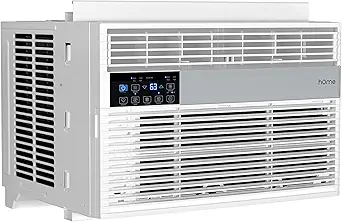
Honeywell vs Homelabs: Overview
Comparing Honeywell and Homelabs helps you determine which brand is best suited for your needs in Air Conditioners. Both brands offer strong choices depending on your budget and key feature requirements.
Key Features & Comparison
Evaluate factors such as build quality, warranty, customer satisfaction, and total value before making your final purchase choice between Honeywell and Homelabs.
Customer Support & Warranty
When evaluating warranty coverage and customer service infrastructure, Honeywell holds a distinct advantage due to its mature, globally recognized manufacturing footprint and widespread network of certified service technicians. Honeywell air conditioners—frequently licensed and produced by specialized HVAC manufacturers like JMATEK—typically come backed by solid limited warranties ranging from one to five years, often offering extended compressor coverage on select premium models. The brand's customer support system is multi-tiered and accessible, featuring comprehensive online troubleshooting repositories, dedicated regional call centers, and a standardized process for obtaining replacement parts or scheduling warranty repairs. This established infrastructure provides long-term peace of mind, particularly for consumers investing in heavier, more permanent window or portable units where professional repairability outweighs direct unit replacement.
In contrast, hOmeLabs approaches customer service through a modern, direct-to-consumer digital framework that emphasizes rapid resolution over traditional repair networks. hOmeLabs air conditioners generally include a standard one-year limited warranty, with the frequent option to extend coverage by an additional six months simply by registering the product online. While hOmeLabs lacks the extensive field-service technician network of Honeywell, they compensate with highly responsive email and chat support teams that are quick to issue full unit replacements rather than requiring users to diagnose and repair faulty components. However, the trade-off with hOmeLabs is the limited long-term availability of specialized internal components once the warranty expires, whereas Honeywell owners can reliably source filters, exhaust assemblies, and internal boards years after their initial purchase.
Energy Efficiency
Energy efficiency across modern air conditioning units is heavily dictated by compressor design, thermal management, and adherence to updated DOE (Department of Energy) standards, areas where both brands demonstrate competent engineering with differing design philosophies. Honeywell prioritizes energy conservation through intelligent dual-hose integration on high-end portable models, auto-evaporation systems that reduce compressor workload by cooling the condenser coils with recycled condensate, and high Energy Efficiency Ratios (EER/CEER). Many of Honeywell’s window and portable units meet or exceed strict Energy Star ratings, integrating precise digital thermostats and programmable 24-hour timers that prevent unnecessary cycle runs. Their engineering focuses on minimizing standby power consumption and maintaining stable internal thermal loads to prevent the high amp draws associated with frequent compressor restarts.
hOmeLabs takes a user-centric approach to energy efficiency, outfitting their portable and window air conditioners with aggressive eco-modes and smart cycle management. In eco-mode, hOmeLabs units shut off both the compressor and the internal circulation fan once the target temperature is achieved, periodic sampling air temperatures before restarting, which drastically reduces continuous watt-hour draw compared to models that run fans indefinitely. While hOmeLabs delivers competitive CEER ratings that satisfy contemporary baseline regulatory requirements, their lineup predominantly features single-hose portable configurations, which are inherently more prone to negative pressure air infiltration than Honeywell's dual-hose designs. For budget-conscious consumers, hOmeLabs provides low operational overhead for short-term daily use, but Honeywell exhibits superior thermodynamic efficiency in challenging environments and prolonged operation cycles.
Noise Level
Acoustic performance in room air conditioners depends largely on fan blade aerodynamics, chassis insulation, and compressor vibration dampening. Honeywell has invested heavily in low-decibel operational engineering, frequently featuring dual-motor setups and specialized sound-dampening insulation around the compressor housing. This mechanical isolation allows Honeywell units to achieve sound ratings as low as 51 to 54 dBA on low fan settings, making them well-suited for bedrooms and quiet home offices. Furthermore, Honeywell’s airflow engineering produces a smooth, white-noise profile with minimal high-frequency hums or low-frequency mechanical rattles, ensuring that air transitions through the louvers with minimal turbulence even at maximum cubic feet per minute (CFM) output.
hOmeLabs designs its air conditioners with acoustic comfort in mind, though their mechanical execution tilts toward functional simplicity. Operating typically between 50 and 56 dBA depending on the model and fan tier, hOmeLabs units are subjectively quiet, but they rely more heavily on single-motor assemblies in their compact portable series, which can result in a more noticeable pitch shift when the fan transitions through operational speeds. The compressor engagement in hOmeLabs models is slightly more pronounced, often accompanied by an audible click and brief vibration during cycle initialization. While hOmeLabs delivers thoroughly acceptable sound levels that will not disrupt average daytime household activities, Honeywell remains the more refined option for acoustically sensitive environments where uninterrupted, whisper-quiet operation is paramount.
Cooling Performance
Cooling performance is the core benchmark of any HVAC system, and Honeywell shines through its high-capacity thermodynamic airflow engineering and superior CFM ratings. Honeywell units utilize robust rotary compressors paired with optimized heat exchangers that facilitate rapid thermal pull-down, effectively lowering the ambient temperature of a room in short order. Their advanced vertical or motorized horizontal swing louvers ensure thorough air dispersion across entire living spaces, eliminating hot spots that can plague less powerful units. In demanding high-humidity environments, Honeywell's robust dehumidification capabilities—often removing upwards of 60 to 80 pints of moisture per day—further enhance perceived cooling performance by significantly reducing sensible and latent heat loads.
hOmeLabs matches competitive cooling demands through straightforward, high-output cooling hardware that excels in small to medium-sized rooms. Their window and portable AC models reliably reach their rated BTU outputs (conforming to modern SACC standards for portable models), delivering crisp, immediate airflow directly in the path of the blower. However, hOmeLabs units generally utilize manual directional louvers with narrower dispersion angles, which can require more strategic placement or auxiliary fans to achieve the even ambient cooling that Honeywell provides effortlessly. For small apartments, dormitories, or localized supplemental cooling, hOmeLabs delivers punchy and reliable refrigeration performance, but Honeywell retains a definitive performance edge when it comes to maintaining sustained, uniform thermal stability in larger spaces.
Compare current retail pricing, active promotions, and verified stock availability directly from authorized stores: