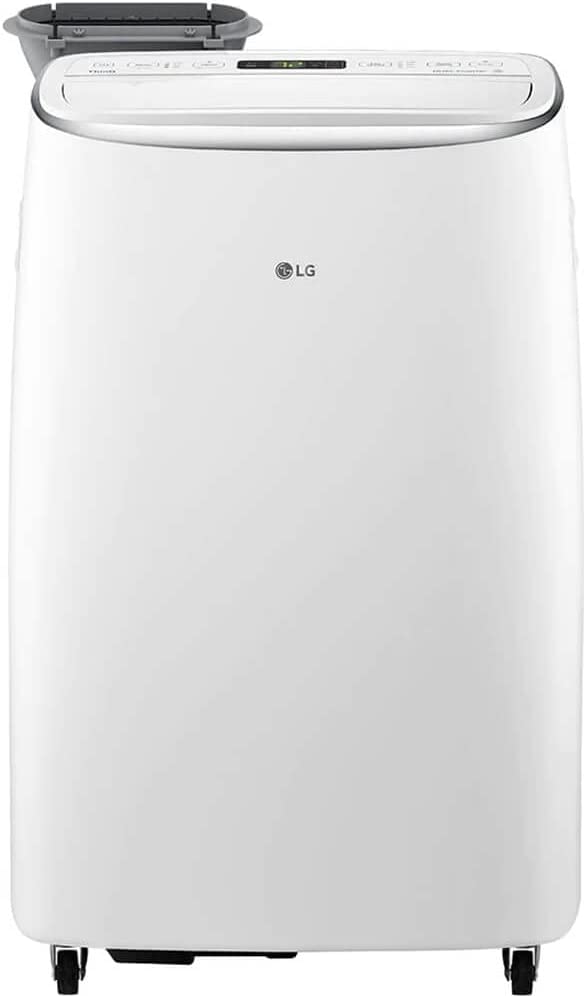
LG vs Midea: Overview
Comparing LG and Midea helps you determine which brand is best suited for your needs in Air Conditioners. Both brands offer strong choices depending on your budget and key feature requirements.
Key Features & Comparison
Evaluate factors such as build quality, warranty, customer satisfaction, and total value before making your final purchase choice between LG and Midea.
Customer Support & Warranty
When evaluating warranty coverage and after-sales service, LG generally commands an advantage due to its mature global infrastructure and expansive dedicated technician network. Across most of its residential air conditioning portfolio, including ductless mini-splits and window units, LG provides standard limited warranties backed by a standout 10-year coverage on its proprietary Dual Inverter compressors. This extended compressor assurance reflects high manufacturing confidence and grants substantial peace of mind to consumers. Furthermore, LG's customer support ecosystem features integrated diagnostic capabilities like Smart Diagnosis via the ThinQ app, which allows users to troubleshoot minor operational glitches and relay error codes directly to certified service agents, significantly expediting claims and field repairs.
Midea has made significant strides in bolstering its warranty terms, particularly on flagship lines like the Midea U, which typically offers a 1-year comprehensive warranty along with up to 10 years on the compressor depending on the specific model tier and market. However, where Midea encounters challenges is in the consistency of its third-party customer service execution. As a brand that historically operated primarily as an original equipment manufacturer (OEM) before scaling its consumer-facing presence, Midea's direct service pipeline can feel less integrated than LG's. Users navigating parts replacements, warranty authorizations, or specialized on-site labor often experience longer turnaround times. For buyers prioritizing immediate, streamlined, and direct corporate assistance, LG maintains a distinct competitive edge.
Energy Efficiency
In the realm of energy efficiency, both brands represent the cutting edge of inverter technology, but they manifest this prowess through distinct engineering designs. LG relies on its flagship Dual Inverter technology, which uses dual rotary cylinders operating at 180-degree phase shifts. This mechanism broadens the frequency range of the compressor, allowing it to sustain minimal power draw while fine-tuning output precisely to internal loads. Most of LG's modern lineup easily exceeds standard SEER and CEER benchmarks, earning Energy Star certification and demonstrating superior operational efficiency across high-ambient-heat environments where thermal throttling often degrades standard units.
Midea, conversely, revolutionized the window air conditioner market by pioneering the innovative U-shaped inverter chassis. This physical decoupling allows a window sash to slide between the noisy, heat-generating compressor outside and the indoor blower inside, which inherently reduces air leakage and thermal transfer compared to traditional chassis designs. Combined with its DC inverter compressor, Midea achieves phenomenal CEER ratings that often exceed 15.0, placing it among the most cost-effective cooling solutions on a per-watt basis. While LG excels in consistent seasonal efficiency across both mini-splits and premium window units, Midea provides unmatched structural energy savings in the window segment, yielding lower utility bills at a noticeably lower initial capital expenditure.
Noise Level
Acoustic performance is an area where engineering differentiation between these two manufacturers is most apparent to end users. LG relies on high-precision BLDC (Brushless Direct Current) fan motors and proprietary skewed fan designs to eliminate rotational turbulence and mechanical vibration. In their ductless mini-split systems, LG units can operate as quietly as 19 to 22 decibels (dBA) in low or sleep modes, rendering them virtually imperceptible in standard bedrooms. Even their traditional and inverter-based window units generally clock in around 44 to 52 dBA, using advanced composite damping materials to isolate internal compressor hum from the living space.
Midea's acoustic benchmark is heavily defined by the physical isolation architecture of the Midea U series. By using the closed window as an acoustic baffle between the outdoor compressor and the indoor air-handling blower, Midea achieves operating sound levels as low as 32 to 42 dBA in window installations, far outperforming standard box-style units from any competitor, including LG. For mini-split systems, Midea utilizes variable-speed cross-flow fans and silencer designs that maintain whisper-quiet operation comparable to LG's mid-tier units. While LG exhibits superior acoustic suppression across traditional unified chassis through motor precision, Midea's mechanical window design provides an extraordinarily quiet environment that is difficult to beat without installing a full mini-split system.
Cooling Performance
Cooling performance hinges on heat exchange efficiency, airflow throw, and dynamic compressor modulation. LG's air conditioners stand out for their rapid pulldown capability, frequently branded under features like Jet Cool or Dual Inverter Turbo mode. The dual-rotary compressor can spin up to maximum displacement almost instantaneously, forcing expansive volumes of high-velocity cold air across large spaces via 4-way auto-swing louvers. This enables LG units to rapidly depressurize indoor heat loads during peak summer heat waves and maintain exceptionally tight temperature tolerances within fractions of a degree, preventing noticeable cycling fluctuations.
Midea counters with formidable heat dissipation technology and intelligent climate management. Its inverter systems modulate output smoothly, using expansive micro-channel or grooved copper condensers to sustain efficient refrigerant phase transitions even when outdoor ambient temperatures climb past 100°F (38°C). Midea units also benefit from specialized dynamic airflow controls, such as their widespread inclusion of remote sensing (often integrated via remote thermostat sensors or app algorithms), which directs cooling based on the user's location rather than the return-air temperature at the chassis. While LG generally wins out in sheer CFM air movement and rapid thermal drop, Midea delivers exceptionally stable, draft-free, and sustained continuous-run cooling that avoids the dehumidification shortfalls common in over-aggressive compressors.