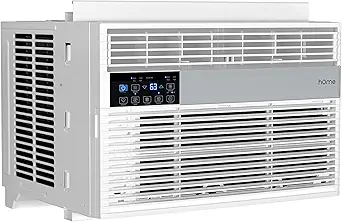
Homelabs vs Shinco: Overview
Comparing Homelabs and Shinco helps you determine which brand is best suited for your needs in Air Conditioners. Both brands offer strong choices depending on your budget and key feature requirements.
Key Features & Comparison
Evaluate factors such as build quality, warranty, customer satisfaction, and total value before making your final purchase choice between Homelabs and Shinco.
Customer Support & Warranty
When evaluating warranty coverage and after-sales service, hOmeLabs presents a more transparent and consumer-friendly framework. The brand typically provides a straightforward one-year limited warranty across its air conditioning catalog, backed by an accessible domestic support infrastructure that includes responsive digital ticketing, live chat, and comprehensive online documentation. hOmeLabs has cultivated a reputation for relatively frictionless claims processing, frequently resolving defective unit disputes through swift replacements rather than cumbersome component-level repair cycles. This standardized approach gives consumers dependable baseline protection, particularly when dealing with early-stage mechanical failures or transit-related damage.
In contrast, Shinco operates on a more fragmented support model that reflects its positioning as an aggressive budget-tier manufacturer. While Shinco also advertises standard one-year warranty terms, actual customer service interactions often depend heavily on third-party marketplace channels rather than a robust direct-to-consumer corporate portal. Communication can sometimes suffer from slower response latencies and more demanding troubleshooting thresholds before a return or replacement is authorized. For users who prioritize dedicated customer care and straightforward warranty recourse, hOmeLabs holds an operational advantage, whereas Shinco purchasers trade off premium support infrastructure in exchange for a lower initial acquisition cost.
Energy Efficiency
Energy management across portable and window air conditioners is intrinsically tied to compressor design and thermal regulation, where hOmeLabs demonstrates a slight technological edge. Most hOmeLabs units are engineered to meet modern DOE (Department of Energy) standards, frequently utilizing rotary compressors paired with eco-conscious refrigerants like R32 to achieve favorable Combined Energy Efficiency Ratio (CEER) ratings. Their onboard firmware incorporates smart energy-saver cycles that actively power down both the fan and compressor once the target ambient temperature is achieved, preventing unnecessary standby draw and significantly reducing electrical consumption over prolonged summer operation.
Shinco approaches energy efficiency with an emphasis on functional simplicity, delivering units that comply with baseline regulatory benchmarks without pushing the envelope on advanced thermal engineering. While Shinco utilizes efficient heat-exchange coils and modern refrigerants in its current lineup, its thermal algorithms tend to be more rudimentary, which can result in wider temperature hysteresis and more frequent compressor cycling. This frequent on-off cycling places intermittent spikes on the power draw, leading to slightly higher operational costs over long cooling sessions. While perfectly adequate for intermittent or single-room seasonal use, Shinco models generally lag behind hOmeLabs in terms of sustained, month-over-month electrical optimization.
Noise Level
Acoustic dampening is a critical performance metric for residential air conditioning, particularly in bedroom environments where hOmeLabs exhibits superior mechanical isolation. hOmeLabs designs its chassis with internal vibration-absorbing motor mounts and dual-fan assemblies engineered to diffuse airflow turbulence. On low-fan settings, many hOmeLabs portable units operate within the 50 to 53 dB(A) range, producing a smooth, low-frequency hum that functions more like non-intrusive white noise rather than an abrasive mechanical rumble. The acoustic profile remains relatively consistent even when the compressor engages, avoiding the sudden chassis rattling that often plagues entry-level cooling appliances.
Shinco units, conversely, lean toward higher baseline acoustic outputs due to lighter cabinet construction and less aggressive internal sound insulation. While Shinco publishes competitive decibel metrics—often claiming low-fan operation around 52 to 54 dB(A)—real-world acoustics reveal a higher-pitched airflow signature and more perceptible mechanical vibration transmitted through the plastic housing. The cycling on and off of the compressor is noticeably more abrupt in Shinco models, which can cause sudden spikes in sound levels that may disrupt light sleepers. Consequently, while Shinco provides adequate acoustic tolerance for living spaces or home offices, hOmeLabs remains the preferred choice for sleep-sensitive environments.
Cooling Performance
In terms of raw thermal dynamics and heat extraction, hOmeLabs models consistently deliver rapid pulldown capabilities backed by accurate ASHRAE/SACC ratings. Their portable and window units feature broad evaporator surfaces and high-CFM (cubic feet per minute) blower fans that effectively circulate chilled air across medium-to-large floor plans. The airflow trajectory is well-dispersed, minimizing localized cold zones and promoting uniform thermal equilibrium throughout the room. Additionally, hOmeLabs integrates high-capacity dehumidification modes that lower latent heat substantially, allowing the ambient air to feel considerably cooler and less stifling even during peak humidity conditions.
Shinco remains a formidable competitor in baseline cooling capacity, frequently offering high BTU outputs per dollar spent. A Shinco unit will rapidly drop the temperature within its immediate directional discharge path, making it exceptionally effective for personal spot-cooling or quickly mitigating heat in smaller enclosed rooms. However, its air distribution mechanics are somewhat more concentrated, often resulting in directional draftiness rather than balanced, room-wide circulation. While Shinco matches hOmeLabs in terms of brute thermodynamic tonnage, hOmeLabs holds the advantage in volumetric airflow engineering, yielding a more consistently balanced ambient climate over extended duty cycles.
Compare current retail pricing, active promotions, and verified stock availability directly from authorized stores: