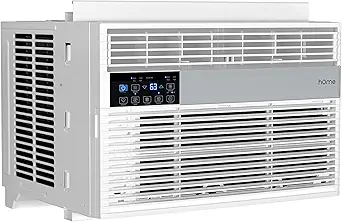
Frigidaire vs Homelabs: Overview
Comparing Frigidaire and Homelabs helps you determine which brand is best suited for your needs in Air Conditioners. Both brands offer strong choices depending on your budget and key feature requirements.
Key Features & Comparison
Evaluate factors such as build quality, warranty, customer satisfaction, and total value before making your final purchase choice between Frigidaire and Homelabs.
Customer Support & Warranty
When examining customer service and warranty infrastructure, Frigidaire benefits heavily from the extensive corporate backing of its parent company, Electrolux. Frigidaire offers a standardized one-year limited warranty covering parts and labor, backed by a nationwide network of certified service technicians and easily accessible replacement components. This established logistical footprint makes securing physical repairs, filing claims, or obtaining genuine parts straightforward. However, because Frigidaire is a legacy mass-market brand, customer service touchpoints can occasionally feel impersonal, resulting in bureaucratic hurdles or longer wait times during the peak summer cooling season.
In contrast, hOmeLabs operates primarily as a direct-to-consumer, digital-first brand, offering a standard one-year warranty with an optional extra six months or full year upon registering the product online. Their customer support model relies heavily on streamlined digital channels, including email ticketing, web forms, and responsive chat services, which often resolve basic troubleshooting and claims faster than traditional phone queues. The primary trade-off with hOmeLabs is the absence of a dedicated physical repair contractor network; instead of dispatching technicians to repair a faulty compressor, they typically issue complete unit replacements or refunds, which can be advantageous in the short term but limits long-term, out-of-warranty serviceability.
Energy Efficiency
Frigidaire demonstrates strong engineering capabilities in energy management, particularly through its premium and inverter-driven window air conditioner lineups. Many Frigidaire models exceed baseline federal standards, boasting Energy Star certifications with Combined Energy Efficiency Ratios (CEER) often reaching 12.0 to 15.0 on advanced variable-speed units. Their sophisticated programmable thermostats, robust 'Eco Mode' algorithms, and compatibility with the Frigidaire smart app allow consumers to fine-tune operation schedules to avoid peak-hour utility surcharges, making them exceptionally cost-effective for whole-season usage.
hOmeLabs prioritizes straightforward, practical efficiency, offering models that adhere strictly to current Department of Energy guidelines, with several units achieving Energy Star status. While their traditional single-speed rotary compressors are reasonably thrifty, hOmeLabs generally lacks the high-end inverter compressor technology found in Frigidaire’s top-tier catalog. Consequently, while hOmeLabs units feature competent energy-saver cycles that cycle the fan and compressor efficiently to maintain ambient temperature, they generally yield slightly lower seasonal CEER ratings compared to Frigidaire’s most advanced offerings, representing a balanced choice for budget-conscious buyers rather than maximum energy conservationists.
Noise Level
Acoustic performance is an area where Frigidaire has invested considerable engineering resources, particularly through its 'Quiet Temp' series. These specialized units integrate reinforced structural dampening, balanced blower wheels, and advanced sound-insulating wraps around the rotary compressor to significantly minimize mechanical vibration. On their lowest settings, Frigidaire's premium models can operate as quietly as 42 to 45 decibels (dBA), producing an unobtrusive white noise profile that is well-suited for bedrooms, home offices, and nurseries where acoustic disruption must be minimized.
hOmeLabs designs its air conditioners with acoustic performance that is typical for modern, competitively priced appliances, averaging between 50 and 55 dBA on low-to-medium settings. The brand uses durable plastic housings and relatively quiet fan motors, but the chassis engineering does not include the heavy-duty sound-baffling materials found in Frigidaire’s specialized quiet-line hardware. While hOmeLabs units are rarely harsh or excessively jarring, the cyclical engagement of the compressor is distinctly more audible, resulting in noticeable shifts in ambient sound that light sleepers might find perceptible during nighttime operation.
Cooling Performance
Frigidaire's cooling performance is defined by high airflow velocity, rapid thermal reduction, and a comprehensive portfolio ranging from small 5,000 BTU window units to heavy-duty 28,000 BTU models. Their engineering focuses on wide-angle, motorized louver systems that maximize air circulation and eliminate micro-climate hot spots in larger living areas. Furthermore, Frigidaire units feature robust dehumidification capabilities, pulling significant pints of moisture from the air per hour, which greatly enhances perceived cooling comfort during humid summer months.
hOmeLabs focuses primarily on the core residential capacities, specializing in 5,000 to 14,000 BTU window and portable air conditioners tailored for small-to-medium spaces. Their units deliver consistent, reliable thermal pull-down times within their rated square footage, backed by intuitive digital controls and rapid-cooling modes that quickly bring down room temperatures. However, hOmeLabs units tend to feature more basic, manually adjustable louvers with narrower directional throw, making them slightly less effective at circulating air evenly through irregularly shaped rooms or open-concept floor plans compared to Frigidaire's top performers.
Compare current retail pricing, active promotions, and verified stock availability directly from authorized stores: