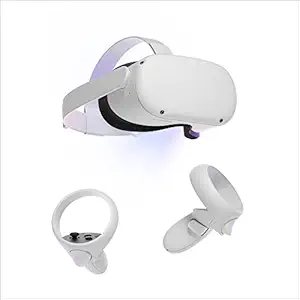
Samsung vs Meta Quest: Overview
Comparing Samsung and Meta Quest helps you determine which brand is best suited for your needs in VR Headsets. Both brands offer strong choices depending on your budget and key feature requirements.
Key Features & Comparison
Evaluate factors such as build quality, warranty, customer satisfaction, and total value before making your final purchase choice between Samsung and Meta Quest.
Features
Meta Quest sets the gold standard for standalone feature integration, offering a comprehensive suite of spatial computing capabilities that define modern consumer VR. Devices like the Quest 3 showcase high-resolution full-color stereoscopic passthrough, advanced depth sensor projection for automatic room meshing, and remarkably fluid optical hand tracking that often eliminates the need for physical controllers. The Quest operating system, built atop an Android base, is rich with multi-window multitasking, spatial audio calibration, direct-to-headset PC streaming via Air Link, and an enormous catalog of native titles spanning gaming, productivity, and social virtual spaces.
Samsung counters this ecosystem advantage with engineering prowess rooted in core display and interface innovations. Historical entries like the Odyssey+ introduced cutting-edge anti-screen-door effect technology, motorized IPD adjustment, and integrated AKG-tuned spatial acoustics. In newer and emerging spatial hardware developed alongside Google’s Android XR framework, Samsung emphasizes cross-device synergy, high-speed wireless connectivity with Galaxy devices, micro-OLED integration, and iris biometric tracking. While Meta excels in real-time mixed reality gaming features and boundary-mapping safety protocols, Samsung concentrates on pristine audiovisual presentation, higher dynamic range content consumption, and professional-grade workflow connectivity.
Performance
From a compute and tracking performance perspective, Meta Quest delivers an exceptionally optimized, low-latency standalone experience. Powered by customized Qualcomm Snapdragon XR2 architectures paired with robust active cooling systems, Meta squeezes remarkable graphical fidelity and stable 90Hz to 120Hz frame rates out of a mobile chip. Meta's tracking algorithms, refined over a decade of iterative machine-learning updates, yield rock-solid 6DoF head and controller localization with negligible drift, ensuring high precision even in fast-paced rhythm games or competitive simulations without requiring external sensor beacons.
Samsung’s performance philosophy, historically rooted in tethered computing, bypasses the compute constraints of mobile chips by harnessing host PC processing power or high-bandwidth tethered connections. Devices such as the HMD Odyssey delivered uncompressed video feeds with zero wireless compression artifacts, taking full advantage of dedicated desktop GPUs. In the modern standalone and spatial computing arena, Samsung leverages top-tier silicon configurations and proprietary cooling to drive ultra-high-resolution micro-OLED panels without thermal throttling. While Meta holds a clear advantage in native standalone optimization and proprietary predictive tracking algorithms, Samsung leads in raw visual throughput, panel pixel density, and compute ceilings when integrated with external workstations.
Design
Meta Quest’s design ethos centers on consumer-friendly ergonomics, durability, and functional balance for active use. The hardware utilizes lightweight plastics, balanced pancake lens optics that dramatically reduce the headset’s front-heavy profile, and intuitive continuous physical IPD sliders. Meta prioritizes a clean, minimalist silhouette with a wide peripheral field of view, though their standard out-of-the-box fabric straps frequently require third-party or elite strap upgrades to achieve true long-term cranial comfort. The Touch controllers are masterpieces of ergonomics, offering balanced weight distribution, capacitive touch surfaces, and robust haptics that feel natural in the hand.
Samsung approaches design through a premium consumer-electronics lens, frequently adopting halo-style headbands that distribute the device's mass evenly across the forehead rather than pressing directly against the delicate facial tissues. This architectural choice significantly reduces cheekbone and eye strain during extended viewing sessions. The materials utilized by Samsung often incorporate leatherette padding, premium plastics, and acoustic engineering reminiscent of high-end consumer headphones. While Samsung headsets can feel physically larger and less conducive to rapid, vigorous physical movements compared to the compact Quest, they routinely excel in passive comfort, luxurious build quality, and superior ambient light-blocking facial interfaces.
Compare current retail pricing, active promotions, and verified stock availability directly from authorized stores: