HP vs HTC: Overview & Brand Philosophy
The virtual reality landscape has evolved from a niche experimental novelty into a mature ecosystem serving both hardcore consumers and mission-critical enterprise sectors. In this competitive space, HP and HTC represent two vastly different corporate philosophies and engineering trajectories. While both manufacturers made their initial splashes in consumer PC-VR, their product lifecycles, target demographics, and technological priorities have diverged significantly over the past decade.
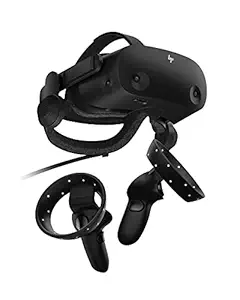
HP entered the VR sector through the Windows Mixed Reality (WMR) initiative, initially targeting accessible consumer immersion before redefining its niche with the acclaimed Reverb series. HP's philosophy has centered on precision fidelity—prioritizing ultra-high display resolution, lightweight ergonomic chassis design, and partnership-driven spatial audio (most notably collaborating with Valve). Rather than building an expansive proprietary software ecosystem, HP designed its hardware as direct plug-and-play peripherals for SteamVR and enterprise simulation environments, emphasizing visual clarity above all else.
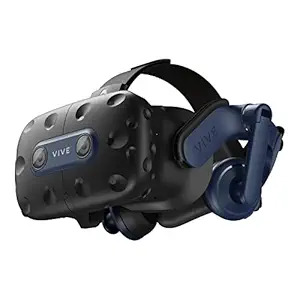
HTC, conversely, is a foundational pioneer of modern room-scale virtual reality. Through its Vive brand, HTC established early dominance in tracking precision via Valve's SteamVR Lighthouse base stations before transitioning into an independent platform holder. HTC's philosophy emphasizes modularity, versatility, and industrial-grade enterprise deployment. By developing its own software marketplace (Viveport) and embracing hybrid standalone and PC-VR architectures (such as the Vive Focus and XR Elite lines), HTC positions itself not merely as a peripheral manufacturer, but as an end-to-end XR solution provider.
Key Differences & Technological Comparison
The core technological distinction between HP and HTC lies in tracking methodology, display architecture, and ecosystem integration. While HP has historically refined inside-out optical tracking to minimize setup friction, HTC provides dual paths: ultra-precise external base station tracking for demanding room-scale environments, alongside proprietary inside-out tracking for standalone and hybrid headsets.
In display technology, HP earned an industry benchmark reputation with the Reverb G2, delivering 2160 x 2160 pixels per eye through custom sub-pixel striped LCD panels. This virtually eliminated the "screen-door effect" and established HP as the gold standard for seated flight and racing simulators. HTC counters this with wider fields of view (FOV), higher refresh rates reaching up to 120Hz on flagship models like the Vive Pro 2, and higher gross resolutions (2448 x 2448 per eye on the Pro 2), though often paired with dual-element Fresnel or pancake lenses that present distinct optical trade-offs regarding edge-to-edge clarity and god rays.
Ecosystem infrastructure further separates the two. HP's hardware relies heavily on the Windows Mixed Reality platform as an intermediary layer before passing through to SteamVR or OpenXR. This reliance on Microsoft's software stack has introduced operational friction over time. HTC, meanwhile, develops its own robust runtime environment (Vive Console), offers native SteamVR integration on base-station models, and maintains Viveport Infinity—a unique subscription-based distribution model offering unlimited access to hundreds of VR titles.
Pros & Cons Comparison
HP (Reverb Series)
- Pro: Class-Leading Clarity: Industry-renowned panel sharpness, making it exceptional for reading instrument clusters in seated simulations.
- Pro: Off-Ear Audio Engineering: Utilizes Valve-designed near-field off-ear speakers that deliver superior acoustic spatialization without physical ear fatigue.
- Pro: Ergonomic Weight Distribution: Lightweight construction and balanced strap systems ensure comfort during prolonged seated sessions.
- Pro: Aggressive Price-to-Performance: Offered one of the most competitive visual-fidelity-to-cost ratios in PC-VR history.
- Con: Controller Tracking Blindspots: Inside-out optical tracking lacks coverage behind the head and directly below the waistline.
- Con: Software Dependency: Vulnerable to changes and eventual deprecation of the Windows Mixed Reality ecosystem.
- Con: Non-Modular Design: Limited upgradeability; does not natively support base station tracking or wireless PC transmission without cumbersome third-party workarounds.
HTC (Vive Series)
- Pro: Sub-Millimeter Tracking Precision: Lighthouse-compatible models offer unmatched tracking volume and accuracy with zero controller occlusion.
- Pro: Expansive Modular Ecosystem: Native support for Vive Trackers, facial tracking add-ons, wireless PC adapters, and third-party peripherals like the Valve Index controllers.
- Pro: Wider Field of View: Delivers expansive horizontal FOV (up to 120 degrees on the Pro 2), enhancing peripheral immersion.
- Pro: Independent Software Suite: Dedicated platform support via Viveport, enterprise device management (VIVE Business), and direct OpenXR compatibility.
- Con: High Cost of Entry: Premium pricing across full kits, individual accessories, and base stations places it outside typical consumer budgets.
- Con: Lens Artifacts: Complex lens stacks in models like the Vive Pro 2 can produce pronounced concentric ring glare (god rays) in high-contrast scenes.
- Con: Bulk and Weight: Industrial-grade builds often weigh significantly more than streamlined consumer competitors.
Performance, Durability & Value Analysis
From an endurance perspective, HTC headsets are engineered primarily for punishing enterprise workflows, commercial VR arcades, and high-intensity enthusiasts. The materials used in the Vive Pro and Focus series feature high-density plastics, robust ratcheting headstraps, and modular face gaskets designed for constant sanitation. Furthermore, HTC's tracking relies on solid-state optical sensors reading sweeping laser lines, which delivers absolute physical durability compared to camera-based computer vision setups that can degrade in low-light environments. However, this longevity comes at an extreme monetary premium, often requiring users to invest well over $1,000 for a complete hardware kit.
HP focused on maximizing return on investment for the dedicated simulator community. The physical construction of headsets like the Reverb G2 features lightweight plastics that, while less rugged than HTC's industrial shells, excel in minimizing structural fatigue for the wearer. Long-term reliability concerns for HP center largely on their proprietary tether cables and shifting software support rather than physical build degradation. In terms of raw dollar-for-pixel visual performance, HP traditionally outperformed HTC, providing superior central-vision fidelity at nearly half the total investment cost of a complete Vive setup.
Final Verdict: Which Brand Should You Choose?
The choice between HP and HTC depends heavily on your primary use cases, tracking demands, and long-term ecosystem viability:
Choose HP if: You are a dedicated flight simulation (e.g., Microsoft Flight Simulator) or sim-racing enthusiast operating strictly in a seated position. If you require razor-sharp text clarity to read avionics and digital dashboards on a moderate budget, and you are comfortable navigating the sunsetting Windows Mixed Reality ecosystem, HP provides exceptional visual performance per dollar.
Choose HTC if: You demand uncompromising room-scale tracking accuracy, full-body physical presence, and enterprise-grade modularity. HTC is the clear choice for professional developers, commercial operators, and high-end VR enthusiasts who want to integrate external accessories like full-body trackers, utilize specialized wireless PC-VR links, or ensure long-term software support independent of consumer OS volatility.
Features
When evaluating the feature ecosystems of HP and HTC in the virtual reality space, the two manufacturers represent fundamentally different product philosophies. HP—predominantly through its Reverb G2 series—engineered its feature set around a streamlined, high-fidelity "plug-and-play" experience tailored to simulators and desktop VR users. Its standout engineering achievements include class-leading 2160 x 2160 per-eye LCD panels and off-ear spatial audio drivers developed in partnership with Valve. However, HP's feature set remains relatively rigid; it relies on a four-camera inside-out optical tracking array that lacks expandability, lacks native wireless functionality, and integrates standard mechanical IPD adjustments without cutting-edge biometric sensing. The engineering focus here is sensory fidelity in visual and auditory domains, trading away deep feature customization to maintain an accessible, integrated footprint.
Conversely, HTC’s Vive lineup (including the Vive Pro 2, Vive XR Elite, and Vive Focus 3) boasts an enterprise-grade, modular feature architecture designed for extreme versatility. HTC dominates in tracking flexibility, supporting SteamVR base station (Lighthouse) sub-millimeter tracking alongside standalone inside-out systems. Furthermore, HTC’s technical ecosystem features expansive modularity: users can integrate official wireless adapters for tether-free PC VR, hot-swappable batteries, full-face and eye-tracking add-ons, and dedicated Vive Trackers for full-body physical presence. While HP aims for an optimal out-of-the-box audiovisual baseline, HTC excels in cutting-edge, hybrid capabilities, offering features like high-resolution full-color RGB passthrough for mixed reality (MR) and enterprise software deployment suites that HP simply does not match.
The practical trade-offs between HP and HTC ultimately center on specialized performance versus adaptable utility. HP delivers a superior audio-visual feature-to-cost ratio for seated experiences like flight or racing simulations, but its feature ceiling is strictly capped by a sub-par controller tracking volume, the requirement of a continuous physical tether, and the looming sunset of Windows Mixed Reality. HTC requires significantly higher capital investment and often introduces software complexity via its Vive Console overlay, yet it provides an uncompromised, future-proof feature suite. For enthusiasts and enterprise clients demanding features like native standalone processing, high-fidelity mixed reality, and seamless full-body motion capture, HTC’s robust hardware ecosystem substantially outclasses HP’s focused, yet constrained, hardware offerings.
Performance
When evaluating raw performance in the virtual reality landscape, HP and HTC demonstrate fundamentally different engineering philosophies, catering to distinct segments of the high-end market. HP concentrated its efforts almost exclusively on audiovisual fidelity, as epitomized by the Reverb G2. Developed in collaboration with Valve, HP engineered an industry-leading display pipeline offering an impressive 2160 x 2160 resolution per eye combined with custom off-ear speakers. In terms of static visual clarity, pixel density, and the minimization of the screen-door effect, HP often edges out comparable hardware, making it a standout performer for flight, racing, and architectural simulations where reading small gauges and fine text is paramount. However, HP's performance profile is bottlenecked by its inside-out optical tracking system; while adequate for casual movement, the cameras frequently struggle with dead zones and latency when controllers are held close to the face or low at the hips, creating a noticeable performance disparity between its visual delivery and input reliability.
Conversely, HTC—spearheaded by its Vive, Vive Pro, and Vive XR Elite product lines—engineers a more holistic, enterprise-grade performance ecosystem. While modern HTC displays occasionally feature marginally lower subpixel clarity than HP's sharpest panels, HTC outclasses HP in tracking precision, thermal management, and sustained graphical throughput. By utilizing SteamVR external base stations (Lighthouse tracking) for its Pro series, HTC achieves sub-millimeter positional tracking across a 360-degree volume, virtually eliminating the tracking occlusion and drift that plague HP's headsets during rapid, competitive gameplay. Furthermore, HTC’s flagship devices offer expansive fields of view (reaching up to 120 degrees horizontally on the Pro 2 compared to HP's narrower ~114-degree diagonal metric) and support native high-refresh pipelines of up to 120Hz, ensuring buttery-smooth frame delivery that significantly reduces motion sickness during intensive computing sessions.
Ultimately, the performance trade-off between these two brands comes down to localized visual perfection versus full-spectrum tracking reliability and ecosystem flexibility. HP delivers superior, plug-and-play visual horsepower for stationary simulation enthusiasts who demand exceptional central clarity without the friction of mounting external hardware. HTC, on the other hand, provides a vastly superior professional-tier architecture; with options for flawless external tracking, high-bandwidth wireless adapters to eliminate cable tethering, and versatile standalone-to-PC streaming capabilities, HTC remains the definitive choice for enterprise users, developers, and enthusiasts who require absolute precision, lower motion-to-photon latency, and zero tracking compromise.
Design
In the virtual reality hardware space, HP and HTC present divergent design philosophies, with HP championing streamlined minimalism and HTC leaning into modular, enthusiast-grade engineering. HP’s VR design language, epitomized by the Reverb series, centers on lightweight construction and plug-and-play ergonomics. By collaborating with Valve, HP integrated off-ear spatial audio speakers and a fabric-lined chassis that prioritizes thermal dissipation and long-session comfort. Its physical footprint is compact, utilizing a standard three-strap Velcro or ratcheting head-mount mechanism that balances weight evenly across the crown. In contrast, HTC’s Vive lineup—spanning from the Vive Pro 2 to the standalone XR Elite—embraces a rugged, industrial aesthetic characterized by high-density polymers, integrated mechanical IPD (interpupillary distance) dials, and rigid halo-style straps. HTC treats its headsets as versatile hardware platforms, often incorporating specialized mounting brackets, active cooling vents, and distinct camera arrays that give them an overtly high-tech, utilitarian appearance.
From an engineering and technical standpoint, HTC demonstrates superior versatility and modularity, whereas HP prioritizes simplicity and cost efficiency. HTC’s flagship headsets frequently feature removable face cushions, swap-in battery modules that act as rear counterweights for optimal center-of-gravity distribution, and expandable expansion ports designed for facial trackers, wireless adapters, and external sensor brackets. This modularity extends to tracking hardware, where HTC integrates SteamVR tracking diodes directly into distinct geometric contours, alongside inside-out camera designs on newer models. HP, on the other hand, relies primarily on inside-out tracking, keeping the exterior shell unencumbered by external sensor nodes, resulting in a sleeker, continuous curve. However, this minimalist approach leaves HP with less room for physical adjustments; its tethered cables are notoriously rigid, and the hinge mechanisms, while functional, lack the refined articulated movement found in HTC’s flip-up visors and adjustable eye-relief sliders.
The practical trade-offs between the two brands ultimately reflect different target audiences. HP’s design wins on sheer comfort for seated experiences such as flight and racing simulations, where its ultra-low mass, breathable materials, and unobtrusive off-ear audio alleviate physical fatigue over extended hours. The trade-off is a distinct lack of adaptability, as HP headsets are non-expandable and exhibit a more fragile, consumer-grade structural feel. HTC trades some of this lightweight simplicity for enterprise-grade durability, structural rigidity, and extensive adjustability. While an HTC headset often feels noticeably heavier and more complex to dial in for a casual session, its design offers vastly superior customization, robust weight distribution, and repairability. Users prioritizing lightweight, no-frills seated ergonomics will gravitate toward HP’s refined, unified shell, while those demanding durable, configurable hardware that adapts to diverse physical spaces and external peripherals will find HTC’s industrial design vastly superior.