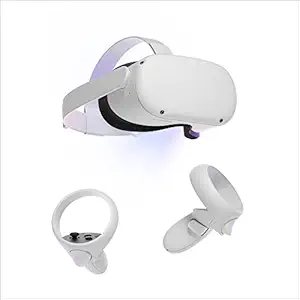
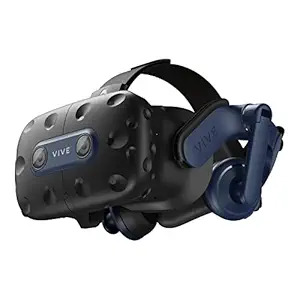
Meta Quest vs HTC: Overview
Comparing Meta Quest and HTC helps you determine which brand is best suited for your needs in VR Headsets. Both brands offer strong choices depending on your budget and key feature requirements.
Key Features & Comparison
Evaluate factors such as build quality, warranty, customer satisfaction, and total value before making your final purchase choice between Meta Quest and HTC.
Features
Meta Quest sets the industry benchmark for standalone feature integration, driven by relentless software innovation and AI-powered computer vision. Devices like the Quest 3 showcase exceptional full-color stereoscopic passthrough, automated spatial boundary mapping, and class-leading optical hand-tracking algorithms that eliminate the need for physical controllers in casual navigation. Furthermore, Meta’s ecosystem offers robust native features such as Air Link for wireless PC streaming, local spatial co-location, and a rich operating system that blends social connectivity, productivity tools, and entertainment within a singular, coherent user interface.
HTC counters with a modular, pro-grade feature architecture designed for specialized and commercial deployment. The Vive ecosystem frequently offers hardware-based customization, including native eye-tracking modules, facial trackers, hot-swappable battery systems, and dedicated display inputs like DisplayPort connectivity for uncompressed visual rendering. While HTC's native software environment lacks the casual polish and vast consumer library of Meta’s Horizon OS, it provides enterprise management suites (Vive Business), robust offline operational modes, and seamless native integration with SteamVR infrastructure, making it far more capable in mission-critical and research-heavy applications.
Performance
In terms of standalone computational throughput and graphical pipelines, Meta Quest holds a tangible edge in the mobile sector due to its close co-engineering partnerships with Qualcomm. Powered by bespoke Snapdragon XR2 platforms, Quest headsets maximize graphical compute per watt, driving high-resolution displays through advanced dynamic foveated rendering, spatial upscaling, and low-latency inside-out tracking. For tethered PC VR use, Meta utilizes sophisticated encoding and decoding pipelines over Wi-Fi 6E or USB-C, which, while subject to minor compression artifacts, delivers an impressively stable and responsive wireless computing experience for general consumers.
HTC shines brightest in raw, uncompressed graphical fidelity and sub-millimeter tracking reliability when deployed in high-performance setups. While HTC’s standalone devices (such as the Vive XR Elite) utilize similar mobile silicon to Meta, their dedicated PC VR hardware (like the Vive Pro 2) circumvents mobile encoding entirely via dedicated display bandwidth, eliminating latency and visual compression. Moreover, HTC's continued reliance on external SteamVR Base Station tracking offers superior occlusion resistance and precision compared to Meta’s optical inside-out tracking, making HTC the definitive performer for complex flight simulations, scientific measurement, and fast-paced competitive esports.
Design
From an industrial design standpoint, Meta Quest emphasizes mainstream ergonomics, mass-production efficiency, and compact footprints through the implementation of pancake optics. The Quest hardware focuses on a balanced, approachable silhouette that reduces front-heaviness compared to earlier Fresnel lens generations. However, to maintain competitive retail pricing, Meta frequently relies on lightweight, cost-effective materials, including basic fabric head straps and foam facial interfaces that often compel users to purchase aftermarket ergonomic accessories to achieve optimal long-term comfort during extended sessions.
HTC approaches hardware design with an emphasis on commercial durability, modularity, and balanced weight distribution right out of the box. Devices like the Vive Focus and Vive Pro series utilize rigid, ratcheting headbands with integrated counterweights, removable and wipeable commercial-grade cushions, and robust thermal management systems engineered for multi-hour operational duty. HTC’s willingness to experiment with transformative form factors—such as modular battery cradles that convert headsets into lightweight glasses—reflects an engineering culture dedicated to physical versatility, premium componentry, and sustained industrial-grade wear.
Compare current retail pricing, active promotions, and verified stock availability directly from authorized stores: