Sony vs HTC: Overview
Comparing Sony and HTC helps you determine which brand is best suited for your needs in VR Headsets. Both brands offer strong choices depending on your budget and key feature requirements.
Key Features & Comparison
Evaluate factors such as build quality, warranty, customer satisfaction, and total value before making your final purchase choice between Sony and HTC.
Features
In terms of feature sets, Sony relies heavily on bespoke sensory innovations to create emotional immersion. The PlayStation VR2, for instance, set a modern benchmark by integrating hardware-level eye tracking for foveated rendering, headset-based haptics to simulate environmental forces, and advanced Sense controllers featuring adaptive triggers borrowed from the DualSense. These features are tightly integrated into the PlayStation software development kit, ensuring that developers can exploit them universally. Sony opts for inside-out tracking cameras and high-dynamic-range (HDR) OLED panels, an impressive engineering feat that ensures black levels and dynamic contrast remain unmatched in consumer VR, even if the tethered nature limits true room-scale portability.
HTC, on the other hand, approaches features from a modular, utility-first perspective. The Vive ecosystem is renowned for expansive tracking fidelity, supporting external SteamVR base stations (Lighthouse tracking) that deliver sub-millimeter precision, alongside inside-out camera systems on devices like the Vive XR Elite. HTC sets itself apart through physical versatility: swappable battery cradles, dedicated full-body tracker pucks, facial and eye-tracking add-on modules, and high-resolution color passthrough for mixed reality workflows. While HTC’s sensory feedback mechanisms are less artistically nuanced than Sony's custom haptics, the brand's expansive feature set enables advanced enterprise simulations, multi-point motion capture, and complete independence from a single platform.
Performance
Performance benchmarks reveal Sony's mastery over visual fidelity within bounded hardware limitations. Thanks to the native implementation of eye tracking and dynamic foveated rendering, Sony is able to extract staggering performance from host hardware, maintaining high frame rates—up to 120Hz—without visual artifacting in critical focal zones. The OLED panels offer an astonishing color gamut, exceptional peak brightness, and true blacks that make horror and sci-fi environments breathtaking. However, this visual prowess is counterbalanced by optical trade-offs; Sony’s use of Fresnel lenses introduces a narrower optical 'sweet spot' and noticeable god rays or chromatic aberration around high-contrast edges when compared to modern pancake lens designs.
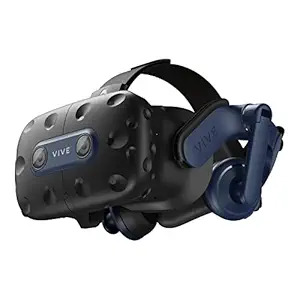
HTC prioritizes sustained optical clarity and computational throughput across various hardware configurations. High-end devices such as the Vive Pro 2 boast ultra-high-resolution displays (up to 5K combined resolution) with expansive 120-degree fields of view, which drastically diminish the screen-door effect for precise architectural, sim-racing, or professional design tasks. Newer models incorporate advanced pancake optics that deliver edge-to-edge clarity, completely eliminating the center-only focus typical of Fresnel arrays. Performance in the HTC ecosystem is inherently scalable: standalone models utilize capable Qualcomm Snapdragon XR2 platforms, while tethered iterations exploit top-tier desktop GPUs, achieving peerless visual clarity and tracking stability at the expense of steep hardware requirements.
Design
Sony’s industrial design is characterized by an ergonomic halo-strap architecture that has influenced the entire industry. By redistributing the headset’s weight across the forehead and the crown of the skull, Sony ensures that minimal clamping force is applied directly to the user’s nose and cheekbones. The physical chassis balances futuristic, organic aesthetics with functional utility, featuring an accordion-style silicone light shield that effectively blocks ambient light while preventing lens fogging via passive ventilation. The primary compromise in Sony's modern design is its insistence on a tethered connection; while a single USB-C cable is far superior to previous iterations, it still physically anchors the user to their console.
HTC champions a mechanical, convertible approach to industrial design that favors functional durability and adaptability. Devices like the Vive XR Elite demonstrate clever modularity, allowing users to physically detach the rear battery strap to transform the device into a lightweight pair of immersive glasses powered via an external power bank or PC tether. HTC generally utilizes robust, textured composite plastics built to endure rigorous commercial and enterprise environments. While HTC headsets can occasionally feel heavier or bulkier due to integrated cooling fans, internal processors, and battery packs, their inclusion of physical manual IPD dials, adjustable diopters for glasses-free use, and convertible form factors deliver superior mechanical customization for diverse head geometries.