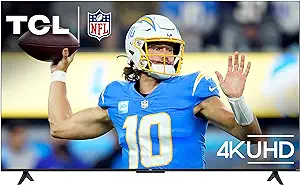
Choosing the right television for your home involves navigating through a myriad of options, and two notable contenders in the market are TCL and Insignia. Both brands offer a range of TVs with unique features and specifications, making the decision-making process a challenge. In this article, we will conduct a detailed comparison between TCL and INSIGNIA TVs, covering key aspects such as display technology, picture quality, smart TV capabilities, build quality, and pricing.
Key Features Comparison
Affordability
When evaluating affordability in the television market, INSIGNIA—Best Buy’s proprietary house brand—represents the absolute entry-level price floor, whereas TCL champions a value-to-performance philosophy that delivers advanced display engineering at accessible price tiers. INSIGNIA’s cost-efficiency stems from aggressive hardware economization: their displays predominantly utilize basic direct-lit LED backlights with 60Hz refresh rates and rely heavily on partnerships with Amazon to integrate the Fire TV OS, minimizing bespoke software development overhead. This straightforward engineering approach allows INSIGNIA to dominate ultra-budget sub-50-inch categories, making them exceptionally appealing for secondary rooms, dorms, or utility spaces where rock-bottom initial capital expenditure outweighs picture fidelity.
Conversely, TCL fundamentally redefines affordability by scaling high-tier technical specifications down to budget-conscious consumer brackets. Rather than merely stripping down hardware to hit a low price point, TCL leverages deep vertical integration—producing its own LCD panels through its subsidiary, CSOT—to significantly lower manufacturing overhead. This internal supply chain enables TCL to incorporate premium engineering features, such as Quantum Dot (QLED) color enhancement, Mini-LED backlighting, comprehensive full-array local dimming (FALD), and higher-tier HDR decoding (Dolby Vision and HDR10+), well below traditional industry price thresholds. While an entry-level TCL 3-Series or 4-Series competes directly with INSIGNIA on price, stepping up to the mid-range Q-Series yields exponential gains in contrast ratio, peak luminance, and gaming capability for only an incremental price increase.
The practical trade-offs between the two brands ultimately center on immediate monetary savings versus extended performance lifespan. An INSIGNIA display maximizes short-term budget preservation, but consumers compromise heavily on peak brightness, wide color gamut coverage, and advanced motion processing, which can lead to premature perceived obsolescence as streaming standards evolve. TCL introduces a slightly tiered pricing ladder that requires a modest premium over bare-bones alternatives, but rewards the consumer with significantly higher color volume, superior viewing angles, and more versatile connectivity (including HDMI 2.1 support on select mid-tier models). For pure bottom-dollar affordability, INSIGNIA is undeniably difficult to beat, but TCL provides superior long-term economic value by delivering near-flagship picture quality at a fraction of the cost of tier-one competitors.
Picture Quality
Top-Rated Picture Quality Brands




Both TCL and Insignia offer a range of resolutions, catering to various consumer preferences. TCL is celebrated for its budget-friendly 4K options, providing high-resolution content at competitive prices. The brand has gained popularity for offering advanced features in higher-end models, contributing to an impressive picture quality. Insignia, similarly, offers 4K options, and while the overall picture quality is commendable, it may vary depending on the specific model.
Brand Reputation
When evaluating brand reputation in the television marketplace, TCL and Insignia occupy distinct tiers of consumer perception, driven largely by their origin stories and technological ambitions. Insignia is Best Buy’s private-label house brand, primarily recognized as a utilitarian, ultra-budget option. Consumers associate Insignia with basic reliability and accessible price points rather than cutting-edge audiovisual performance. Conversely, TCL is a vertically integrated global manufacturing powerhouse that has systematically shed the "cheap budget brand" stigma over the past decade. By aggressively investing in proprietary display panel development through its subsidiary CSOT (China Star Optoelectronics Technology), TCL has cultivated a reputation as an innovative industry disruptor that routinely challenges established titans like Samsung and LG in the mid-to-high-end value segments.
This perceptual gap is clearly reflected in their respective engineering standards and technical capabilities. Insignia relies largely on outsourced third-party contract manufacturing, yielding displays with pedestrian peak brightness, standard 60Hz native refresh rates, and basic direct-lit LED arrays lacking sophisticated local dimming. Its reputation rests almost entirely on the user-friendly integration of Amazon’s Fire TV platform, making it a dependable, frictionless choice for secondary spaces like guest bedrooms, dorms, or kitchens. TCL, on the other hand, built its formidable industry standing by pioneering accessible Mini-LED technology and full-array local dimming (FALD) in consumer sets. AV enthusiasts and tech critics consistently laud TCL's 6-Series and QM-Series for delivering wide color gamuts, high contrast ratios, and specialized gaming features such as 120Hz/144Hz panels, Variable Refresh Rate (VRR), and Auto Low Latency Mode (ALLM)—attributes entirely absent from Insignia's engineering repertoire.
Ultimately, the trade-off in brand reputation between the two centers on consumer expectations regarding longevity, quality control, and visual fidelity. Insignia maintains a steady, safe reputation for shoppers seeking an unpretentious television backed by Best Buy’s straightforward domestic return infrastructure, though buyer expectations for HDR performance and cinematic depth remain low. TCL carries the higher-prestige badge for performance-per-dollar, winning numerous industry accolades for flagship-tier specifications at midrange pricing. However, TCL's rapid expansion and aggressive pushing of display limits have occasionally yielded a reputation for minor panel variance (the "dirty screen effect") and firmware quirks. Even with these intermittent quality-control growing pains, TCL enjoys a markedly superior reputation among mainstream buyers and home theater enthusiasts alike, whereas Insignia remains firmly categorized as an entry-level convenience brand.
Smart Features
When evaluating the smart TV ecosystems of INSIGNIA and TCL, the primary distinction lies in operating system versatility and underlying processing capability. INSIGNIA, Best Buy’s house brand, relies almost exclusively on Amazon’s Fire TV OS, with a few legacy models utilizing Roku. This integration delivers a deeply content-centric interface with seamless, native Alexa voice control, smart home dashboard integration, and immediate access to Amazon Prime services. However, INSIGNIA sets frequently utilize entry-level system-on-chips (SoCs) and constrained RAM allocations. This architectural limitation often results in noticeable UI latency, slower application cold-boots, and occasional sluggishness when navigating dense, visual-heavy content carousels over extended periods of use.
Conversely, TCL adopts a more diversified and performance-driven approach to smart functionality, offering platforms powered by either Roku TV or Google TV across its budget and premium tiers. TCL’s Google TV implementation provides advanced algorithmic content curation, deep personalization through multi-user profiles, and hands-free Google Assistant voice commands via far-field microphones on mid-to-high-end models. Crucially, TCL equips its televisions with more robust processors and higher memory overhead, ensuring fluid menu navigation, snappy multitasking, and rapid app switching. Furthermore, TCL's smart architecture supports broad ecosystem interoperability, regularly including Apple AirPlay 2, HomeKit, and Google Cast, whereas INSIGNIA typically limits seamless screen mirroring and ecosystem control to the Amazon and Android environments.
From a practical consumer standpoint, the trade-off centers on ecosystem loyalty versus overall system agility. INSIGNIA provides a turnkey, budget-friendly smart hub tailored for households heavily invested in Amazon’s smart ecosystem, delivering straightforward voice-guided navigation through the Alexa Voice Remote. However, TCL represents the superior engineering choice for longevity and feature depth. With access to the expansive Google Play Store or the lightweight simplicity of Roku OS, combined with higher processing ceilings that resist platform slowdown over years of firmware updates, TCL delivers a significantly more refined, flexible, and responsive smart TV experience.
Conclusion
The decision between TCL and Insignia TVs ultimately depends on your specific needs, preferences, and budget constraints. If you are seeking an affordable TV with advanced features and sleek design, TCL may be the better fit. However, if you prioritize value-oriented options without compromising on reliability, Insignia could be a suitable choice. Consider your specific requirements, weigh the features that matter most to you, and factor in your budget to find a TV that aligns with your expectations and elevates your overall viewing experience.