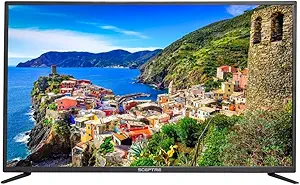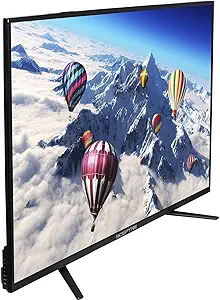







Unveiling the Best Entertainment Experience
As technology continues to advance, the television market has become a battlefield for brands aiming to provide consumers with the ultimate viewing experience. Two notable contenders in this arena are Vizio and Sceptre, both recognized for their commitment to innovation and delivering quality entertainment solutions. In this article, we will delve into the features, technologies, and overall offerings of Vizio and Sceptre TVs to help you navigate the path towards your next home entertainment centerpiece.
Display Technology:
Vizio and Sceptre employ different display technologies to cater to a diverse audience. Vizio, a pioneer in the field, often integrates advanced technologies such as LED and Quantum Dot for striking colors, sharp contrasts, and impressive brightness levels. Sceptre, known for its budget-friendly options, typically utilizes LED displays to balance visual quality with affordability. Consider your preferences for display technologies and your budget constraints when evaluating the options presented by each brand.
Resolution and Picture Quality:
Both Vizio and Sceptre offer a range of resolutions, from Full HD to 4K. Vizio's commitment to delivering an exceptional picture quality is evident in its use of Quantum Dot technology, ensuring vibrant and detailed visuals. Sceptre, focusing on affordability, provides respectable picture quality with its range of Full HD and 4K TVs. Assess your priorities for resolution and visual clarity to determine which brand aligns better with your expectations.
Smart Features:
In the age of smart technology, the inclusion of intelligent features has become a standard in modern TVs. Vizio utilizes the SmartCast platform, known for its user-friendly interface and compatibility with popular streaming services. Sceptre, too, provides smart features in select models, offering access to streaming apps and connectivity options. Evaluate the available smart features, app ecosystems, and ease of use to identify the brand that suits your streaming and connectivity needs.
Audio Performance:
While visual quality is paramount, audio performance plays a crucial role in delivering a holistic entertainment experience. Vizio often integrates advanced audio technologies, such as DTS Virtual:X and Dolby Atmos, ensuring an immersive sound quality. Sceptre, with its focus on budget-friendly options, provides TVs with satisfactory audio capabilities suitable for everyday viewing. Consider your audio preferences and whether you plan to invest in additional sound systems when assessing the audio capabilities of each brand.
Build and Design:
The physical appearance of a TV can significantly impact its integration into your living space. Vizio TVs are renowned for their sleek and modern designs, often featuring slim bezels and aesthetically pleasing builds. Sceptre, while emphasizing affordability, offers TVs with practical and versatile designs that appeal to a broad range of consumers. Evaluate the design elements, such as bezel size, stand design, and overall build quality, to choose a TV that seamlessly fits into your home environment.
Conclusion:
Choosing between Sceptre and VIZIO TVs involves considering your individual preferences, budget constraints, and the specific features that matter most to you. Vizio stands out for its commitment to cutting-edge technology and sleek designs, while Sceptre offers budget-friendly options without sacrificing overall quality. Assess the specific models within each brand, taking into account factors like display technology, resolution, smart features, audio quality, and design. Armed with this information, you can make an informed decision and select a TV that perfectly aligns with your entertainment preferences and budget.
Affordability
When evaluating affordability in the television space, Sceptre and VIZIO represent two distinctly different approaches to cost efficiency: bare-bones economy versus feature-dense value engineering. Sceptre operates as an ultra-budget brand that achieves rock-bottom pricing primarily by stripping away modern smart features, advanced image processing, and licensing overhead. By offering mostly "dumb" displays equipped with basic 60Hz edge-lit or direct-lit LED backlights and standard color gamut capabilities, Sceptre lowers manufacturing costs to the absolute minimum. In contrast, VIZIO designs displays that compete in the entry-level to mid-range tier, optimizing its supply chain and leveraging its SmartCast/WatchFree+ operating system to offset hardware costs through ad-supported ecosystem monetization. As a result, VIZIO commands a slight price premium over Sceptre, but its bill of materials includes essential modern visual technologies like full-array local dimming (FALD), Quantum Dot color enhancements, and broad HDR support (Dolby Vision and HDR10+).
The practical trade-offs between the two brands directly impact long-term ownership value. Sceptre offers unbeatable upfront savings, making it an ideal choice for utility installations, guest rooms, or consumers who prefer using their own external streaming devices like a Roku or Apple TV 4K. However, Sceptre's lower price point comes at the expense of contrast depth, peak brightness, and audio engineering, with built-in speakers that are notoriously tinny and panels that struggle significantly with glare and off-angle viewing. VIZIO delivers superior performance-per-dollar metrics, integrating proprietary IQ image processors that handle motion interpolation, spatial noise reduction, and low-latency gaming features like Variable Refresh Rate (VRR) and AMD FreeSync. While VIZIO's software occasionally faces firmware instability, the tangible upgrades in picture quality, viewing angles, and smart capabilities generally yield higher perceived value. Ultimately, Sceptre wins on pure, uncompromising initial price reduction, while VIZIO delivers far superior modern functionality for only a marginal increase in investment.
Picture Quality
Top-Rated Picture Quality Brands




Both Vizio and Sceptre offer a range of resolutions, from Full HD to 4K. Vizio's commitment to delivering an exceptional picture quality is evident in its use of Quantum Dot technology, ensuring vibrant and detailed visuals. Sceptre, focusing on affordability, provides respectable picture quality with its range of Full HD and 4K TVs. Assess your priorities for resolution and visual clarity to determine which brand aligns better with your expectations.
Brand Reputation
In the landscape of budget and mid-tier television manufacturing, Sceptre and VIZIO carry distinctly different brand reputations shaped by their engineering priorities and market positioning. Sceptre has long established itself as an uncompromising champion of the ultra-budget segment, earning a reputation for delivering functional, bare-bones display panels without modern lifestyle inflation. The brand's identity is anchored in utilitarian value—frequently omitting smart operating systems altogether to provide reliable, low-cost commercial and secondary displays. Conversely, VIZIO built its reputation over the last two decades as a disruptive pioneer that challenged legacy electronics giants by democratizing premium visual technologies. While Sceptre is perceived as a strictly transactional, cost-per-inch brand, VIZIO is recognized as an innovative, feature-forward competitor that bridges the gap between commodity hardware and high-performance home theater engineering.
When analyzing technical strengths and quality perception, the disparity between the two brands becomes even more pronounced. VIZIO has historically enjoyed critical acclaim for its proprietary hardware implementations, notably its early and aggressive adoption of Full Array Local Dimming (FALD), Quantum Dot color technology, and native high-refresh-rate gaming panels within its Quantum and OLED series. However, VIZIO's reputation has suffered occasional blows due to quality assurance inconsistencies, firmware instability, and a heavily ad-monetized SmartCast OS that frustrates tech-savvy users. Sceptre, by contrast, sidesteps complex software pitfalls by focusing on basic liquid crystal engineering. While Sceptre's panels typically offer inferior peak brightness, limited contrast ratios, and rudimentary audio engineering, the brand paradoxically suffers fewer consumer complaints regarding software crashes or ecosystem bloat because its hardware is fundamentally less complex.
Ultimately, the practical trade-offs regarding brand reputation define their respective consumer bases. Sceptre has cultivated a dependable, if modest, standing among consumers needing straightforward, no-nonsense monitors for dorm rooms, workshops, or signage—where expectations for dynamic HDR or long-term firmware updates are non-existent. VIZIO, despite navigating reputational turbulence regarding long-term reliability and invasive smart-platform tracking, commands significantly higher prestige among mainstream cinephiles and gamers looking for legitimate Dolby Vision playback and cutting-edge display standards without a four-figure price tag. For brand confidence rooted in modern picture engineering, VIZIO remains the industry benchmark in this pairing, while Sceptre holds a specialized reputation for sheer mechanical simplicity and rock-bottom affordability.
Smart Features
In the age of smart technology, the inclusion of intelligent features has become a standard in modern TVs. Vizio utilizes the SmartCast platform, known for its user-friendly interface and compatibility with popular streaming services. Sceptre, too, provides smart features in select models, offering access to streaming apps and connectivity options. Evaluate the available smart features, app ecosystems, and ease of use to identify the brand that suits your streaming and connectivity needs.