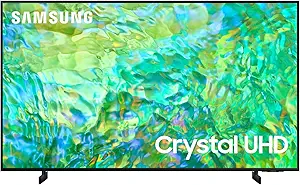
The television market is inundated with a plethora of brands, each vying for a spot in your living room. Two prominent contenders in this arena are Samsung and Vizio, both recognized for delivering high-quality visuals and innovative features. In this article, we'll delve into the strengths and weaknesses of Samsung and Vizio TVs, aiming to help you make an informed decision when choosing the perfect television for your home.
Affordability
When assessing the aspect of affordability, VIZIO and Samsung represent fundamentally different value architectures within the television market. VIZIO has historically built its brand identity around high-spec democratization, systematically undercutting Tier-1 manufacturers by engineering panels that prioritize headline performance metrics at aggressive price-to-performance ratios. Where an entry-to-mid-tier consumer might only afford a standard 60Hz edge-lit LED from Samsung, the equivalent financial investment in VIZIO’s M-Series or Quantum lines often yields high-end hardware integrations such as full-array local dimming (FALD), Quantum Dot color volume, and HDMI 2.1 variable refresh rate capabilities. VIZIO achieves this aggressive pricing structure through lean manufacturing, lower marketing overhead, and heavily subsidizing initial retail costs via its ad-supported SmartCast operating environment, making it an exceptionally compelling budget champion for cost-conscious cinephiles and gamers.
Samsung, conversely, commands an inherent "brand premium" that recalibrates its definition of affordability from strictly low initial purchase price to broader long-term reliability and system cohesion. Samsung's entry-level models (such as the Crystal UHD series) generally carry higher MSRPs than technically superior VIZIO alternatives, often compromising on panel backlighting technology and peak brightness at similar price tiers. However, the engineering trade-offs explain this margin: Samsung consistently outperforms VIZIO in video processing, upscale latency, gray-uniformity quality control, and physical chassis durability. Consumers investing in Samsung’s ecosystem are also paying for superior, lower-friction software experiences via Tizen OS, broader smart home integrations, and substantially lower defect-to-return rates, counterbalancing VIZIO’s paper-spec superiority with lower risk of post-purchase hardware anomalies or sluggish UI performance.
Ultimately, the practical trade-off between the two brands hinges on immediate feature density versus long-term build consistency. VIZIO is the indisputable frontrunner in sheer, front-loaded affordability, delivering contrast ratios, dynamic HDR performance, and dedicated gaming enhancements that punch several price brackets above their class. Samsung’s value proposition is less about price disruption and more about overall product maturity; while you will pay more per nit of brightness and per dimming zone, the investment amortizes over time through higher manufacturing tolerances, superior post-calibration image fidelity, and dependable consumer support. For pure hardware-per-dollar optimization, VIZIO reigns supreme, while Samsung provides a more refined, predictable investment for those willing to accept a modest premium.
Picture Quality
Top-Rated Picture Quality Brands




One of the primary considerations when purchasing a TV is picture quality. Samsung is renowned for its cutting-edge QLED (Quantum Dot LED) technology, which enhances color accuracy and brightness. QLED displays also offer better viewing angles and are known for their impressive HDR (High Dynamic Range) performance.
On the other hand, Vizio has gained recognition for its affordable yet commendable picture quality. Many Vizio models feature LED panels with local dimming technology, providing deep blacks and improved contrast. While not on par with Samsung's QLED, Vizio's offerings present a compelling option for budget-conscious consumers.
Brand Reputation
In the television industry, Samsung has long maintained a tier-one reputation as the global market-share leader, known for driving display innovation and commanding premium retail real estate. The South Korean tech giant is recognized for exceptional industrial design, cutting-edge panel technology—such as Neo QLED and QD-OLED—and high-performance proprietary processors like the Neural Quantum processor. This pedigree establishes Samsung as a safe, high-end choice among consumers who value consistent build quality, advanced gaming features (such as 4K at 144Hz support and dedicated gaming hubs), and robust smart home integration through its SmartThings ecosystem. However, Samsung's pursuit of proprietary standards—most notably its stubborn refusal to support Dolby Vision in favor of its own open-source HDR10+ format—and an increasingly ad-heavy Tizen OS interface have drawn minor criticism from home theater purists and tech enthusiasts.
Conversely, VIZIO has carved out its brand identity as a disruptive value champion, fundamentally built on the promise of bringing high-end display specifications down to budget-conscious price points. Historically, VIZIO earned widespread consumer goodwill by democratizing advanced visual technologies, offering full-array local dimming and broad HDR format support (including Dolby Vision) at a fraction of the cost of legacy brands. In terms of technical strengths, VIZIO’s mid-tier and flagship models often provide competitive contrast ratios and deep black levels for home theater setups. Nevertheless, VIZIO’s reputation has been periodically undermined by persistent software instability, a noticeably sluggish SmartCast (now VIZIO Home) operating system, and historical consumer privacy controversies regarding automated content recognition. While recent iterations have stabilized, the brand is still perceived primarily as a pragmatic, cost-per-feature choice rather than a prestige display manufacturer.
When weighing brand reputation between the two, consumers are balancing Samsung's track record of premium hardware engineering and global reliability against VIZIO's aggressive price-to-performance ratio. Samsung undeniably commands greater trust in quality control, hardware longevity, and post-purchase customer service, which justifies its price premium for buyers seeking a long-term living room centerpiece. VIZIO remains an attractive alternative for price-sensitive buyers looking to maximize raw panel performance per dollar, but it requires accepting trade-offs in software fluidity, lower-tier model finish quality, and a brand cachet that still sits firmly in the budget-to-midrange territory.
Smart Features
Both Samsung and Vizio offer smart TV functionalities, providing access to popular streaming services and apps. Samsung's Tizen operating system powers its smart TVs, offering a user-friendly interface, voice control, and a vast app store. The inclusion of features like Samsung's Ambient Mode, which turns the TV into a piece of artwork when not in use, adds an extra layer of sophistication.
Vizio, on the other hand, utilizes the SmartCast platform, which also supports popular streaming services. While not as feature-rich as Samsung's Tizen, SmartCast is intuitive and provides a seamless streaming experience. Additionally, Vizio often integrates Google Chromecast for easy casting from mobile devices.
Conclusion
In the Samsung vs. Vizio TV battle, the choice ultimately boils down to your priorities and budget. If you seek top-notch picture quality, sleek designs, and are willing to invest a bit more, Samsung might be the ideal choice. On the other hand, if you prioritize affordability without compromising too much on quality, Vizio offers a compelling range of options. Before making a decision, consider your specific needs, the features that matter most to you, and your budget constraints. Whichever brand you choose, both Samsung and Vizio continue to innovate and push the boundaries of what is possible in the world of television technology.