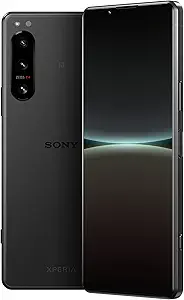
Sony vs TCL: Overview
Comparing Sony and TCL helps you determine which brand is best suited for your needs in Smartphones. Both brands offer strong choices depending on your budget and key feature requirements.
Key Features & Comparison
Evaluate factors such as build quality, warranty, customer satisfaction, and total value before making your final purchase choice between Sony and TCL.
Affordability
When evaluating affordability, Sony and TCL represent polar extremes of smartphone market positioning and pricing philosophy. TCL operates with a cost-efficiency mandate, focusing aggressively on the sub-$150 to $350 budget and entry-level tiers with its numbered series and NXTPAPER devices. By leveraging its parent company’s display manufacturing infrastructure (CSOT), TCL is able to deliver surprisingly competent hardware—such as high-refresh-rate panels and paper-like, eye-care display tech—at prices that maximize accessibility for budget-conscious buyers. Conversely, Sony treats the smartphone market as a boutique, prosumer showcase. Its Xperia lineup rarely dips below upper-mid-range pricing; even the base Xperia 10 series typically launches at a price point well above TCL’s flagship offerings, while the flagship Xperia 1 models command steep premiums often exceeding $1,300, rendering Sony virtually irrelevant in conventional affordability discussions.
The technical engineering and feature sets reflect this stark price divergence. Sony builds uncompromising, low-volume devices engineered for audio and imaging purists, packing in advanced variable telephoto optics derived from its Alpha camera division, uncompressed 3.5mm headphone jacks with dedicated DACs, and micro-SD expansion housed in an IP65/IP68-rated metal-and-glass chassis. These specialized components inflate production costs, appealing primarily to a niche demographic willing to pay for precision. In contrast, TCL employs calculated trade-offs to protect consumer margins. It relies on cost-effective polycarbonate construction, entry-to-mid-tier MediaTek or Qualcomm chipsets, and basic secondary camera sensors, while funneling resources into high-visibility areas like battery longevity and display enhancements (via its proprietary NXTVISION engine). The result is a device that covers everyday essentials remarkably well without burdening the buyer with the research-and-development overhead of niche professional-grade features.
Ultimately, the practical trade-offs regarding affordability hinge on the buyer's tolerance for compromise. TCL is the clear, uncontested victor in sheer price-to-performance and upfront economy, providing usable everyday software, reliable modern connectivity, and distinct display innovations for a fraction of the cost of tier-one flagships. However, buyers must accept shorter software support lifecycles, modest gaming performance, and average low-light photography. Sony delivers long-term physical durability, cutting-edge creative control, and top-tier industrial design, but its pricing structure remains prohibitively expensive for mainstream consumers. For anyone prioritizing cost efficiency, low financial barrier to entry, and maximal functional return per dollar spent, TCL decisively outclasses Sony.
Quality/Durability
From an engineering and materials standpoint, Sony and TCL represent opposite ends of the smartphone spectrum, directly influencing their long-term structural integrity. Sony treats its Xperia line as high-precision instruments, incorporating aerospace-grade aluminum frames, tactile textured glass, and the latest iterations of Corning Gorilla Glass Victus across both front and rear panels. The Japanese manufacturer maintains rigorous fabrication tolerances, resulting in zero chassis flex and exceptional torsional rigidity. Conversely, TCL operates primarily within the budget-to-midrange market, where cost optimization dictates the bill of materials. While TCL handsets—such as their NXTPAPER and standard numerical series—feature solid assembly for their price bracket, they rely predominantly on polycarbonate unibodies or plastic composite mid-frames paired with older Gorilla Glass or proprietary tempered alternatives. While TCL’s textured matte finishes and NXTPAPER display coatings effectively resist superficial micro-scratches and fingerprint smudges, they lack the dense, structural resilience and drop-impact absorption engineered into Sony's hardware.
Environmental resistance and component-level sealing further widen the durability gap between the two brands. Sony has long been an industry benchmark for environmental protection, routinely certifying its flagship and upper-midrange devices with simultaneous IP65 (water jet resistance) and IP68 (continuous immersion) ratings. This advanced dual-barrier sealing extends to vulnerable interfaces, including the legacy 3.5mm audio jack and the tool-less SIM tray, ensuring that internal components remain impervious to fine particulates and accidental submersions. In contrast, TCL frequently omits official Ingress Protection (IP) ratings to keep retail costs competitive, or at best offers basic splash resistance equivalent to IP52 on select mid-tier models. Consequently, TCL smartphones are significantly more vulnerable to moisture damage, humidity penetration, and dust accumulation over time, requiring users to exercise greater environmental caution during daily operation.
Regarding long-term component wear and practical durability trade-offs, Sony delivers a vastly superior hardware lifecycle, albeit at an exponentially higher price tier. Sony’s internal thermal architecture—modernized with expansive vapor chambers and passive heat dissipation—helps preserve battery health and protects internal chipsets from sustained thermal degradation over three to five years of intense use. TCL devices provide commendable utilitarian build quality for the sub-$300 segment, proving remarkably resilient against the typical scuffs of plastic-bodied phones, but they exhibit faster aesthetic wear, looser port tolerances, and thermal throttling under sustained loads that can accelerate internal component aging. Ultimately, Sony provides peerless, flagship-tier industrial durability designed to survive demanding conditions over multiple years, whereas TCL delivers practical, cost-effective resilience that necessitates supplementary protective cases and moderate handling to achieve longevity.
Performance
When evaluating performance, Sony and TCL target drastically different segments of the smartphone spectrum, resulting in a distinct divide in processing capability and hardware architecture. Sony positions its Xperia lineup—most notably the Xperia 1 and Xperia 5 series—as elite creator-grade workhorses powered by Qualcomm’s top-tier Snapdragon 8-series platforms. Paired with high-bandwidth LPDDR5X RAM and ultra-fast UFS 4.0 storage, Sony devices effortlessly handle heavy compute tasks, including 4K 120fps video recording, real-time autofocus tracking, and graphically demanding AAA mobile gaming. In contrast, TCL operates almost exclusively in the budget and mid-tier markets with its 40 and 50 series, outfitting devices with modest MediaTek Dimensity, Helio, or lower-tier Snapdragon 4/6-series chipsets. While TCL's hardware is well-tuned for standard web browsing, social media feeds, and media playback, it relies on slower eMMC 5.1 or mid-tier UFS flash memory and constrained RAM, which exposes tangible latency during aggressive multitasking and intensive application switching.
Thermal engineering and sustained compute throughput further differentiate the two manufacturers. Sony has invested heavily in re-engineering its thermal dissipation systems in recent generations, incorporating larger vapor chambers and thermal graphite sheets to mitigate the aggressive throttling that impacted earlier flagships. This high-performance thermal envelope allows Sony's custom image signal processors and CPU cores to sustain prolonged burst shooting and high-framerate output. TCL, conversely, prioritizes power conservation and display optimization over raw compute power. By leveraging lower-TDP processors that inherently produce less heat, TCL devices run cool under ordinary workloads, but they quickly encounter silicon bottlenecks when pushed past basic tasks. TCL integrates proprietary NXTVISION display processors to offload visual upscaling and color tuning, which helps compensate for modest GPU power during video playback, but it cannot bridge the performance gap in heavy compute scenarios.
From a practical and software-optimization standpoint, Sony offers an enthusiast-centric performance environment anchored by a clean, near-stock Android build and specialized utilities like "Game Enhancer," which features bypass charging to reduce heat during plugged-in gaming sessions. This design preserves long-term hardware longevity and provides substantial headroom for multi-year OS updates. TCL’s implementation of its custom TCL UI provides a serviceable everyday experience, yet it occasionally exhibits UI micro-stutters and dropped frames when background processes pile up. Ultimately, Sony provides uncompromised, future-proof flagship performance tailored for power users, mobile gamers, and multimedia creators willing to pay a premium, whereas TCL delivers pragmatically measured, entry-level performance engineered strictly to satisfy everyday essentials at an accessible price point.
Camera Quality
When evaluating smartphone camera systems, Sony and TCL inhabit fundamentally different tiers of optical engineering, catering to diametrically opposed consumer expectations. Sony approaches mobile photography with hardware-centric heritage derived from its prestigious Alpha mirrorless camera division. Flagship Xperia models integrate proprietary Exmor T stacked CMOS sensors, Zeiss T* anti-reflective coatings, and groundbreaking continuous optical zoom mechanisms that span variable physical focal lengths without digital degradation. In contrast, TCL operates almost exclusively within the budget to lower-mid-range market segments. TCL devices generally feature off-the-shelf, cost-effective sensors (often sourced from OmniVision or lower-tier Samsung ISOCELL lines) that prioritize high megapixel marketing counts—such as 50MP or 108MP—via pixel-binning, but pair them with plastic lens arrays and low-utility auxiliary modules like 2MP macro and depth sensors.
The divergence in software philosophy and image processing further underscores this performance divide. Sony deliberately shuns the aggressive, hyper-saturated computational processing typical of modern smartphones, opting instead for organic color science, natural skin tones, and subtle dynamic range preservation. Through its dedicated Photography Pro and Videography Pro interfaces, Sony grants users granular, DSLR-style manual controls, Real-Time Eye AF, and rapid burst shooting up to 30 frames per second with full autofocus tracking. TCL, conversely, relies on rudimentary automated algorithms and basic multi-frame processing designed strictly for point-and-shoot simplicity. While TCL's NXTVISION visual engine effectively boosts real-time contrast and color saturation on the device’s display, the raw image capture frequently suffers from shutter lag, over-sharpened edge halos, crushed shadows, and muddy details in medium-to-low ambient light.
Ultimately, the practical trade-offs come down to creative control and budgetary constraints. Sony delivers an uncompromising, enthusiast-grade camera array with unmatched manual depth, continuous telephoto capability, and pristine 4K 120fps video recording, though it demands both photographic competence and a steep premium price to unlock its full potential. TCL provides adequate, social-media-ready snapshots in bright daylight at a fraction of the cost, making it acceptable for utilitarian documentation, but it lacks the sensor size, optical stabilization, and algorithmic sophistication required to compete with Sony’s prosumer-grade imaging prowess.