







Realme vs Samsung: Overview
Comparing Realme and Samsung helps you determine which brand is best suited for your needs in Smartphones. Both brands offer strong choices depending on your budget and key feature requirements.
Key Features & Comparison
Evaluate factors such as build quality, warranty, customer satisfaction, and total value before making your final purchase choice between Realme and Samsung.
Affordability
When analyzing the cost-to-specification ratio, Realme aggressively outmaneuvers Samsung, particularly in the entry-level to upper-midrange segments. Operating under BBK Electronics, Realme leverages shared supply-chain infrastructure and lean profit margins to pack flagship-adjacent hardware into highly accessible price brackets. Consumers shopping the Realme C-series or Number-series frequently encounter high-refresh-rate AMOLED panels, rapid fast-charging capabilities up to 67W or even 240W, and capable mid-tier silicon at price points where Samsung still relies on conservative 25W charging, slower processors, and occasionally inferior plastic chassis. For budget-conscious buyers seeking maximum raw hardware output per dollar spent, Realme presents an almost unbeatable initial value proposition.
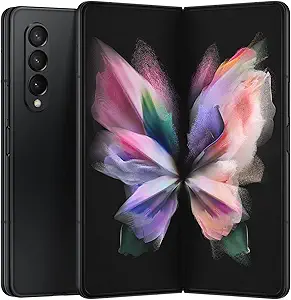
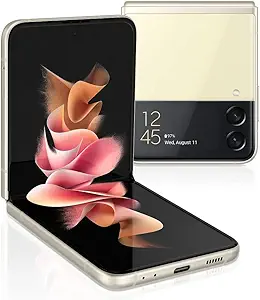
Samsung, conversely, operates with a brand premium that stretches across its vast portfolio, from the entry-level Galaxy A-series to the ultra-premium Galaxy S and Z foldables. While Samsung struggles to match Realme's sheer hardware density at sub-$400 price tags, its pricing strategy accounts for less tangible, long-term economic factors. Samsung's mid-range and premium devices often command higher residual trade-in values and come bundled with industry-leading software support promises—up to seven years of major OS updates on flagship tiers compared to Realme's typical two to three years. Thus, while Realme wins on immediate upfront affordability, Samsung offers competitive total cost of ownership over a multi-year horizon.
Quality/Durability
Samsung holds a decisive advantage in engineering precision, structural durability, and environmental protection. Having refined its manufacturing processes over decades, Samsung integrates top-tier materials across its lineup, including bespoke Armor Aluminum frames and the latest Corning Gorilla Glass Victus 2 or Armor coatings. A cornerstone of Samsung's durability engineering is ingress protection; full IP68 water and dust resistance is standard on all Galaxy S models and has permeated deep into the mid-tier Galaxy A series (e.g., A35 and A54). This structural resilience ensures that Samsung devices are far better equipped to withstand accidental submersions, drop impacts, and prolonged environmental wear.
Realme has made notable strides in structural integrity, but concessions are frequently made to maintain disruptive pricing. Most Realme devices feature polycarbonate sub-frames and composite plastic rear panels disguised by ornate finishes, which are more susceptible to torsion flex and micro-scratching over time. While Realme often includes basic splash resistance (IP54 or IP65 ratings), comprehensive submersion protection is exceptionally rare in its catalog. Nevertheless, Realme achieves commendable build quality with tight tolerances, responsive tactile buttons, and dependable drop-shock absorption, though it remains a tier below the industrial-grade, hermetically sealed craftsmanship championed by Samsung.
Performance
In sustained throughput and day-to-day responsiveness, the two brands approach performance through distinct philosophies. Realme prioritizes raw processing speed and thermal overhead for intense tasks like mobile gaming, often integrating upper-tier MediaTek Dimensity or Qualcomm Snapdragon 8-series chipsets into mid-tier chassis alongside oversized vapor cooling chambers. This hardware-first approach is paired with Realme UI, a platform engineered for rapid animation speeds, high touch-sampling rates, and aggressive background app management. For users focused on gaming frame stability, instant app loading, and rapid battery top-ups via proprietary SuperVOOC charging, Realme offers blistering, unthrottled burst performance.
Samsung balances silicon horsepower with a deeply integrated, feature-dense software ecosystem. While Samsung utilizes top-tier silicon—such as customized "Snapdragon for Galaxy" processors and high-end Exynos variants—its performance profile is intrinsically linked to One UI. This interface is heavier than Realme UI, taxing system RAM to deliver complex multitasking capabilities like Samsung DeX, Knox security encryption, and sophisticated system-wide automation. While an entry-to-midrange Samsung may exhibit occasional micro-stutters compared to a fluidly tuned Realme, Samsung flagships provide superior sustained compute performance, desktop-class peripheral expansion, and consistent performance stability across enterprise workflows.
Camera Quality
In mobile photography, Samsung represents an industry benchmark, defined by sophisticated optical hardware and mature computational photography pipelines. Samsung's optical engineering shines through its proprietary ISOCELL sensors (reaching up to 200MP) paired with specialized periscope telephoto arrays that deliver exceptional 3x, 5x, and 10x optical zoom capabilities. Beyond raw sensor metrics, Samsung's computational imaging algorithms excel in dynamic range management, accurate skin-tone reproduction, and multi-frame HDR synthesis under challenging backlight. Furthermore, Samsung remains the premier Android platform for videography, offering superior optical image stabilization (OIS), seamless lens-switching during 4K60 recording, and robust Pro video controls.
Realme takes a more selective, focal-length-dependent approach to imaging that yields strong primary-sensor results but reveals trade-offs elsewhere. Realme frequently equips its devices with high-performing primary sensors from Sony (such as the IMX890), delivering vibrant, contrast-rich, and socially shareable daytime images that rival flagships in clarity and saturation. However, secondary and tertiary optics—such as ultra-wide and macro lenses—are frequently low-resolution cost-cutting measures that exhibit noticeable color disparity and soft edge sharpness. While Realme's computational night modes and street photography filters are surprisingly competent, it cannot match Samsung's optical consistency across multiple focal lengths, high-magnification telephoto fidelity, or professional-grade video stabilization.