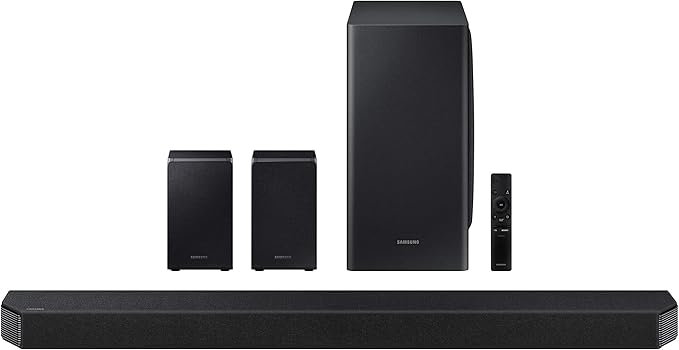
Samsung vs Logitech: Overview
Comparing Samsung and Logitech helps you determine which brand is best suited for your needs in Home Theaters. Both brands offer strong choices depending on your budget and key feature requirements.
Key Features & Comparison
Evaluate factors such as build quality, warranty, customer satisfaction, and total value before making your final purchase choice between Samsung and Logitech.
Features
From a feature and technological capability standpoint, Samsung operates on the leading edge of modern home cinema engineering. Samsung systems frequently incorporate object-based spatial audio decoding, offering native support for Dolby Atmos and DTS:X alongside proprietary innovations like Q-Symphony, which synchronizes soundbar drivers with compatible Samsung television speakers. Wireless capabilities abound in Samsung's ecosystem, featuring eARC transmission, Wi-Fi multiroom audio, Apple AirPlay 2, Spotify Connect, and Bluetooth audio streaming. Furthermore, Samsung embeds sophisticated room-calibration algorithms, such as SpaceFit Sound, which analyze room acoustics via built-in microphones to automatically equalize driver output based on physical boundaries and furnishings.
Logitech, by comparison, adopts a utilitarian, legacy-focused approach that heavily emphasizes versatile physical inputs rather than smart wireless connectivity. Signature units like the Logitech Z906 feature standard optical Toslink, digital coaxial, and multi-channel 3.5mm analog inputs, making them exceptional for connecting multiple gaming consoles, PCs, and older playback sources simultaneously. However, Logitech systems generally lack modern digital features such as HDMI eARC, Dolby Atmos, Wi-Fi networking, and automated acoustic calibration. While Logitech provides on-the-fly hardware matrixing to simulate surround sound from stereo sources, it cannot match Samsung's advanced digital signal processing (DSP), voice enhancement technologies, and wireless conveniences.
Performance
Acoustic performance highlights the divergence in driver engineering and acoustic voicing between these manufacturers. Samsung home theater systems are voiced to deliver a balanced, reference-like soundstage suitable for nuanced cinematic dialogue and complex musical arrangements. High frequencies are handled by wide-dispersion tweeters that prevent narrow sweet spots, while dedicated center channels ensure vocal clarity remains intelligible even during explosive audio mixes. Up-firing and side-firing drivers create convincing acoustic reflections off walls and ceilings, delivering a dynamic, three-dimensional hemisphere of sound. Subwoofer integration in higher-tier Samsung models is tight, transient-responsive, and tuned to avoid frequency bloat.
Logitech systems prioritize high output, immediate dynamic impact, and visceral low-frequency energy. Built with rugged, long-throw subwoofers and compact satellite drivers, Logitech systems excel at producing ground-shaking bass and impressive loudness without immediate distortion, often carrying THX certification on flagship offerings. However, this power comes at the cost of audiophile refinement. The satellite speakers often possess a mid-range scoop, leading to slightly thin vocals that must be compensated for by aggressive subwoofer crossover points. While Logitech is immensely satisfying for action movies, explosive gaming, and bass-heavy tracks in small-to-medium rooms, Samsung delivers a more cohesive, articulate, and spatially accurate soundstage across a wider dynamic range.
Design
The industrial design of both brands directly mirrors their intended environments and user demographics. Samsung emphasizes sleek, contemporary aesthetics crafted to complement ultra-thin flat-panel televisions and modern interior decor. Their soundbars, subwoofers, and rear satellites feature low-profile silhouettes, minimalist geometric lines, acoustic mesh fabrics, and premium metal grilles. Samsung also engineers products with living-space ergonomics in mind, emphasizing wireless linkups between components to virtually eliminate cable clutter. Wall-mounting solutions, concealed cable management channels, and intuitive LED status readouts integrated discreetly behind grilles reinforce a tidy, luxury-oriented presentation.
Logitech embraces a pragmatic, utilitarian aesthetic rooted in PC gaming and multimedia hardware conventions. Logitech satellites and console control modules are largely constructed from dense, matte black plastics with exposed driver grilles and prominent status LEDs that fit naturally on a computer desk, media console, or workstation. Cable management is a much larger practical consideration with Logitech, as traditional setups require running extensive lengths of analog speaker wire from the central powered subwoofer to each individual satellite speaker. While Logitech’s rugged hardware is durable, easily mountable, and physically resilient, it lacks the sophisticated living-room elegance and cable-free visual refinement characteristic of Samsung's modern home theater systems.
Compare current retail pricing, active promotions, and verified stock availability directly from authorized stores:
Compare current retail pricing, active promotions, and verified stock availability directly from authorized stores: