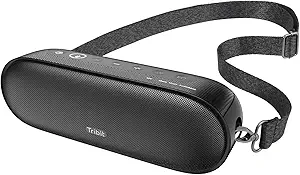
Sony vs Tribit: Overview
Comparing Sony and Tribit helps you determine which brand is best suited for your needs in Boomboxes. Both brands offer strong choices depending on your budget and key feature requirements.
Key Features & Comparison
Evaluate factors such as build quality, warranty, customer satisfaction, and total value before making your final purchase choice between Sony and Tribit.
Features
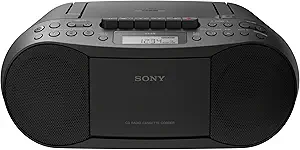
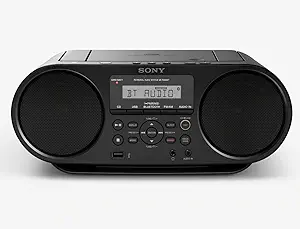
Feature-wise, Sony offers an expansive, tech-heavy suite designed for entertainment versatility and social gatherings. Sony's boomboxes frequently incorporate proprietary LDAC codec support, enabling high-resolution wireless streaming that outclasses standard Bluetooth limitations. Furthermore, Sony provides granular audio customization and lighting configurations through the Sony | Music Center and Fiestable applications. Hardware integration is also a major selling point, with many models boasting microphone/guitar inputs, built-in party lighting, integrated carrying handles, and multi-unit synchronization via Party Connect, making them versatile all-in-one entertainment hubs for musicians and party hosts alike.
Tribit adopts a more focused, practical feature philosophy centered on outdoor resilience and extended playtime. While lacking advanced companion app party games and specialized guitar inputs, Tribit boomboxes compensate with class-leading power bank capabilities to charge external mobile devices via USB-C, alongside cutting-edge Bluetooth 5.3 chips for reliable long-range tethering. Tribit's equalization is typically managed via intuitive onboard hardware buttons, such as their proprietary XBass boost mode, alongside an increasingly capable mobile app for custom EQ profiles. Sony indisputably wins on professional utility and entertainment extras, but Tribit's streamlined, high-utility feature set covers every essential base for standard consumer listening.
Performance
In terms of acoustic performance, Sony relies on advanced driver architecture—often utilizing non-circular 'X-Balanced' speaker units—to enhance sound pressure and minimize harmonic distortion at high volumes. Sony's sound profile is distinctly engineered with rich, deep sub-bass frequencies and an expansive dynamic range, ensuring that even complex arrangements retain separation between midrange vocals and low-end resonance. The inclusion of the LDAC codec allows Sony units to render higher fidelity from compatible source devices, offering audiophile-grade detail that remains cohesive even when driven near maximum output thresholds.
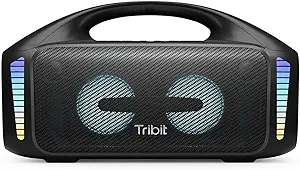
Tribit counters with an astonishing acoustic punch engineered around raw efficiency and outdoor projection. Leveraging large passive radiators alongside robust neodymium drivers, Tribit boomboxes like the StormBox Blast generate visceral, room-shaking low-end that punches well above their weight class and price tier. While Tribit's high-frequency extension lacks the subtle airiness and nuanced micro-detail found in Sony’s top-tier processing, their DSP successfully avoids harsh treble clipping at top volumes. Sony provides superior acoustic balance and vocal transparency, but Tribit delivers phenomenal energy and bass displacement that leaves most listeners thrilled with its raw acoustic drive.
Design
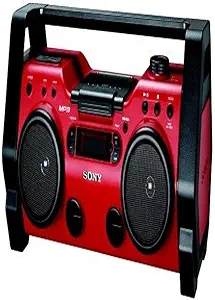
Sony’s industrial design favors a modern, sleek aesthetic that blends nightclub energy with contemporary living room styling. Their boomboxes often feature textured matte plastics, recessed ambient LED illumination bands, and smoothly integrated grab-handles that accentuate an upscale profile. However, this design philosophy usually results in a larger footprint and substantial weight, prioritizing stationary placement on a patio or living room floor over true off-grid portability. Weatherproofing across Sony’s larger boombox portfolio generally hovers around splash-proof IPX4 ratings, signaling that they are protected against light rain or poolside splashes, but not built for harsh wilderness abuse.
Tribit embraces a distinctly rugged, utilitarian aesthetic engineered specifically for active outdoor transport. Featuring heavy-duty molded handles, robust corner bumpers, and industrial-style speaker grilles, Tribit chassis are built to take drops and scrapes without catastrophic failure. Crucially, Tribit frequently secures IPX7 or IP67 waterproof ratings across its boombox line, meaning the units can withstand complete submersion in water and resist fine dust or sand. While Sony crafts a more refined, aesthetically versatile piece of equipment for home and party settings, Tribit delivers superior structural resilience and outdoor survivability.
Compare current retail pricing, active promotions, and verified stock availability directly from authorized stores: