Sony vs TOSHIBA: Overview
Comparing Sony and TOSHIBA helps you determine which brand is best suited for your needs in Boomboxes. Both brands offer strong choices depending on your budget and key feature requirements.
Key Features & Comparison
Evaluate factors such as build quality, warranty, customer satisfaction, and total value before making your final purchase choice between Sony and TOSHIBA.
Features
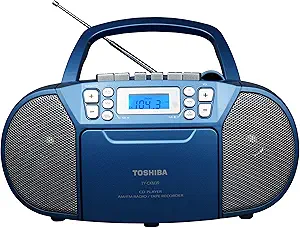
In terms of feature sets, Toshiba frequently outpaces Sony in retro versatility and legacy media handling. Many of Toshiba’s popular boomboxes, such as those in their TY series, cater heavily to cassette enthusiasts by offering dual-cassette decks with high-speed dubbing, auto-stop mechanisms, and dedicated microphone inputs for public address or karaoke functionality. Additionally, Toshiba routinely includes analog-to-digital recording capabilities, SD card slots, and USB ports across a wider portion of their lineup, allowing users to digitize vintage tapes or spin MP3 tracks easily without requiring an auxiliary source device.
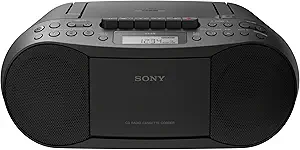
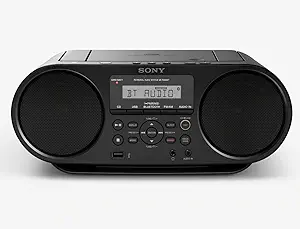
Sony takes a more curated, modernization-focused route with its feature implementation. While Sony still offers staple options like CD players, AM/FM tuners, and legacy cassette decks on select portable models, their engineering shines primarily in modern wireless integration and playback stability. Sony prioritizes superior Bluetooth implementations, incorporating codecs like LDAC in high-tier models for high-resolution wireless streaming, alongside intuitive digital presets, robust sleep-timer functions, and synchronized LED party lighting systems on larger models. Where Toshiba throws in every conceivable physical format jack, Sony refines fewer features to an industrial-grade standard, ensuring seamless device pairing and stable data reading.
Performance
Acoustic performance is an area where Sony demonstrates clear technical superiority over Toshiba. Leveraging proprietary technologies like Mega Bass and sophisticated Digital Sound Enhancement Engines (DSEE), Sony boomboxes produce an expansive soundstage with articulate mids, crisp highs, and deep, controlled low-end frequencies that do not disintegrate into harmonic distortion at high gain. Whether dealing with a compact CD player or a high-output portable party speaker, Sony’s cabinet tuning and passive radiator placement minimize chassis rattle and optimize bass reflection, producing a full-bodied signature suitable for critical listening.
Toshiba delivers dependable, everyday sound quality that punches respectably within its price bracket, but it lacks the sophisticated digital equalization found in Sony's offerings. While Toshiba units often feature dynamic bass boost switches and standard multi-band graphic equalizers, their frequency separation tends to be flatter, with low-end output tapering off rapidly at elevated volumes. Toshiba units perform admirably for spoken-word audio, talk radio, and casual background music playback, but audiophiles will notice higher total harmonic distortion (THD) and a more mid-forward, boxy tonal quality when pushing the hardware to its amplification ceiling.
Design
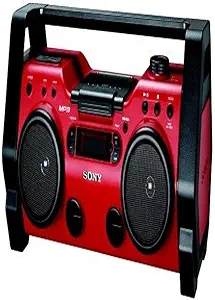
Sony’s industrial design philosophy champions minimalism, ergonomic handling, and rugged structural integrity. Sony boomboxes typically exhibit seamless, rounded contours constructed from high-grade, impact-resistant ABS plastics designed to withstand the wear and tear of continuous transit. The tactile feedback on Sony devices is distinctly premium, featuring smooth, well-dampened buttons, securely seated disc trays, and integrated carry handles engineered for balanced weight distribution. Their aesthetic leans modern and understated, ensuring that the hardware fits just as naturally on an executive desk as it does on an outdoor picnic bench.
Toshiba embraces a retro-utilitarian aesthetic that evokes the classic boombox era of the 1980s and 1990s, characterized by angular profiles, prominent chrome accents, and physical tactile toggles. While visually nostalgic and highly functional, the materials used by Toshiba often feel lighter and more plasticky in hand compared to Sony's denser unibody designs. Cassette door hinges and slider switches on Toshiba models require a gentler touch over prolonged use, but their expansive front panels—frequently adorned with VU meters, LCD screens, and prominent physical dials—offer a delightfully hands-on, mechanical operation that purists often find deeply rewarding.