Aiwa vs Tribit: Overview
Comparing Aiwa and Tribit helps you determine which brand is best suited for your needs in Boomboxes. Both brands offer strong choices depending on your budget and key feature requirements.
Key Features & Comparison
Evaluate factors such as build quality, warranty, customer satisfaction, and total value before making your final purchase choice between Aiwa and Tribit.
Features
From a feature-set perspective, Aiwa takes a traditionalist approach centered around acoustic customization and playback versatility. Typical Aiwa boombox offerings include robust onboard equalization controls, allowing users to tailor specific frequency bands directly on the chassis rather than relying strictly on smartphone software. Additionally, Aiwa often integrates analog connectivity like 3.5mm auxiliary inputs, dedicated line-ins, and sometimes USB playback or charging pass-through, serving users with diverse source devices. However, Aiwa tends to eschew mobile companion apps and modern light shows, keeping their feature set strictly dedicated to signal purity and core audio reproduction.
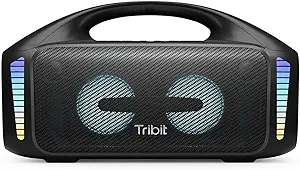
Tribit, on the other hand, embraces contemporary smart features and experiential extras that appeal heavily to younger, party-oriented audiences. Their boomboxes frequently feature customizable RGB LED lighting arrays that sync dynamically to the beat of the music, multi-point Bluetooth pairing, and integration with the proprietary Tribit mobile app for deep firmware and EQ customization. Tribit also leads significantly in environmental sealing, providing comprehensive IPX7 or IP67 waterproofing that allows units to survive rainstorms and poolside drops. Furthermore, Tribit’s signature XBass technology and heavy-duty power-bank capabilities provide tangible utility that matches modern, off-grid mobile lifestyles far better than Aiwa’s conservative feature profile.
Performance
In terms of raw acoustic performance, Aiwa stands as a formidable benchmark for clarity, instrument separation, and tonal balance. Rather than utilizing aggressive dynamic compression to artificial extremes, Aiwa designs its acoustic chambers with dedicated tweeters, robust neodymium magnet mid-range drivers, and tuned passive or active bass radiators driven by high-current bi-amplification. The result is an articulate soundstage where midrange vocals and upper-register strings maintain spatial presence even when the volume is pushed to substantial decibel levels. Low frequencies from an Aiwa unit are tight, musical, and accurate, appealing heavily to listeners of rock, jazz, and intricate electronic music where bass bloat ruins the listening experience.
Tribit approaches audio performance with an emphasis on sheer energetic impact, punchy low-end extension, and acoustic projection over wide outdoor spaces. Utilizing advanced proprietary DSP and their dedicated XBass algorithmic tuning, Tribit boomboxes generate astonishingly deep sub-bass frequencies for their enclosure size, making them absolute leaders in hip-hop, EDM, and modern pop reproduction. While Tribit units can occasionally exhibit minor high-frequency compression and slightly recessed mid-tones at maximum volume output, their ability to deliver powerful, club-like sound outdoors without distortion is engineered with remarkable technical precision, often besting Aiwa in perceived bass quantity and direct crowd engagement.
Design
The industrial design of Aiwa boomboxes reflects a retro-industrial, functional aesthetic that prioritizes acoustic resonance and physical serviceability. Constructed with thick, rigid enclosures designed to eliminate unwanted internal cabinet vibrations, Aiwa units look and feel like professional studio equipment scaled down for transport. They often feature prominent metal grilles, tactile analog-style knobs, and accessible battery compartments that allow users to swap battery packs to extend the product's operational lifespan indefinitely. The trade-off, however, is noticeable bulk and substantial weight, alongside minimal water and dust resistance, making Aiwa devices inherently less suited for abusive outdoor environments.
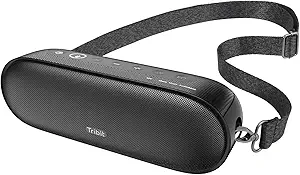
Tribit adopts a distinctly modern, aggressive boombox profile characterized by heavy-duty ABS plastics, impact-resistant rubberized bumpers, and integrated structural carry handles built directly into the unibody chassis. The aesthetic is sleek, purposeful, and indisputably built for action, featuring completely sealed push-button interfaces that prevent water and grit ingress. While Tribit sacrifices user-swappable batteries in favor of hermetically sealed structural integrity, the resulting build quality guarantees durability that can withstand heavy drops, splashes, and dirt. Tribit’s integrated reactive light bars further emphasize its contemporary design language, providing a vibrant visual spectacle that contrasts sharply with Aiwa’s utilitarian, audio-purist chassis.
Compare current retail pricing, active promotions, and verified stock availability directly from authorized stores: