



Elegoo and Anycubic are two of the strongest forces in the budget-to-midrange 3D printing world. Both brands launched in China (Elegoo in 2015, Anycubic around the same time) and quickly gained reputations for delivering high-performance machines at surprisingly low prices. Elegoo initially made waves with its Mars resin printers, which helped bring MSLA printing (Masked Stereolithography – a resin printing method using an LCD to cure resin) to hobbyists at an affordable level. They later expanded into FDM printing (Fused Deposition Modeling – printing by melting and layering filament) with the Neptune series.
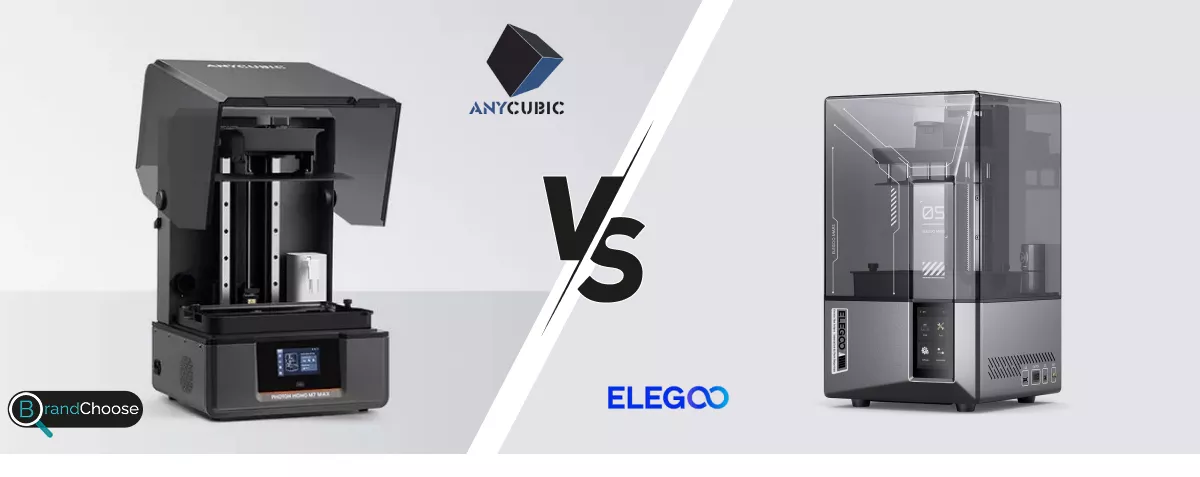
Anycubic took a similar path, with early success in both Photon resin and Kobra FDM lines. Known for delivering high-quality out-of-the-box prints, Anycubic built a loyal following for its ease of use and reliable results. Today, both brands compete aggressively with rapid innovation, especially in speed, resolution, and affordability.
Print Quality & Speed
🟦 Anycubic counters with its Photon and Kobra series, which also deliver high-quality results. Photon resin printers are crisp out of the box, while Kobra FDM units can match Elegoo’s smoothness after some tuning. Overall, Elegoo holds a slight edge in resin detail and first-layer consistency.
🟪 Elegoo printers, particularly in the Mars and Saturn series, are widely respected for producing exceptionally detailed resin prints that require minimal post-processing. Their FDM Neptune 4 line also performs well, offering smooth surfaces and solid speed when paired with Klipper firmware (a high-performance motion controller that offloads step calculations for faster, more precise moves).

✅ Elegoo is relatively better in print quality and speed.
Material Compatibility
🟦 Anycubic supports most common materials like PLA, PETG, TPU, and even ABS (in enclosed models such as the Kobra Max Combo, where a chamber holds heat to reduce warping). Their resin printers accept a wide range of third-party resins — including flexible, tough, and water-washable variants — with profiles that work well without extra tweaking.
🟪 Elegoo is also open to third-party filaments and resins. Newer Neptune printers ship with all-metal hotends (no PTFE liner, so they can safely exceed 260 °C), making them compatible with Nylon, ASA, and some carbon-fiber composites after minor upgrades. On the resin side, Mars and Saturn series are compatible with every major resin chemistry, from dental to castable wax.
✅ Both brands perform well; Elegoo supports more high-temp materials with some tuning, while Anycubic makes compatibility smoother overall.
Maintenance
🟦 Anycubic prioritizes simplicity. FEP film swaps on resin vats use four captive screws, and nozzle changes on Kobra FDM printers are tool-free with a spring clamp. Firmware-guided wizards cover Z-offset, belt tension, and PID tuning, making upkeep approachable for newcomers.
🟪 Elegoo provides straightforward maintenance too, with step-by-step PDFs for vat cleaning, belt tensioning, and hotend unclogging. For bigger jobs (dual Z-axis realignment or motherboard swaps) the active Reddit community fills gaps, but hands-on effort is higher than on Anycubic’s more modular designs.
✅ Anycubic is slightly ahead for ease of maintenance; Elegoo is still user-friendly but can require more manual effort on certain models.
Technology & Features
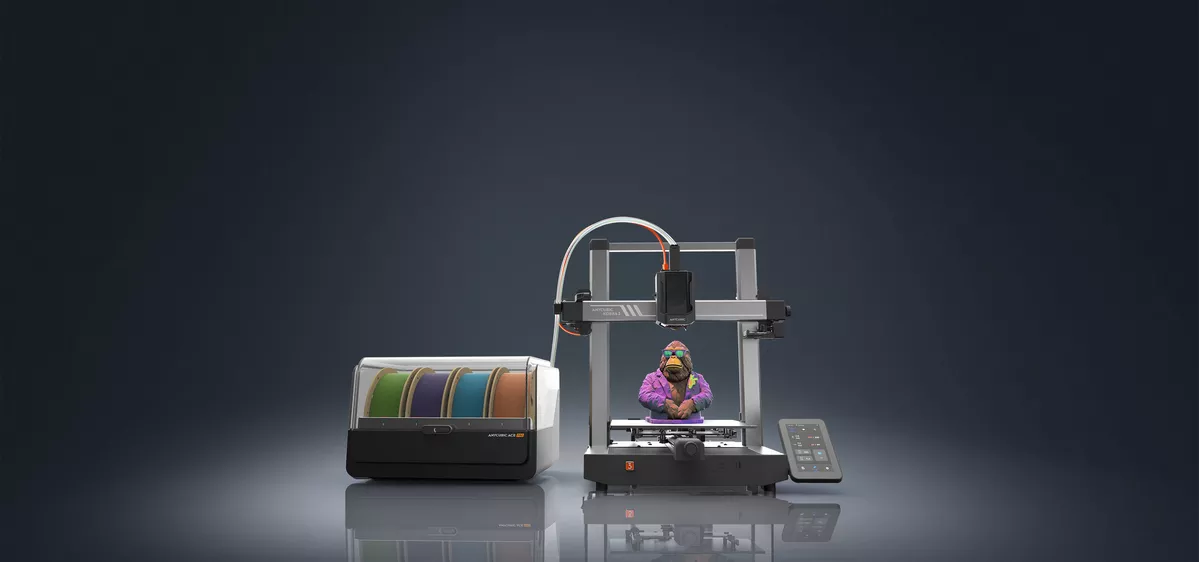
🟦 Anycubic leads in automation and workflow polish. The Kobra 3 Combo introduces multi-material printing via a four-port AMS-style hub, plus auto-bed levelling, live Z correction, and integrated Wi-Fi with cloud model library sync. Firmware wizards handle flow calibration and first-layer inspection, reducing failed prints.
🟪 Elegoo has pushed harder into headline specs lately. The Saturn 4 Ultra features a 16 K LCD, smart resin sensors that pause prints when the vat is low, and dual linear rails for wobble-free Z motion. Neptune 4 Max bundles Klipper out of the box, enabling resonance compensation and real-time pressure advance for crisper corners at 500 mm/s.
✅ Elegoo offers more hardware-driven innovation; Anycubic focuses on workflow efficiency and polish.
🟦 Go with Anycubic if you are:
- A beginner who wants plug-and-play simplicity with guided firmware wizards
- Primarily interested in resin printing, especially for miniatures or dental models
- Someone who values automated features (auto-levelling, flow calibration) and a polished cloud-connected workflow
🟪 Go with Elegoo if you are:
- Looking for the absolute highest resolution in consumer resin printers (up to 16 K)
- Interested in large-format, high-speed FDM printing via Klipper out of the box
- Comfortable with a bit of manual tuning to unlock maximum speed and build volume
Conclusion
Anycubic is ideal for users who want a simple, consistent experience across FDM and resin, especially beginners and casual users. Elegoo appeals to those who prioritize raw printing performance, resolution, and large-format capability—especially resin enthusiasts and budget-conscious power users. Both brands deliver amazing value; the better fit depends on how much you want to fine-tune versus how fast you want to start printing.