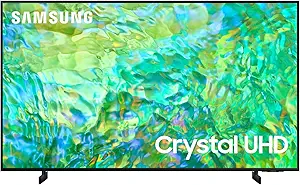
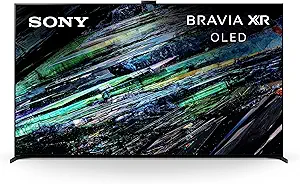
In the realm of home entertainment, Samsung and Sony stand as two giants, each boasting a rich legacy of innovation and a commitment to delivering cutting-edge television technology. As consumers navigate the vast landscape of TVs, the choice between Samsung and Sony can be a daunting one. Both brands offer a plethora of features, from state-of-the-art display technologies to smart TV capabilities. In this article, we delve into the key aspects of Samsung and Sony TVs to help you make an informed decision based on your preferences and requirements.
Key Features Comparison
Affordability
When evaluating affordability in the television space, Samsung holds a commanding advantage over Sony, driven by its massive vertical integration and aggressive tiered pricing strategy. Samsung captures entry-level and budget-conscious buyers through its ubiquitous Crystal UHD and entry-level QLED series (such as the DU7000 and Q60 series), which consistently undercut comparable Sony offerings. Sony largely refuses to compete in the sub-entry tier; its base models (historically the X75/X80 series and modern BRAVIA 3 lines) command a noticeable price premium often termed the "Sony tax." At these lower price points, Samsung offers superior hardware-per-dollar, delivering quantum dot color enhancement and comprehensive smart platforms at margins Sony does not match, making Samsung the unequivocally more accessible brand for shoppers with strict budgetary constraints.
In the competitive mid-range and premium tiers—encompassing Mini-LED and OLED technologies—the affordability dynamic shifts from raw baseline pricing to performance-per-dollar metrics. Samsung continues to dominate pure cost efficiency with models like the Neo QLED QN90 series and the S90 OLED series, frequently discounting them throughout product life cycles to undercut Sony’s BRAVIA 7, 8, and flagship models by hundreds, sometimes thousands, of dollars. Furthermore, Samsung democratizes gaming features by providing four full-bandwidth HDMI 2.1 ports across most of its mid-tier to high-end lineup, whereas Sony often restricts buyers to two HDMI 2.1 ports, one of which doubles as the eARC port. For consumers seeking cutting-edge panel brightness and expansive feature sets without astronomical investment, Samsung consistently delivers superior value on paper.
However, true affordability must also factor in the practical trade-offs regarding engineering longevity and post-purchase value. While Samsung secures the price-to-spec ratio, it makes technical concessions in lower-to-mid tiers, such as relying heavily on plastic chassis construction, displaying intrusive interface advertising, and omitting Dolby Vision support in favor of the royalty-free HDR10+ standard. Conversely, Sony’s higher acquisition cost is partially offset by class-leading Cognitive Processor XR video processing, unmatched out-of-the-box color accuracy that eliminates the need for professional calibration, and superior motion handling and upscaling of legacy content. Ultimately, while Sony justifies its elevated price tag for AV enthusiasts seeking refined reference-quality engineering, Samsung is the undisputed victor in affordability, offering broader market accessibility, aggressive promotional pricing, and higher technical throughput per dollar spent.
Picture Quality
Top-Rated Picture Quality Brands


When it comes to picture quality, both Samsung and Sony excel, albeit through different technologies. Samsung is known for its QLED displays, which utilize Quantum Dot technology to enhance color reproduction, brightness, and contrast. On the other hand, Sony is renowned for its BRAVIA OLED and LED technologies, providing deep blacks and vibrant colors. Consider your preferences for color accuracy, contrast, and overall visual experience when comparing specific models.
Brand Reputation
Sony and Samsung have cultivated two of the most formidable, yet distinctly polarized, reputations in the television industry, each reflecting a fundamentally different engineering philosophy and market approach. Sony’s brand equity is firmly anchored in cinematic heritage, reference-grade color science, and professional broadcast pedigree. Drawing direct influence from its high-end CineAlta cameras and BVM master studio monitors, Sony is widely perceived by videophiles and industry professionals as the gold standard for out-of-the-box accuracy, unmatched motion handling, and industry-leading upscaling via its Cognitive Processor XR. In contrast, Samsung has built its brand as the quintessential market pioneer and undisputed volume leader, maintaining the global number-one television market share for nearly two decades. Samsung’s reputation thrives on technological dynamism, industrial design, and pushing consumer boundaries through vibrant Quantum Dot displays, ultra-bright Neo QLED (Mini-LED) arrays, and lifestyle-driven concepts such as The Frame, presenting itself as the vanguard of high-impact, modern home entertainment.
When evaluating technical strengths and feature sets through the lens of brand perception, distinct trade-offs emerge that influence consumer trust. Sony commands a "premium tax" because its engineering prioritizes fidelity over raw metrics; it rigorously supports ubiquitous enthusiast standards like Dolby Vision and integrates smoothly with Google TV and the PlayStation ecosystem. However, this purist approach occasionally makes Sony slower to adopt cutting-edge hardware specifications across lower-tier models, often yielding fewer full-bandwidth HDMI 2.1 ports compared to its rival. Conversely, Samsung’s reputation is bolstered by aggressive feature-stacking—consistently delivering four full-bandwidth HDMI 2.1 ports, class-leading peak luminance, and a specialized gaming hub with ultra-low input lag across a broader range of price points. Yet, Samsung’s standing among critical home-theater purists is subtly diminished by its stubborn refusal to license Dolby Vision in favor of its proprietary HDR10+ format, alongside an algorithmic tendency to prioritize hyper-saturated, attention-grabbing picture profiles over strict creative intent.
Ultimately, both brands enjoy stellar reliability ratings and massive consumer loyalty, but they address entirely different customer expectations. Sony’s reputation is that of the uncompromising specialist: consumers purchase a Sony expecting robust internal build quality, seamless acoustic surface audio engineering, and a long-term investment that replicates a calibrated grading monitor in darker, dedicated viewing rooms. Samsung’s reputation is that of the hyper-adaptable innovator: buyers choose Samsung for state-of-the-art living room performance capable of overpowering ambient daytime glare, intuitive smart home cohesion via SmartThings, and an unmatched diversity of aesthetic form factors. While Sony secures the reputation for prestige and cinematic authenticity, Samsung retains the mantle of practical dominance and feature-rich accessibility.
Smart Features
Smart TV capabilities play a crucial role in the modern viewing experience. Samsung employs the Tizen operating system for its smart TVs, providing a user-friendly interface with a variety of apps and streaming services. Sony, on the other hand, typically uses Android TV, offering a customizable and feature-rich platform with access to a vast app ecosystem. Explore the interfaces to determine which one aligns better with your preferences for ease of use and available apps.
Conclusion
The decision between Samsung and Sony TVs boils down to your individual preferences, priorities, and budget. Both brands offer exceptional options, and the "best" TV for you depends on the features that matter most for your home entertainment experience. Take the time to compare specific models, read reviews, and consider your unique requirements to find the perfect TV that will bring your favorite movies, shows, and games to life in stunning detail and clarity.