





TCL vs Microsoft: Overview
Comparing TCL and Microsoft helps you determine which brand is best suited for your needs in Tablets. Both brands offer strong choices depending on your budget and key feature requirements.
Key Features & Comparison
Evaluate factors such as build quality, warranty, customer satisfaction, and total value before making your final purchase choice between TCL and Microsoft.
Affordability
TCL has built its tablet reputation almost entirely around exceptional value engineering, targeting budget-conscious consumers, students, and light-duty family use. By utilizing cost-effective Android hardware platforms, entry-to-mid-tier MediaTek processors, and integrated manufacturing lines, TCL delivers feature-rich slates like the TAB series and NXTPAPER models at a fraction of premium retail prices. These devices frequently package essential capabilities—such as expandable storage, cellular LTE connectivity, and bundled accessories like folio cases or styluses—into sub-$250 MSRP tiers, maximizing purchasing power for users who need everyday functionality without long-term financial commitment.
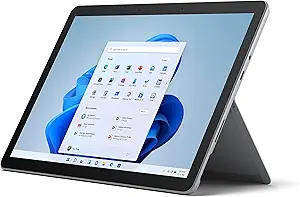
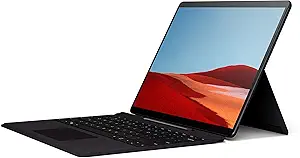
Microsoft operates at the opposite end of the spectrum with its Surface ecosystem, positioning its hardware as premium, enterprise-grade 2-in-1 computers rather than simple multimedia tablets. Even entry-level options like the Surface Go come with a higher base price that quickly balloons once proprietary necessities, such as the Surface Type Cover and Surface Slim Pen, are purchased separately. While Microsoft demands significantly more capital up front, it justifies the investment through aluminum or magnesium chassis fabrication, multi-year commercial deployment support, and full desktop operating system functionality, representing a productivity investment rather than TCL’s immediate consumer cost savings.
Battery Life
Battery longevity on TCL tablets benefits significantly from the brand's low-draw component architecture and innovative display technologies. With hardware powered by power-efficient, ARM-based silicon alongside TCL's proprietary NXTPAPER matte panels—which utilize reflective and diffused lighting techniques—power consumption is drastically lower than that of conventional screens. Consequently, TCL devices frequently achieve well over 10 to 14 hours of continuous video playback, reading, or web browsing. Standby efficiency under modern Android releases is equally strong, allowing a TCL tablet to rest for days between uses without draining the battery reservoir, making it exceptionally reliable for casual, unplugged living.
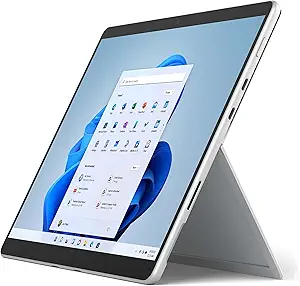
Microsoft faces a far more demanding thermal and power environment due to its integration of x86-based Intel Core processors or custom high-output ARM chips running full-scale Windows 11. Driving complex background tasks, desktop virtualization, and high-frequency active digitizers consumes substantial energy, typically netting Surface Pro models around 7 to 10 hours of real-world mixed usage, often falling short of marketed metrics. While newer ARM-powered Surface variants narrow this gap substantially, Microsoft devices run heavier system architectures that pull more continuous wattage. However, Microsoft counters with faster commercial charging protocols and flexible Power Delivery (PD) docking, prioritizing quick desk replenishment over TCL's extended, lower-power endurance.
Display
Display technology is the cornerstone of TCL’s brand identity, owing to its heritage through CSOT (China Star Optoelectronics Technology). TCL differentiates its tablets through NXTPAPER technology, a hardware-level multi-layer design that diffuses light to create a non-glare, paper-like tactile feel without degrading color saturation via software filters. These panels eliminate harsh blue light emissions and mirror-like reflections, making them arguably the best screens in the consumer tablet space for long-form reading, academic note-taking, and outdoor media viewing. Even their conventional IPS LCDs feature NXTVISION software optimizations that dynamically boost contrast, sharpness, and HDR conversion at highly competitive price tiers.
Microsoft approaches display engineering from a professional workstation perspective, outfitting the Surface Pro and Surface Go lines with high-resolution PixelSense displays. Characterized by crisp 3:2 aspect ratios, these screens maximize vertical screen real estate for documents, spreadsheets, and side-by-side app docking. Microsoft excels in technical fidelity, delivering factory-calibrated sRGB and DCI-P3 color profiles, dynamic refresh rates up to 120Hz, and sub-millimeter zero-parallax pen tracking tailored for precision digital artistry and CAD sketching. While glossy and prone to workplace glare compared to TCL’s NXTPAPER, Microsoft’s displays are vastly superior in sheer pixel density, refresh fluidity, and professional color grading.
Performance
TCL designs its performance envelopes around everyday mobile consumption, relying on mid-range MediaTek or Qualcomm Snapdragon processors paired with 4GB to 8GB of RAM. In real-world operation, this architecture handles social media, media streaming, web browsing, and lightweight mobile gaming with adequate smoothness. However, the performance ceiling is readily apparent under heavy multitasking loads, complex 3D gaming, or data-intensive workflows. The Android-based operating environment limits TCL tablets to the mobile application ecosystem, meaning they serve best as secondary companion screens rather than primary productivity engines.
Microsoft Surfaces operate in an entirely different performance tier, functioning as fully capable mobile workstations running 64-bit Windows 11. Equipped with modern Intel Core i5/i7, Core Ultra, or high-tier Snapdragon X processors and configurable with up to 32GB of RAM and rapid PCIe NVMe storage, Surface devices effortlessly tackle desktop-class workloads. They are engineered to execute compiled software, full desktop office suites, enterprise management tools, and creative production pipelines like Adobe Creative Cloud. The trade-off lies in higher operating temperatures and thermal throttling under sustained loads, yet Microsoft offers raw compute capacity that dwarfs TCL’s mobile-first framework.