TCL vs Amazon: Overview & Brand Philosophy
The budget and mid-tier tablet market has undergone a dramatic transformation in recent years, evolving from a category defined by frustrating compromises into a competitive battleground of specialized, highly capable devices. Within this space, TCL and Amazon represent two distinctly different philosophies regarding how a consumer tablet should be engineered, monetized, and integrated into daily life. Rather than competing head-to-head on bleeding-edge specifications like Apple or Samsung, both manufacturers have carved out dominant niches by focusing on user-centric utility at accessible price points.
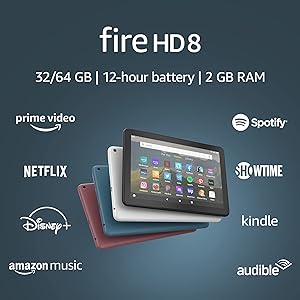
Amazon approaches the tablet ecosystem as an extension of its vast digital storefront and subscription network. The Amazon Fire lineup is unapologetically content-first, designed from the ground up to consume Prime Video, Kindle books, Audible narration, and Amazon Music. By subsidizing hardware costs through downstream digital sales and optional lock-screen advertisements, Amazon delivers functional, durable hardware at margins traditional electronics manufacturers simply cannot match. For Amazon, the tablet is not a standalone workstation; it is an affordable portal into the Amazon digital universe.
Conversely, TCL leverages its heritage as a global display innovator to approach tablets with a hardware-first, visual health methodology. Best known for pioneering accessible quantum-dot and Mini-LED televisions, TCL brings advanced screen technologies down to handheld formats. Most notably, TCL has differentiated itself through its proprietary NXTPAPER technology, which combines the tactile, anti-glare, eye-safe qualities of E-ink with the high refresh rates and full-color capabilities of standard LCDs. TCL’s philosophy treats the tablet as an open Android utility—a digital canvas and e-reader hybrid unencumbered by proprietary retail ecosystems.
Key Differences & Technological Comparison
Understanding the mechanical and software distinctions between TCL and Amazon is critical to making an informed purchasing decision, as the two brands diverge significantly across several core technological pillars:
- Display Engineering: While Amazon equips its Fire tablets with serviceable, reflective IPS LCD panels suited for indoor video playback, TCL focuses heavily on display innovation. TCL's standard tablets utilize their "NXTVISION" real-time visual enhancement engine, but their standout offerings feature "NXTPAPER." This hardware-level approach incorporates multi-layer matte filtration that eliminates glare, resists fingerprints, and drastically reduces harmful blue light without introducing severe color shifts, offering an experience vastly superior for prolonged reading and digital note-taking.
- Software Ecosystem & App Availability: Amazon tablets run Fire OS, a heavily forked version of Android stripped of all native Google services. Out of the box, Fire OS lacks the Google Play Store, Google Docs, Gmail, and native YouTube, directing users instead to the curated Amazon Appstore. While technically capable of sideloading Google services via developer workarounds, it is not supported officially. TCL, on the other hand, runs clean, certified Android with full Google Mobile Services (GMS), providing instant, unrestricted access to millions of Play Store applications, modern multitasking tools, and enterprise productivity suites.
- Build Quality & Physical Design: Amazon Fire tablets favor rugged utility over premium aesthetics. Built with thick polycarbonate shells and reinforced bezels, Fire tablets are designed to withstand drops, spills, and rough handling, making them the industry benchmark for children and shared family environments. TCL tablets opt for a modern, sleek profile, often utilizing thinner profiles, narrower bezels, brushed metallic finishes, and paper-textured glass backings that feel significantly more mature and professional.
- Productivity & Peripheral Integration: TCL treats its tablets as lightweight productivity tools, frequently integrating low-latency USI stylus support, desktop-style multitasking modes, and keyboard dock pins. Amazon Fire tablets, with the rare exception of their "Max" variant, are primarily designed for passive touch consumption rather than content creation or academic drafting.
Pros & Cons Comparison
TCL Tablets
- Pros:
- Groundbreaking NXTPAPER display variants offer exceptional eye comfort and outdoor legibility.
- Ships with pure Android and certified Google Play Store out of the box.
- Superior aesthetics with slimmer bezels, premium materials, and lightweight designs.
- Enhanced productivity features, including robust stylus integration and multi-window multitasking.
- Cons:
- Generally higher entry-level price point compared to entry-level Amazon Fire devices.
- Limited long-term Android OS update track record compared to premier market leaders.
- Less rugged physical protection out of the box, requiring protective cases for young users.
Amazon Fire Tablets
- Pros:
- Exceptional price-to-performance ratio; frequently discounted during major retail events.
- Deep, seamless integration with Prime Video, Kindle, Audible, and Alexa smart home controls.
- Industry-leading durability, with highly resilient chassis designs and dedicated Kids Editions.
- Outstanding parental controls via Amazon Kids+, allowing granular content and time restrictions.
- Cons:
- Locked into Fire OS; completely lacks native Google apps and standard Google Play Store support.
- Base models include lock-screen advertisements unless an additional fee is paid to remove them.
- Reflective, fingerprint-prone displays that struggle significantly in direct sunlight.
- Underpowered chipsets and restricted RAM in base models result in sluggish multitasking.
Performance, Durability & Value Analysis
From a raw performance and longevity standpoint, both brands configure their hardware to align directly with their pricing structures. Amazon Fire tablets typically employ entry-level MediaTek processors paired with modest RAM allotments (often 2GB to 3GB on standard models, expanding to 4GB on the Fire Max 11). This architecture delivers smooth video streaming and dependable basic web browsing, but it falters under heavy app switching or high-end 3D mobile gaming. However, Amazon counters this with exceptional physical longevity. The dense plastics and structural shock absorption found across the Fire line allow these tablets to endure years of physical abuse without structural failure, translating into unbeatable long-term durability value for families on a shoestring budget.
TCL allocates a higher percentage of its bill of materials toward computing balance and visual components. Outfitted with more capable mid-range silicon and higher base RAM configurations, TCL tablets offer superior longevity from an operating system perspective. They handle complex browser environments, large PDF rendering, and concurrent application execution with notably less memory-refresh stutter than Amazon's budget offerings. While TCL devices lack the drop-tested resilience of Amazon’s dense plastics and require more careful handling, their value is realized through versatility: a single TCL tablet can effectively serve as an e-reader, a remote-learning workstation, and a standard Android media tablet without ecosystem friction.
Final Verdict: Which Brand Should You Choose?
Choosing between TCL and Amazon comes down to how you prioritize software freedom and visual comfort versus cost savings and durable simplicity.
Choose Amazon if: Your primary objective is affordable, low-stress media consumption, or you are shopping for children and elderly relatives. If you are already deeply embedded in the Amazon Prime ecosystem, read primarily on the Kindle platform, and want a rugged, inexpensive tablet that can survive drops and everyday wear, the Amazon Fire series remains the undisputed value champion of the electronics world.
Choose TCL if: You want a complete, unrestricted Android tablet experience with direct access to Google Workspace, modern productivity apps, and the Google Play Store. Furthermore, if you spend hours reading digital documents, reviewing textbooks, or taking handwritten notes, TCL’s models—especially those featuring their innovative NXTPAPER anti-glare display technology—provide a significantly more sophisticated, eye-friendly, and versatile computing experience that well justifies the modest step up in cost.
Affordability
When evaluating affordability in the budget tablet sector, Amazon stands as the undisputed industry benchmark for bottom-dollar entry pricing, primarily driven by a heavily subsidized, ecosystem-first business model. Through its Fire tablet lineup (ranging from the Fire 7 to the Fire Max 11), Amazon is capable of engineering devices with shockingly low price-to-spec ratios because the hardware functions as a digital storefront. This subsidized approach permits Amazon to integrate robust, child-friendly polycarbonate chassis, decent baseline processors (frequently optimized MediaTek silicon), and exceptionally durable builds at prices competitors struggle to match. However, this raw economic advantage requires users to accept distinct trade-offs, namely the restrictive Fire OS ecosystem, pervasive lock-screen advertising (which requires a fee to eliminate), and the native absence of Google Play Services, which necessitates manual sideloading or strict adherence to the curated Amazon Appstore.
Conversely, TCL navigates affordability through a value-engineering lens that prioritizes traditional open-platform functionality and specialized hardware innovation. Competing squarely in the budget-to-midrange bracket via its Tab and NXTPAPER series, TCL rarely matches Amazon’s absolute lowest price floors, but it offers vastly superior baseline utility out of the box. Rather than locking users behind proprietary software walls, TCL tablets ship with uninhibited, native Android operating systems and full Google Mobile Services (GMS), instantly providing access to the expansive Play Store ecosystem without user modification. Additionally, TCL leverages its parent company’s vertical display manufacturing capabilities to deliver technical strengths unheard of at comparable price points—most notably its proprietary NXTPAPER matte, anti-glare display technology that mimics physical paper while mitigating blue light exposure, alongside inclusion of higher-resolution FHD panels and standard cellular LTE connectivity on select entry-level variants.
Ultimately, the choice between the two brands regarding affordability pivots on how a consumer measures value: upfront capital expenditure versus daily technical flexibility. Amazon is the definitive winner for buyers with non-negotiable, sub-$100 budgets, families needing cheap media-consumption devices, or users already deeply invested in Prime services who don't mind software compartmentalization. TCL, on the other hand, wins on long-term price-to-performance ergonomics; by spending marginally more upfront, buyers bypass the "ad-supported" tax and gain a versatile, full-fledged Android tablet equipped with superior screen engineering, better multi-tasking software, and independent software freedom that doesn't tether them to a single retail giant.
Battery Life
When evaluating battery performance in the budget-to-midrange tablet segment, Amazon and TCL approach power engineering from fundamentally different product philosophies. Amazon’s Fire tablets—spanning the Fire 7 through the Fire Max 11—are engineered around predictable, closed-ecosystem media consumption and lightweight computing. Amazon pairs moderate battery capacities (typically ranging from 3,750 mAh in entry-level models to roughly 7,500 mAh in the flagship Fire Max 11) with heavily restricted, low-overhead Fire OS software. Because background processes are rigorously constrained and the underlying processors (typically tailored MediaTek silicon) prioritize thermal and power efficiency over raw performance, Amazon tablets consistently achieve their advertised 10 to 14 hours of mixed-use longevity. Furthermore, their deep standby efficiency is exceptional; an idle Fire tablet sips negligible current over several days, making it an extraordinarily dependable choice for casual, intermittent e-reading and video streaming.
In contrast, TCL approaches tablet battery life through the lens of specialized display technology and full Android versatility. Many of TCL’s standout models, such as the NXTPAPER series, employ unique matte, paper-like displays that rely on diffuse natural light reflection alongside integrated hardware blue-light filters. Because these panels require significantly less backlighting to maintain legibility in well-lit environments, TCL can achieve dramatic power savings during intensive reading, note-taking, and productivity tasks. Models like the TCL TAB 10 or 11 pack robust cells (often around 8,000 mAh) and provide reverse wired charging capabilities to power peripheral devices—a technical feature largely absent on Amazon’s hardware. However, running a standard, uncurated version of Android with full Google Mobile Services creates more background telemetry and app synchronization, which can lead to higher standby drain compared to Amazon’s strictly sandboxed platform.
Ultimately, the practical trade-off between the two brands centers on workflow predictability versus display-optimized endurance. Amazon delivers virtually foolproof battery efficiency that resists degradation from rogue background apps, making it ideal for media-centric consumers who prioritize set-it-and-forget-it standby life and steady playback times. TCL offers an intriguing technical edge for users who spend hours working with digital text or creative sketching, where the power-efficient NXTPAPER technology and larger battery capacities yield longer continuous on-screen sessions. However, achieving peak battery life on a TCL tablet requires more active consumer management of brightness, app permissions, and background processes than is ever necessary on Amazon’s tightly throttled ecosystem.
Display
When evaluating display technology, TCL and Amazon approach the tablet market with fundamentally different engineering philosophies. TCL leverages its extensive pedigree as a leading global television manufacturer, aggressively prioritizing advanced panel tech even in its budget-to-midrange offerings. Central to TCL’s hardware identity is its proprietary NXTPAPER technology, which combines a multi-layered matte finish, hardware-level blue light reduction, and an anti-glare etching process that mimics the tactile and visual qualities of real paper without sacrificing full-color vibrancy. In contrast, Amazon’s Fire tablets employ conventional IPS LCD panels engineered for mass-market affordability and indoor multimedia consumption. While Amazon offers competent color reproduction and respectable contrast for streaming Prime Video, their standard glossy finishes suffer significantly from ambient reflections and harsh glare, presenting a noticeably lower standard of optical engineering compared to TCL’s dedicated visual-health panels.
In terms of technical performance and practical trade-offs, TCL consistently edges ahead in resolution, viewing angles, and outdoor usability. TCL frequently equips its tablets with 2K resolutions, high refresh rates (up to 90Hz or 120Hz on select models), and specialized color modes that adapt dynamically to ambient lighting conditions. This makes TCL displays exceptionally versatile for prolonged reading, sketch work, and productivity, sharply reducing ocular fatigue. Amazon, on the other hand, reserves Full HD 1080p resolution almost exclusively for its larger, premium variants like the Fire HD 10 and Fire Max 11, while the lower-tier Fire 7 and Fire HD 8 settle for sub-1080p resolutions that exhibit noticeable pixelation. Although Amazon's Fire Max 11 provides an adequately sharp, bright panel that competes reasonably well within its price bracket, it remains locked at a standard 60Hz refresh rate and lacks the nuanced calibration tools found in TCL’s software suite.
Ultimately, the practical choice between the two brands hinges on intended use and screen fatigue tolerance. Amazon excels at providing a bright, functional, albeit reflective, display built strictly for casual, media-centric consumption where absolute color accuracy and anti-glare capabilities are secondary to price. TCL delivers a superior display ecosystem that champions ergonomic visual comfort, versatile matte-surface engineering, and higher visual fidelity. For users whose primary criteria include outdoor legibility, digital drawing, extensive document review, and reduced eye strain, TCL holds a decisive engineering advantage over Amazon's utilitarian screen lineup.
Performance
When evaluating performance between TCL and Amazon tablets, the fundamental divergence lies in their architectural philosophies and operating environments. Amazon equips its Fire HD and Fire Max lineups primarily with power-efficient MediaTek chipsets paired with modest RAM capacities, tailored specifically to drive Fire OS—a heavily customized, ad-integrated fork of Android. In day-to-day use, modern Amazon tablets like the Fire Max 11 demonstrate adequate optimization for primary media consumption, e-reading, and native Amazon services, showing minimal latency during audio-visual streaming. However, Amazon’s engineering deliberately deprioritizes heavy multitasking; background processes are aggressively managed to prevent memory leaks on lower-tier hardware, which often translates into sluggish app switching, interface stuttering when navigating rich UI elements, and poor frame pacing during demanding 3D gaming.
TCL approaches tablet performance through the lens of traditional productivity and display-driven processing, frequently leveraging a broader array of system-on-chips (SoCs) alongside the unencumbered TCL UI running on stock Android. Models like the TCL NXTPAPER series and the TAB series are engineered with higher baseline RAM configurations, which directly improves multitasking flexibility and sustains multiple background application states without force-closing tasks. TCL’s technical strength lies in how efficiently the hardware handles complex visual rendering; their proprietary display engines offload visual processing effectively, delivering higher fluidity during document editing, web browsing with numerous open tabs, and note-taking with a stylus. While neither brand competes with flagship-tier silicon found in Apple or Samsung devices, TCL holds a distinct computing edge by offering full access to the Google Play Store and modern Android API sets, avoiding the sideloading overhead and software bloat that frequently chokes Amazon's hardware during non-native computational tasks.
The practical trade-offs come down to specialized ecosystem consumption versus versatile mobile computing. Amazon designs its hardware strictly to meet the low-to-mid thermal and processing thresholds of streaming video and reading, resulting in exceptional battery efficiency under light loads, but it severely bottlenecks under sustained workloads or intensive productivity apps. Conversely, TCL delivers superior raw throughput, responsive multi-window capability, and broader software compatibility, making it far more capable as a generalized computing slate. For consumers demanding snappy app execution, seamless document handling, and fluid multitasking, TCL outperforms Amazon's walled-garden architecture, whereas Amazon remains competitive only within the narrow confines of passive, single-task digital entertainment.