





Microsoft vs Apple: Overview
Comparing Microsoft and Apple helps you determine which brand is best suited for your needs in Tablets. Both brands offer strong choices depending on your budget and key feature requirements.
Key Features & Comparison
Evaluate factors such as build quality, warranty, customer satisfaction, and total value before making your final purchase choice between Microsoft and Apple.
Affordability
When evaluating affordability, Apple and Microsoft approach the market from distinct vantage points, each presenting unique hidden costs and value propositions. Apple provides a structured, tiered entry point into the tablet ecosystem, ranging from the budget-friendly base-model iPad to the premium iPad Pro. The entry-level iPad delivers remarkable longevity and access to the complete iPadOS ecosystem at a price point Microsoft rarely attempts to match. While budget-conscious consumers can acquire functional Apple hardware for general media consumption and education without substantial financial friction, costs escalate dramatically as users add modular accessories like the Apple Pencil or Magic Keyboard, alongside Apple’s notoriously high surcharges for expanded base storage and unified memory.
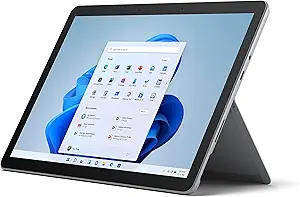
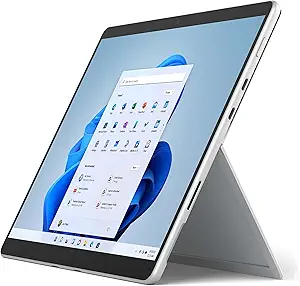
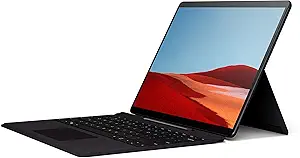
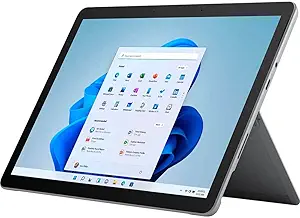
Microsoft positions its Surface tablet portfolio—led by the Surface Pro and Surface Go lines—principally as modular personal computers, and pricing reflects that enterprise-level computing ambition. The Surface Go offers an affordable initial footprint, yet the foundational hardware is frequently underpowered compared to similarly priced iPads. Across the flagship Surface Pro tier, pricing is competitive with premium laptops, but Microsoft rarely bundles the essential Type Cover keyboard or Surface Slim Pen. Because Windows 11 fundamentally requires a keyboard and precision pointer to deliver its core value, buyers must view these costly peripherals as mandatory hardware investments rather than optional accessories. Consequently, Apple captures better entry-level value for pure slate usage, while Microsoft offers a more direct, cost-efficient path to a genuine single-device laptop replacement.
Battery Life
Apple holds a clear architectural advantage in battery longevity thanks to its custom ARM-based Apple Silicon (the A-series and M-series systems on chip). Paired with iPadOS—an operating system designed from inception to aggressively suspend background threads and minimize idle power draw—iPads reliably hit or exceed Apple’s conservative ten-hour runtime metrics. The unified memory architecture and industry-leading performance-per-watt efficiency ensure that high-intensity workloads like 4K video rendering or vector illustration drain power gracefully without generating destructive thermal throttling. This power efficiency persists whether the device is under load or sitting in standby, where Apple devices maintain state for weeks without meaningful parasitic drain.
Microsoft's Surface line has historically struggled with battery endurance, largely due to running desktop x86 Intel architectures underneath the demanding, continuous background processes of standard Windows 11. While recent iterations leveraging Qualcomm Snapdragon X ARM platforms have significantly narrowed this efficiency gap, real-world runtime remains highly variable. When executing modern, natively compiled applications, the newest Surface devices rival Apple’s endurance; however, running legacy Win32 software through binary emulation introduces noticeable overhead that quickly degrades battery reserves. Furthermore, Windows' background indexing, dynamic update cycles, and sleep-state implementations remain prone to inconsistent idle power consumption, making Apple the more dependable option for uncompromised all-day unplugged operations.
Display
Apple’s display engineering across its tablet lineup sets the industry benchmark for color precision, industrial design, and media consumption. The iPad Pro models utilize tandem OLED and Liquid Retina XDR Mini-LED panels that produce extraordinary peak brightness, true blacks, and an infinite contrast ratio ideally suited for high-dynamic-range (HDR) mastering and cinematic playback. Apple’s ProMotion technology seamlessly scales refresh rates up to 120Hz for fluid scrolling and low-latency digital inking. Additionally, features like True Tone and full DCI-P3 wide color gamut calibration guarantee consistent color rendition across disparate lighting environments, making Apple tablets the preferred digital canvas for professional visual creatives.
Microsoft designs the PixelSense displays on its Surface family primarily for enterprise productivity and technical versatility. Adopting an ergonomic 3:2 aspect ratio, Surface screens provide superior vertical canvas space compared to Apple’s standard 4.3:3 and 16:10 orientations, allowing users to view more rows of code, spreadsheets, or split-screen document windows simultaneously. Surface displays integrate dynamic refresh rates up to 120Hz and offer exceptional color profiling with support for sRGB and Vivid profiles. Inking precision is augmented by Microsoft’s custom G6 processor and the haptic feedback built into the Surface Slim Pen, simulating the tactile friction of pen on paper. While Apple leads in peak HDR brightness and contrast dynamics, Microsoft provides a more functional canvas for data-dense, desktop-level productivity.
Performance
In raw compute throughput and silicon efficiency, Apple’s iPad lineup maintains a decisive advantage through the integration of M-series desktop processors in its Pro and Air tiers. Apple Silicon combines high-IPC CPU cores, scalable GPU clusters, a dedicated Neural Engine, and extraordinary unified memory bandwidth into a unified SoC. In synthetic benchmarks and sustained computational tasks—such as hardware-accelerated ProRes video encoding, 3D modeling, and generative on-device AI—the iPad Pro often outperforms full-fledged enterprise laptops. The primary limitation of Apple's performance envelope is not hardware capability, but rather iPadOS itself, which imposes restrictive sandboxing, constrained windowing management, and artificial boundaries on professional multi-tasking workflows.
Microsoft approaches tablet performance through the lens of open-ended desktop computing. Whether configured with Intel Core Ultra or next-generation Snapdragon X Elite processors, a Surface tablet executes untamed desktop-class operating systems with full administrative execution rights. The technical value lies not in peak synthetic bench scores, but in architectural versatility: a Surface can natively run complex IDEs, virtual machines, local databases, uncompressed CAD files, and multi-monitor desktop docking setups without software throttling. Thermal design in modern Surface tablets has evolved with active hybrid vapor-chamber cooling, enabling sustained performance without excessive fan noise. While Apple delivers superior raw silicon speed per watt, Microsoft wins decisively on real-world workflow performance by eliminating administrative and software-level bottlenecks.