





Amazon vs reMarkable: Overview
Comparing Amazon and reMarkable helps you determine which brand is best suited for your needs in Tablets. Both brands offer strong choices depending on your budget and key feature requirements.
Key Features & Comparison
Evaluate factors such as build quality, warranty, customer satisfaction, and total value before making your final purchase choice between Amazon and reMarkable.
Affordability
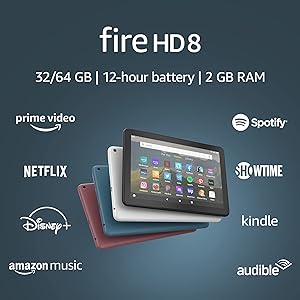
When evaluating affordability, Amazon and reMarkable occupy fundamentally different ends of the consumer spectrum, driven by distinct hardware engineering and business models. Amazon leverages its aggressive loss-leader strategy across the Fire tablet lineup and entry-level Kindle e-readers, subsidizing hardware costs through downstream ecosystem monetization, ad-supported lock screens, and digital content sales. Consequently, consumers can acquire a fully capable multimedia Fire tablet for a fraction of the cost of standard consumer electronics, making Amazon the undisputed leader in sheer cost-to-performance accessibility. Even Amazon's premium digital notebook, the Kindle Scribe, is aggressively priced compared to boutique digital paper alternatives, often bundling the stylus without requiring steep accessory premiums.
Conversely, reMarkable operates as a specialized hardware maker targeting a niche professional demographic willing to invest in distraction-free productivity. The upfront price tag for a reMarkable tablet represents an uncompromising hardware-margin model where the device is engineered as a luxury stationery replacement. Furthermore, buyers must factor in the cost of mandatory or semi-essential accessories; the high-precision Marker styluses and custom Folio covers are sold separately at premium price points that significantly increase the total cost of ownership. While reMarkable provides an unmatched digital paper experience, Amazon remains vastly superior from a pure value and affordability standpoint for mainstream users.
Battery Life
Battery performance between these two brands illustrates the profound difference between conventional multimedia computing and low-draw electrophoretic display (EPD) engineering. Most Amazon Fire tablets utilize backlit IPS LCD panels driven by power-hungry multi-core application processors, resulting in a typical battery endurance of 10 to 14 hours of active use. While sufficient for daily entertainment, browsing, and media consumption, they require regular recharges akin to smartphones. However, Amazon's Kindle Scribe changes the narrative within the brand's portfolio, employing an E Ink panel and aggressive thermal and power throttling that extends standby and active note-taking battery life to weeks rather than hours, demonstrating Amazon's dual-architecture flexibility.
reMarkable, on the other hand, engineers its hardware solely around ultra-low-power consumption, relying entirely on ambient light and bi-stable E Ink technology that consumes energy predominantly when the screen state changes. Coupled with a lean, custom-built Linux operating system (Codex) that eliminates background service overhead, reMarkable tablets can easily endure two weeks of intensive daily drafting or up to a month of standby time on a single charge. Although the Kindle Scribe offers comparable battery longevity within the e-paper subset, reMarkable consistently delivers a more focused, ultra-lean power profile that guarantees dependable offline operation without the battery anxiety associated with Amazon's mass-market Fire line.
Display
The display technologies championed by Amazon and reMarkable diverge sharply based on their intended consumer use cases. Amazon offers two separate display philosophies: the Fire series employs high-definition, backlit LCD panels engineered for rich color reproduction, dynamic video playback, and responsive gaming, whereas the Kindle and Scribe lineups incorporate front-lit, 300 PPI E Ink Carta panels. The Kindle Scribe in particular excels with an integrated front light featuring adjustable warm temperature control, allowing seamless reading and writing in pitch-black environments as well as direct sunlight, thereby maximizing environmental versatility.
In stark contrast, reMarkable deliberately rejects backlighting and frontlighting entirely to engineer the most authentic analog-like writing experience possible. By utilizing a custom Canvas display incorporating fine-grained surface friction, microscopic PMMA texturing, and minimal lens-to-ink distance, reMarkable mimics the acoustic and tactile drag of actual paper better than virtually any other tablet manufacturer. The major trade-off is usability in low-light environments, where an external light source is strictly required. While Amazon offers broader multimedia versatility and superior dark-room adaptability, reMarkable remains the pinnacle of tactile, glare-free, paper-like display engineering.
Performance
Performance benchmarks highlight a deep architectural dichotomy: general-purpose media processing versus low-latency input specialization. Amazon Fire tablets are powered by MediaTek or Qualcomm system-on-chips paired with custom Android-based Fire OS, designed to handle multi-threaded app multitasking, high-bitrate video streaming, and casual 3D gaming. While these chips occasionally suffer from UI stutter and memory bottlenecking under heavy loads, they offer broad computational flexibility. In contrast, Amazon's Kindle Scribe optimizes its processing silicon purely for responsive rendering of complex PDFs and low-latency pen strokes, albeit within a relatively rigid, closed software environment.
reMarkable approaches performance not through raw compute metrics, but through proprietary input pipeline optimization. Powered by an efficient NXP i.MX series application processor running Codex, the device is fine-tuned to reduce pen-to-screen input latency down to sub-21 milliseconds, delivering virtually instantaneous ink projection that prevents visual lag. However, reMarkable intentionally lacks the processing capability for web browsing, video decoding, or heavy app execution. Users seeking a multi-faceted digital powerhouse will find reMarkable critically underpowered, whereas those evaluating performance strictly on fluid handwriting latency and distraction-free document navigation will find its dedicated architecture exceptionally refined.