Lenovo vs Apple: Overview
Comparing Lenovo and Apple helps you determine which brand is best suited for your needs in Tablets. Both brands offer strong choices depending on your budget and key feature requirements.
Key Features & Comparison
Evaluate factors such as build quality, warranty, customer satisfaction, and total value before making your final purchase choice between Lenovo and Apple.
Affordability
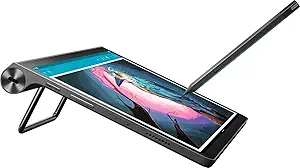
When evaluating affordability, Lenovo consistently positions itself as a market leader in value-driven engineering, offering a broad spectrum of tablets spanning ultra-budget entry models to premium mid-rangers. Devices such as the Lenovo Tab M-series and Tab P-series provide accessible hardware capable of handling media consumption, light browsing, and e-learning at a fraction of the cost of premium competitors. Crucially, Lenovo frequently packages value-adding accessories, such as folio cases, detachable keyboards, or precision styluses, directly in the box. This inclusive retail strategy eliminates the hidden post-purchase costs often associated with tablet ownership, making Lenovo particularly appealing to students, budget-conscious households, and cost-focused enterprise buyers.
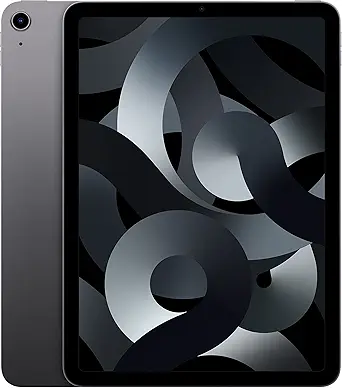
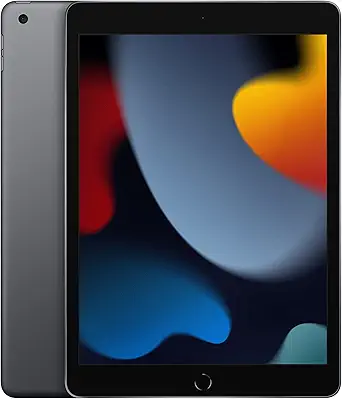
In stark contrast, Apple operates at a distinctly premium price ceiling across its iPad portfolio, with even the baseline iPad demanding a noticeable investment compared to Android entry points. Apple avoids the sub-$200 segment entirely, reserving its industrial design, custom silicon, and robust iPadOS ecosystem for users willing to pay for high-tier hardware. Furthermore, realizing the full potential of an Apple tablet requires acquiring first-party peripherals like the Apple Pencil and Magic Keyboard, which are sold separately at steep premiums. However, Apple offsets this initial financial barrier through superior long-term residual value; iPads consistently retain their resale worth far longer than Lenovo tablets and benefit from five to seven years of guaranteed software updates, balancing initial upfront expense with lasting lifecycle economy.
Battery Life
Lenovo approaches battery engineering with versatility and practical utility, tailoring cell capacities to match specific use cases across its lineup. Entry-level and mid-range Lenovo tablets often feature large physical lithium-polymer cells that deliver respectable screen-on time during continuous local video playback and casual tasks. On higher-end productivity units, such as the Tab P12 Pro, Lenovo incorporates rapid-charging protocols, allowing users to quickly replenish high-capacity batteries. Furthermore, the inclusion of smart battery conservation software, such as charge-limiting modes for tablets kept docked as smart displays, demonstrates an awareness of device longevity and battery wear reduction.
Apple sets an exceptionally high bar for battery performance by relying on deep hardware-software synergy rather than merely increasing physical battery volume. Across the standard iPad, Air, Mini, and Pro lines, Apple consistently targets an industry-standard 10 hours of active web surfing or video streaming. The bespoke power architecture of Apple's A-series and M-series chips allows iPads to enter ultra-low-power idle states with virtually imperceptible passive battery drain, an area where Android tablets often struggle. While Apple's proprietary charging speeds can lag behind the rapid-charge protocols implemented in modern Android tablets, the predictable endurance under demanding computational loads, such as graphic rendering and digital illustration, remains unmatched in day-to-day dependability.
Display
Lenovo has made significant strides in display technology, particularly in its premium and mid-tier portfolios where it leverages vibrant OLED panels to attract multimedia enthusiasts. Devices like the Tab P11 Pro and P12 series feature high-resolution 2.5K and 3K displays with Dolby Vision, HDR10+ support, and wide color gamuts that produce deep, true blacks and infinite contrast ratios. These panels are engineered to excel in entertainment scenarios, offering rich visual dynamics for streaming and gaming. Even within its budget-oriented IPS LCD offerings, Lenovo often incorporates high refresh rates—up to 120Hz—and robust eye-care certifications from TÜV Rheinland to minimize flicker and blue-light fatigue during extended reading sessions.
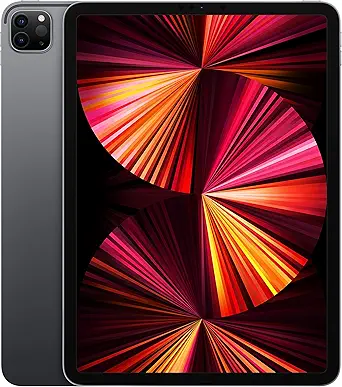
Apple approaches display engineering with an obsessive focus on color accuracy, brightness uniformity, and responsiveness tailored for creative professionals. While standard models utilize well-calibrated Liquid Retina IPS panels, premium models push visual boundaries with technologies such as Liquid Retina XDR (Mini-LED) and the tandem OLED Ultra Retina XDR displays found on the latest iPad Pro. Apple’s True Tone ambient light matching, P3 wide color coverage, and ProMotion 120Hz adaptive refresh rates deliver an exceptionally natural and responsive viewing experience. For photo editors, digital painters, and cinematographers, Apple’s strict color management and anti-reflective laminations provide a level of color fidelity and optical clarity that remains the benchmark across the tablet industry.
Performance
Lenovo utilizes a diverse range of processing platforms across its tablet portfolio, predominantly sourcing SoCs from MediaTek, Qualcomm, and Unisoc to hit specific price-to-performance tiers. In budget-friendly models, processing power is tuned strictly for core media playback, web navigation, and basic multitasking, which can occasionally result in frame drops or interface micro-stutters under heavier workloads. In contrast, Lenovo's high-tier productivity tablets incorporate capable Snapdragon or upper-echelon Dimensity chipsets paired with generous RAM allocations. These higher-end configurations run Lenovo's productivity software and split-screen desktop modes effectively, though raw GPU and CPU benchmark metrics generally trail the cutting-edge silicon found in desktop-grade environments.
Apple fundamentally dominates the tablet performance landscape by equipping its iPad lineup with custom-designed A-series and cutting-edge M-series silicon, such as the M2 and M4 chips. This architecture grants even the mid-range iPad Air processing capabilities that rival or exceed many high-end commercial laptops, providing unmatched headroom for complex 4K video editing, 3D modeling, and demanding digital art workflows. The tight integration between Apple's hardware and iPadOS ensures fluid multitasking, near-instant app launch speeds, and zero UI latency. While critics often argue that iPadOS imposes arbitrary software constraints on such formidable compute power, Apple's unmatched single-core and multi-core computational prowess ensures that an iPad remains lightning-fast for years without operational degradation.