

Samsung vs Amazon: Overview
Comparing Samsung and Amazon helps you determine which brand is best suited for your needs in Tablets. Both brands offer strong choices depending on your budget and key feature requirements.
Key Features & Comparison
Evaluate factors such as build quality, warranty, customer satisfaction, and total value before making your final purchase choice between Samsung and Amazon.
Affordability
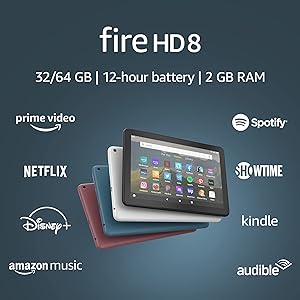
When analyzing overall value and price-to-performance ratio, Amazon dominates the budget hardware spectrum with its Fire tablet family. Amazon’s business strategy intentionally leverages hardware as an entry gateway to its broader ecosystem of digital storefronts, Prime memberships, and media services. Because of this subsidized platform model, Amazon is capable of pricing devices like the Fire 7, Fire HD 8, and Fire HD 10 well below the manufacturing cost curve of traditional consumer electronics manufacturers. Consumers on a strict budget or those seeking secondary media devices for households and young children receive remarkable utility relative to upfront cash outlay, though this low purchase price is often subsidized by lock screen advertisements and ecosystem restrictions unless an opt-out fee is paid.
Samsung targets a vastly broader pricing spectrum, scaling from accessible entry-tier hardware to four-figure productivity workhorses. While Samsung offers the Galaxy Tab A line to compete directly in the sub-$250 marketplace, their engineering philosophy prioritizes standalone hardware profitability rather than digital subscription recapture. As a result, Samsung's most affordable offerings usually command a modest premium over directly comparable Amazon devices. However, this higher barrier to entry yields unencumbered access to the Google Play Store, premium industrial design, and native software devoid of retail-driven bloatware, making Samsung the superior financial choice for shoppers who measure value through software longevity and open architecture rather than the absolute lowest initial retail price.
Battery Life
Amazon engineers its Fire tablets with energy conservation at the forefront, creating platforms optimized for passive media consumption, reading, and continuous video streaming. Because Fire tablets typically utilize low-to-midrange system-on-chip architectures paired with moderate-resolution displays that operate at standard 60Hz refresh rates, they exhibit conservative thermal dynamics and minimal power draw. Users routinely experience anywhere from 10 to 13 hours of continuous mixed-usage screen-on time on modern Fire HD variants. This endurance makes them dependable companions for long-haul travel or casual domestic browsing, though their charging speeds lag behind industry standards, often requiring several hours via low-wattage bundled power adapters to achieve a full recharge.
Samsung equips its Galaxy Tab portfolio with massive battery capacities managed by advanced power management algorithms embedded in Android and One UI. On baseline Galaxy Tab A devices, battery longevity easily rivals or surpasses Amazon due to optimized standby protocols and efficient processor scaling. When stepping up into Samsung’s flagship Galaxy Tab S lineup, battery behavior becomes a balance of heavy processing power versus endurance; driving 120Hz Dynamic AMOLED panels and multi-window multitasking naturally depletes power reserves faster during compute-heavy tasks. Nevertheless, Samsung outpaces Amazon decisively in power replenishment, offering up to 45W fast wired charging on flagship variants, ensuring that power users can quickly recharge high-capacity cells during demanding workflows.
Display
Display engineering represents one of the sharpest contrasts between the two manufacturers, with Samsung standing as the market benchmark in mobile display innovation. Across its premium Galaxy Tab S series, Samsung employs proprietary Dynamic AMOLED 2X panels that produce infinite contrast ratios, deep inky blacks, HDR10+ support, and dynamic 120Hz refresh rates that make system animations and S Pen stylus inputs exceptionally fluid. Even within their budget-oriented Tab A tier, Samsung maintains respectable color accuracy, balanced white points, and higher peak luminance levels than class averages, providing users with a display assembly that resists outdoor glare and delivers vibrant media playback.
Amazon approaches display technology purely from an economy-of-scale perspective, relying primarily on standard IPS LCD panels tuned for indoor entertainment. Fire tablets deliver serviceable 720p or 1080p resolutions that are well-suited for streaming Prime Video, casual gaming, and reading via the Kindle interface. However, the technical compromises are readily apparent upon closer inspection: color gamuts are noticeably narrower, maximum nit output is generally insufficient for direct sunlight legibility, and viewing angles can exhibit color shift. Furthermore, Amazon sticks rigidly to standard 60Hz refresh rates and uses thicker optical bonding layers, resulting in noticeable air gaps between the cover glass and the digitizer on lower-end models that detract from visual immersion.
Performance
Under the hood, Samsung provides a vastly superior performance tier, driven by cutting-edge mobile silicon and deep operating system optimization. High-end Galaxy Tab devices integrate flagship processors such as the Qualcomm Snapdragon 8-series or top-tier MediaTek Dimensity platforms, supported by up to 16GB of high-speed RAM and UFS storage. This raw throughput allows Samsung’s customized One UI software to shine, particularly through features like Samsung DeX, which transforms the tablet into a desktop-class productivity environment capable of effortless multi-window multitasking, hardware virtualization, and professional-grade creative rendering. Even their entry-level tablets receive regular, long-term Android operating system updates that maintain consistent software responsiveness over years of ownership.
Amazon designs Fire tablet performance around targeted, low-overhead tasks rather than intensive computational workloads. Equipped with entry-level MediaTek quad-core or octa-core processors alongside modest 2GB to 4GB RAM configurations, Fire OS is tightly tailored to navigate digital storefronts, stream audio and video, and run casual mobile games. Attempting to push these tablets into heavy multitasking, split-screen workflows, or demanding 3D gaming quickly reveals architectural thermal bottlenecks, resulting in frame drops and application latency. Moreover, Fire OS is a locked-down fork of older Android versions stripped of native Google services, inherently limiting background processing efficiencies and restricting power users from leveraging the expansive modern software ecosystem.