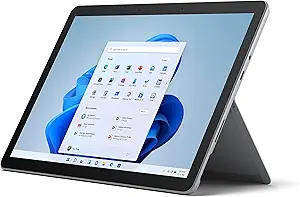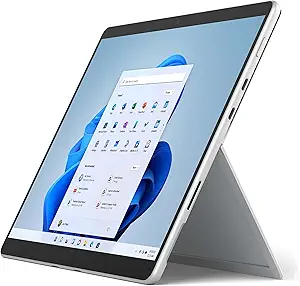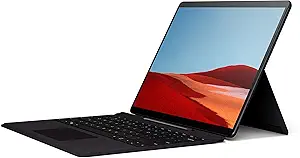

One Plus vs Microsoft: Overview
Comparing One Plus and Microsoft helps you determine which brand is best suited for your needs in Tablets. Both brands offer strong choices depending on your budget and key feature requirements.
Key Features & Comparison
Evaluate factors such as build quality, warranty, customer satisfaction, and total value before making your final purchase choice between One Plus and Microsoft.
Affordability
When evaluating affordability, OnePlus adopts an aggressive direct-to-consumer pricing strategy that significantly lowers the barrier to entry for flagship-tier hardware. By focusing purely on mobile-first computing, OnePlus tablets, such as the OnePlus Pad series, undercut premium market competitors by hundreds of dollars while including substantial base storage and high-end build quality. Furthermore, the ecosystem accessories—such as the magnetic keyboard and stylus—are priced far more reasonably than industry averages, making a fully kitted OnePlus tablet setup exceptionally economical for students and budget-conscious professionals who prioritize media consumption and lightweight productivity.
Microsoft positions its Surface lineup across a vastly broader price spectrum, ranging from budget-tier enterprise devices like the Surface Go to high-end, premium workstation pricing with the Surface Pro series. While entry-level configurations may appear competitive on paper, Microsoft's pricing model aggressively escalates when factoring in mandatory accessories like the Type Cover and Surface Slim Pen, which are sold separately at steep price points. The premium pricing of Microsoft Surface devices reflects their engineering as full-fledged, x86 or specialized ARM Windows PCs; however, from a pure price-to-performance ratio for everyday tablet tasks, OnePlus offers dramatically superior hardware value for the consumer's dollar.
Battery Life
OnePlus leverages mobile-first architecture to deliver exceptional endurance that comfortably outlasts typical workdays. Powered by high-efficiency ARM mobile processors from MediaTek or Qualcomm, OnePlus tablets operate on lightweight Android-based OxygenOS, which aggressively optimizes background processes and idle power draw. Users routinely achieve 10 to 12 hours of screen-on time for mixed media and web tasks. Where OnePlus truly distances itself from Microsoft is in proprietary charging technology; equipped with 67W or higher SUPERVOOC fast charging, a OnePlus tablet can recharge from zero to full in roughly an hour, drastically minimizing operational downtime.
Microsoft Surface tablets present a more complex battery profile due to the resource-intensive nature of desktop Windows 11. While recent ARM-powered Snapdragon X Elite Surface models have drastically closed the efficiency gap and achieved competitive multi-day standby, traditional Intel-based Surface Pro devices continue to struggle with high thermal ceilings and power consumption, often yielding only 6 to 8 hours under moderate office workloads. Additionally, Microsoft relies on proprietary Surface Connect or standard USB-PD protocols that charge at significantly slower rates compared to OnePlus, making battery longevity and rapid top-ups a definitive win for OnePlus in casual mobile use, even if Microsoft provides better power management profiles for heavy enterprise multitasking.
Display
OnePlus focuses heavily on ergonomic media consumption and fluid touch interaction through its distinctive 7:5 aspect ratio displays. Marketed as the 'ReadFit' screen, this squarer proportion closely mimics physical paper and books, making it uniquely comfortable for reading documents, multitasking in split-screen, and web browsing. Technically, OnePlus equips its panels with ultra-smooth 144Hz refresh rates, high pixel densities, and robust peak brightness, ensuring that UI navigation and scrolling feel hyper-responsive. While the panels are typically high-grade IPS LCDs rather than OLED, their color calibration and Dolby Vision support provide a stellar cinematic and casual gaming experience.
Microsoft, conversely, prioritizes professional color fidelity and technical drafting with its PixelSense displays, standardized at a productivity-focused 3:2 aspect ratio. High-end Surface Pro iterations feature stunning 120Hz dynamic refresh rates with optional OLED configurations that provide infinite contrast ratios, deep blacks, and exceptional color accuracy across sRGB and DCI-P3 spectrums. The inclusion of customized haptic feedback engines behind the glass transforms stylus interactions, making digital inking and technical drawing feel remarkably authentic. For graphic designers, video editors, and technical professionals needing absolute precision, Microsoft’s PixelSense screens surpass OnePlus’s panels in color precision and pro-grade utility.
Performance
Performance on OnePlus tablets is defined by silky-smooth mobile responsiveness and seamless app execution within Android. Leveraging flagship-grade silicon paired with generous LPDDR5X RAM and UFS storage, OnePlus tablets excel at high-frame-rate mobile gaming, rapid multitasking, and fluid content consumption. OxygenOS is specifically tuned for speed, minimizing input latency and offering intelligent RAM management. However, the performance ceiling is fundamentally bounded by the limitations of Android: while exceptional for social apps, streaming, and mobile gaming, it lacks native support for professional desktop software suites, making the raw processing power feel occasionally underutilized for heavy creative workflows.
Microsoft delivers an entirely different tier of performance by functioning as a complete personal computer rather than an oversized mobile phone. With configurations scaling up to Intel Core Ultra or Qualcomm Snapdragon X Elite processors paired with up to 32GB or 64GB of RAM, Surface tablets handle complex compilation, full-scale Adobe Creative Cloud suites, CAD modeling, and massive enterprise spreadsheets. While x86 versions can suffer from thermal throttling under sustained heavy loads, the sheer functional capability of running unrestricted, desktop-grade Windows 11 makes Microsoft overwhelmingly superior for productivity, workstation tasks, and professional software integration.
Compare current retail pricing, active promotions, and verified stock availability directly from authorized stores: