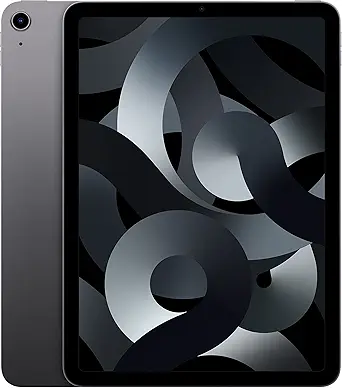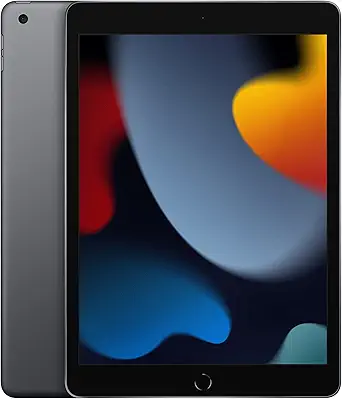








One Plus vs Apple: Overview & Brand Philosophy
The tablet market has long been dominated by a single titan, but emerging challengers are fundamentally reshaping consumer expectations around price and performance. Apple entered the segment in 2010 with the original iPad, essentially inventing the modern tablet category. Over the past decade and a half, Apple’s philosophy has centered on vertical integration—designing custom silicon, premium hardware, and dedicated tablet software (iPadOS) that operates seamlessly within a broader, highly cohesive hardware ecosystem. For Apple, the tablet is not merely a media consumption slate; it is positioned as a modular computing platform capable of displacing traditional laptops for creative professionals, students, and enterprise users alike.
In contrast, OnePlus is a relatively recent entrant to the dedicated tablet space, launching its first slate in 2023. True to its historic "Never Settle" ethos, OnePlus focuses on delivering flagship-tier specifications, distinctive industrial design, and performance-oriented features at aggressive, highly accessible price points. Rather than attempting to establish an entirely closed computing ecosystem, OnePlus emphasizes versatile multimedia performance, fast-charging innovation, and pragmatic productivity enhancements on top of Android via OxygenOS. The brand approaches tablets as powerful companion devices designed to maximize screen real estate, battery efficiency, and everyday user satisfaction without the exorbitant accessory premiums typical of legacy manufacturers.
Key Differences & Technological Comparison
When comparing OnePlus and Apple tablets, the fundamental divide begins with display architecture and aspect ratios. Apple utilizes a traditional 4:3 aspect ratio across most of its baseline and Air models, shifting to a slightly wider format on select Pro variants, which favors document editing, creative drawing, and productivity apps. OnePlus challenges this standard with a unique 7:5 "ReadFit" aspect ratio. This squarer presentation maximizes vertical viewing area for reading and web browsing while maintaining a surprisingly comfortable hand-feel. Additionally, OnePlus equips its tablets with high-refresh-rate panels (up to 144Hz) at price points where Apple still limits entry-level and mid-tier buyers to standard 60Hz displays.
Processing architecture highlights another critical divergence. Apple equips its mid-range and premium tablets with desktop-grade Apple Silicon (M-series chips), granting iPads computational headroom that dramatically outpaces virtually any Android tablet on the market. These chips make iPads unmatched powerhouses for 4K/8K video rendering, 3D modeling, and demanding digital illustration in specialized apps like Procreate and Final Cut Pro. OnePlus relies on high-end mobile architectures from MediaTek (Dimensity series) or Qualcomm Snapdragon. While these processors handle intense multi-tasking, high-framerate mobile gaming, and split-screen workflows with zero lag, they lack the raw desktop-class compute capabilities found in Apple's M-series silicon.
The operating system experience marks the final battleground. Apple’s iPadOS benefits from over a decade of developer optimization, offering a deep, curated catalog of tablet-native applications that fully utilize the display and Apple Pencil. However, iPadOS remains restricted by Apple’s strict sandboxing and rigid window management. OnePlus’s OxygenOS for tablets delivers a lighter, highly flexible multitasking experience with features like "Open Canvas," which allows users to run multiple full-sized apps off-screen and switch between them fluidly. However, OnePlus is inherently constrained by Android's broader tablet app ecosystem, which still features instances of unoptimized smartphone app scaling.
Pros & Cons Comparison
OnePlus Tablets
- Pro: Exceptional Value Proposition: OnePlus bundles high-tier display tech, fast processors, and generous baseline storage at prices far below comparable Apple configurations.
- Pro: Class-Leading Charging Speeds: Proprietary SUPERVOOC fast charging enables tablets to refill massive batteries in approximately an hour, vastly outperforming Apple’s conservative charging rates.
- Pro: Innovative Multitasking: OxygenOS includes native multi-window workflows like Open Canvas that make split-screen productivity intuitive and expansive.
- Pro: Ergonomic 7:5 Display: The unique screen ratio maximizes readable real estate for web browsing, reading digital books, and document review.
- Con: Android Tablet App Ecosystem: Third-party developer support for Android tablets still lags behind the specialized, tablet-native app ecosystem found on iPadOS.
- Con: Limited Long-Term Software Support: While OnePlus provides solid update commitments, it does not match Apple’s standard 5 to 7 years of consistent OS support.
Apple Tablets (iPad)
- Pro: Best-in-Class Application Suite: Access to premier, tablet-exclusive creative and professional software (Procreate, Logic Pro, Affinity Designer) that have no equal on Android.
- Pro: Unrivaled Apple Silicon Performance: M-series processors offer desktop-grade compute, graphical prowess, and unified memory architecture.
- Pro: Industry-Standard Accessories: The Apple Pencil (USB-C and Pro variants) and Magic Keyboard provide the most precise stylus tracking and best typing feedback in the industry.
- Pro: Long Lifespan and Resale Value: iPads consistently receive updates for half a decade or more and hold secondary market value better than any competitor.
- Con: Aggressive Pricing Structure: Essential productivity accessories (Magic Keyboard, Apple Pencil) and storage upgrades dramatically inflate total ownership costs.
- Con: Base-Model Display Limitations: Entry-level and mid-tier models (standard iPad, iPad Air) remain locked to 60Hz refresh rates despite their premium price points.
Performance, Durability & Value Analysis
From an endurance and lifecycle perspective, Apple establishes a benchmark that remains difficult to surpass. An iPad purchased today will reliably receive functional and security updates for upwards of six years, ensuring that its utility remains stable throughout an extended lifecycle. Furthermore, Apple’s rigid aluminum unibodies, exceptional glass tolerances, and ubiquitous third-party repair networks mean hardware failures can be resolved far more readily over time. OnePlus designs remarkably durable hardware featuring precision CNC-machined aluminum bodies and balanced internal layouts, but its secondary market support, localized repair availability, and guaranteed software update windows are comparatively truncated.
When evaluated strictly through the lens of consumer value, OnePlus frequently emerges victorious on pure hardware metrics. For the price of an entry-level base iPad paired with modest storage and accessories, a buyer can purchase a OnePlus tablet equipped with high-refresh-rate displays, flagship-grade speaker arrays, double the baseline storage, and included or low-cost proprietary keyboard and stylus peripherals. If raw compute power for specialized professional creative tasks is not a core requirement, OnePlus delivers considerably more tangible hardware utility per dollar spent, whereas Apple heavily monetizes its software dominance through steep upgrade paths.
Final Verdict: Which Brand Should You Choose?
Your choice between OnePlus and Apple ultimately depends on your existing tech ecosystem, workflow intensity, and budgetary discipline:
Choose OnePlus if: You prioritize price-to-performance, multimedia consumption, and high-productivity daily tasks without overspending. It is the premier choice for Android smartphone users who want a versatile, beautifully built companion screen featuring high-refresh-rate smoothness, lightning-fast battery recharges, and intuitive multitasking for web research, document editing, and video streaming.
Choose Apple if: You require a tablet as a core professional or creative workhorse. If your daily workflow depends on stylus precision for digital art, multi-track audio engineering, 4K video editing, or native tablet software that is completely mature, Apple’s iPad lineup remains the gold standard. It is also the undeniable choice for individuals already anchored in the Apple ecosystem who value AirDrop, Universal Control, and multi-year software longevity.
Affordability
When evaluating affordability, OnePlus takes an aggressive, disruption-focused approach that challenges the premium tablet market by democratizing high-end hardware. The OnePlus Pad series offers flagship-tier specifications—such as high-refresh-rate displays (up to 144Hz), robust Dimensity or Snapdragon chipsets, premium aluminum unibody builds, and industry-leading fast-charging capabilities—at a mid-range price point. OnePlus maximizes value engineering by eliminating the traditional "spec tax" associated with tier-one consumer tech. Furthermore, the total cost of ownership is notably reduced because OnePlus frequently bundles its accessories, such as the magnetic keyboard or stylus, during promotional windows, or retails them at prices dramatically lower than the industry standard. For buyers prioritizing upfront cost against on-paper performance metrics, OnePlus delivers an exceptional ratio of hardware capability per dollar spent.
Conversely, Apple’s strategy regarding affordability is rooted in segmented tiers, product longevity, and total lifecycle value rather than low initial purchase friction. While Apple does offer the entry-level baseline iPad to compete directly in the budget-to-mid-range space, the brand enforces a steep price curve through incremental hardware upgrades, storage configurations, and notoriously expensive first-party accessories like the Magic Keyboard and Apple Pencil. Where Apple structurally justifies its higher price barrier is through superior component optimization, custom silicon (such as the M-series chips) that outclasses Android alternatives in raw power and efficiency, and unmatched software support providing five to seven years of iPadOS updates. Furthermore, Apple tablets enjoy the lowest depreciation rates in the consumer electronics sector, meaning the net cost of ownership narrows significantly when factoring in trade-in or resale value years down the line.
Ultimately, the choice between OnePlus and Apple in terms of affordability hinges on how a consumer defines value. OnePlus is the undeniable champion for short-term and immediate fiscal efficiency, delivering an uncompromising multimedia and productivity experience out of the box without the inflated accessory costs. However, it trades off long-term software support guarantees and residual market value. Apple demands a steeper, more calculated financial investment, particularly for users needing configurations beyond the base storage options, but compensates with unrivaled engineering durability, institutional software longevity, and robust resale viability. For budget-conscious shoppers focused on the best hardware per dollar today, OnePlus wins; for those viewing a tablet as a multi-year investment with guaranteed software stability and retained equity, Apple holds a different, yet powerful, economic advantage.
Battery Life
When evaluating tablet battery life, Apple and OnePlus employ distinctly different engineering philosophies that lead to divergent real-world experiences. Apple has historically prioritized energy efficiency and sustained active runtimes, anchoring its iPad lineup—from the standard 10th-generation iPad to the M-series iPad Pros—around a universal "all-day" standard of approximately 10 hours of continuous mixed-use. This endurance is largely achieved through tightly integrated hardware and software engineering. Apple Silicon chips feature dedicated high-efficiency cores that handle passive and lightweight background tasks with minimal draw, while iPadOS's aggressive background management guarantees industry-leading standby performance; an iPad left dormant over several days will experience virtually negligible battery drain. However, Apple’s conservative approach to charging infrastructure remains a notable technical bottleneck. With power delivery capped mostly between 20W and 30W depending on the model, replenishing a depleted Apple tablet battery often demands two to three hours tethered to a wall outlet.
OnePlus counters Apple’s endurance-centric strategy with a hyper-focus on rapid charging velocity and substantial raw capacity. Tablets such as the OnePlus Pad utilize high-capacity batteries (often upwards of 9,500 mAh) paired with the brand's proprietary SUPERVOOC fast-charging architecture. By supporting charging speeds of 67W or higher, OnePlus fundamentally reshapes how users interact with their device's power constraints; a full charge takes only around 80 minutes, and a mere 30-minute top-up can deliver a full workday's worth of power. In terms of screen-on duration, OnePlus devices easily rival Apple, frequently pushing past 10 to 11 hours of intensive web browsing and video playback due to adaptive refresh rate panels. Where OnePlus falls short is in long-term idle efficiency. Android’s comparatively permissive background execution means standby power consumption is noticeably higher than that of iPadOS, meaning a OnePlus tablet sitting on a desk will discharge at a faster passive rate over extended periods.
Ultimately, the practical trade-off between the two brands hinges on whether a user values predictive longevity or frictionless turnaround. Apple offers the superior set-and-forget ecosystem: its devices excel for professionals and students who need dependable, low-drain standby capabilities and absolute predictability over long travel days without a charger. Conversely, OnePlus is the clear victor for power users who demand rapid recovery times and resent lengthy tethering to power outlets. While Apple provides slightly tighter optimization and superior idle management, OnePlus's implementation of high-wattage charging provides a disruptive modern convenience that fundamentally changes battery anxiety by eliminating the need for overnight charging routines.
Display
When evaluating display engineering in the tablet space, Apple represents the industry’s gold standard of color accuracy, technical breadth, and panel sophistication, whereas OnePlus positions itself as a disruptive challenger focused on fluid ergonomics and high-value performance. Apple segments its portfolio with distinct display tiers, ranging from standard sRGB and wide-color (P3) Liquid Retina IPS LCDs on entry and mid-tier models to cutting-edge Tandem OLED technology on the flagship iPad Pro. The latest iPad Pro displays achieve an extraordinary 1,000 nits of full-screen sustained brightness and up to 1,600 nits for HDR content, delivering near-infinite contrast ratios and virtually eliminating blooming. In contrast, OnePlus equips its flagship OnePlus Pad lineup with premium IPS LCD panels featuring high resolutions (such as 3000 x 2120 on the Pad 2) and respectable peak brightness levels around 900 nits. While OnePlus delivers exceptional sharpness and robust Dolby Vision support, it lacks an equivalent to Apple’s elite Tandem OLED architecture, meaning it cannot fully match Apple's absolute black levels or dynamic range in professional HDR workflows.
The brands diverge significantly in their approach to aspect ratios, refresh rates, and everyday usability. OnePlus engineered its displays around a distinctive 7:5 "ReadFit" aspect ratio, which mimics the proportions of a standard book or paper document. This deliberate design maximizes usable screen real estate for split-screen multitasking, reading, and productivity, striking a superior balance between portrait and landscape modes compared to widescreen alternatives. Furthermore, OnePlus delivers a hyper-fluid 144Hz refresh rate, outpacing the standard 60Hz found on the base iPad and iPad Air, and even edging past the 120Hz cap on Apple's ProMotion displays. However, Apple counters with superior adaptive display intelligence. Technologies like True Tone use advanced ambient sensors to dynamically adjust color temperature to surrounding light, and Apple’s proprietary anti-reflective coatings—including the premium nano-texture glass option—drastically reduce glare compared to the more reflective glass commonly found on OnePlus devices.
Ultimately, the practical trade-offs between the two ecosystems reflect different target audiences and value propositions. For creative professionals, photo editors, and visual artists, Apple remains the definitive choice due to its strict factory color calibration, reference modes, and unified color management across the iPadOS ecosystem. Its lower-tier models may retain conservative 60Hz refresh rates, but the higher-end panels offer unmatched technical mastery. Conversely, OnePlus offers immense value for consumers focused on web browsing, document editing, and mobile gaming. By providing a super-smooth 144Hz refresh rate and a highly functional 7:5 screen geometry at a fraction of the cost of an iPad Pro, OnePlus presents a compelling, productivity-oriented display experience that punches well above its mid-range price point.
Performance
When evaluating performance in the tablet space, Apple stands as the undisputed industry benchmark, largely driven by its proprietary Silicon architecture. High-end iPads utilize the desktop-class M-series chips (such as the M2 and M4), while entry-to-mid-tier models leverage the highly capable A-series Bionic processors. The integration between Apple’s custom hardware and iPadOS delivers unmatched computational power, elite graphics throughput, and exceptional sustained performance under heavy thermal loads. This translates to desktop-grade capabilities, allowing creative and technical professionals to effortlessly execute complex tasks such as 4K and 8K ProRes video editing in Final Cut Pro, multi-track audio production in Logic Pro, and high-polygon 3D rendering. Furthermore, Apple’s architecture demonstrates superior memory bandwidth and energy efficiency, ensuring zero frame drops in demanding AAA gaming titles and an unmatched operational lifespan supported by multi-year software updates.
OnePlus counters in the Android ecosystem by offering impressive flagship-tier processing power at a highly competitive price point, typically deploying high-end Qualcomm Snapdragon or MediaTek Dimensity chipsets paired with generous LPDDR5X RAM allocations. In everyday workflows—such as web browsing, high-bitrate media streaming, and document processing—OnePlus tablets deliver a fast, responsive user experience, aided by OnePlus’s aggressive thermal management and high-refresh-rate display tuning. The brand excels in agile multitasking, leveraging intuitive software features like Open Canvas, which splits and dynamically resizes apps to make the most of the physical screen estate. However, in terms of raw compute performance and maximum graphical fidelity, OnePlus relies on mobile-first silicon that inevitably falls behind the raw benchmarking power and sustained processing headroom provided by Apple’s M-series silicon.
The practical trade-offs ultimately boil down to the distinction between everyday performance efficiency and workstation-grade power. OnePlus delivers more than enough processing muscle for mainstream consumers, power multi-taskers, and casual-to-moderate mobile gamers, representing exceptional value per dollar spent without noticeable real-world bottlenecks. Conversely, Apple remains the definitive choice for users requiring immense raw processing power, future-proof longevity, and a mature ecosystem of professional-grade applications that can actually push the underlying hardware to its limits. While OnePlus provides a fluid and capable consumer computing experience, Apple’s hardware engineering creates a distinct performance ceiling that Android competitors have yet to breach.