
Apple vs Huawei: Overview & Brand Philosophy
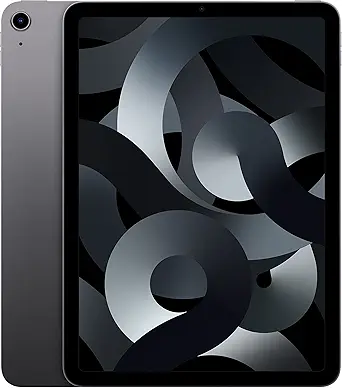
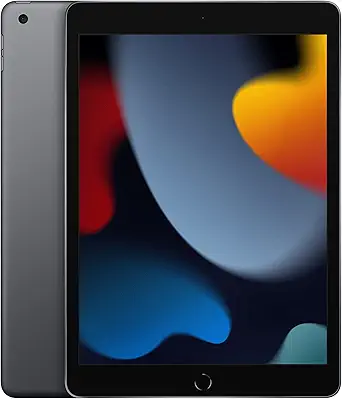
The tablet market has long ceased to be a simple battleground for casual media consumption; it has evolved into a high-stakes arena of productivity, digital artistry, and hybrid computing. At the absolute forefront of this transformation stands Apple, whose iPad lineup has virtually defined the product category since its debut in 2010. Apple’s brand philosophy revolves around tight hardware-software integration, industry-leading proprietary silicon, and a highly polished, secure ecosystem. Through iPadOS, Apple targets both mainstream consumers seeking seamless multimedia experiences and demanding creative professionals who require desktop-class computational power on the go.
Conversely, Huawei represents one of the most resilient and innovative challengers in modern consumer technology. Despite facing immense geopolitical challenges and losing native access to Google Mobile Services (GMS), Huawei has aggressively redefined its strategy by building an independent, hyper-connected hardware and software architecture centered on HarmonyOS. Huawei’s tablet philosophy emphasizes productivity-centric industrial design, groundbreaking display technologies—such as their glare-free PaperMatte screens—and ultra-competitive pricing. Instead of conceding ground, Huawei has engineered its MatePad series into sophisticated productivity engines tailored for professionals, students, and office environments.
When comparing Apple and Huawei in the tablet sector, consumers are not merely choosing between two different physical shells; they are choosing between two distinct digital ideologies. Apple offers an entrenched, globally supported ecosystem built on unparalleled silicon performance and premier app developer support. Huawei, on the other hand, delivers cutting-edge hardware design, innovative display finishes, and an increasingly sophisticated multi-device office ecosystem that frequently undercuts Apple on out-of-the-box value, particularly outside the North American market.
Key Differences & Technological Comparison
The technological divergence between Apple and Huawei tablets begins at the silicon level. Apple equips its mid-to-high-tier tablets—such as the iPad Air and iPad Pro—with its proprietary desktop-class M-series processors (M2 and M4). These chips boast class-leading single-core and multi-core CPU and GPU performance, delivering raw power that easily outstrips any mobile-derived processor. Huawei relies on its internally developed Kirin chipsets or modified Qualcomm Snapdragon platforms. While Huawei’s silicon provides fluid multitasking, dependable efficiency, and proficient onboard AI processing, it does not match Apple’s benchmark scores or thermal headroom during sustained, resource-intensive workflows such as 4K multi-stream video editing or complex 3D rendering.
Display technology represents another critical point of differentiation. Apple has embraced Ultra Retina XDR displays utilizing dual-layer Tandem OLED technology on its top-tier iPad Pro, achieving unprecedented peak brightness, infinite contrast, and precise color grading for HDR workflows. Huawei counters this with practical, user-centric innovations, most notably its proprietary PaperMatte display technology found on select MatePad models. By utilizing nanoscale chemical etching, Huawei dramatically minimizes ambient reflections by up to 97% and provides a tactile, paper-like friction optimized specifically for handwriting and digital sketch work, significantly reducing eye strain compared to traditional glossy glass panels.
The stylus and input ecosystem also showcases different engineering priorities. The Apple Pencil Pro offers haptic feedback, barrel roll detection, squeeze gestures, and pixel-perfect latency, deeply integrated into professional creative suites like Procreate, Logic Pro, and Final Cut Pro. Huawei’s M-Pencil (equipped with NearLink wireless technology) achieves ultra-low latency and higher pressure sensitivity levels (often exceeding 10,000 levels of pressure sensitivity), establishing a near-instantaneous stylus response. Huawei’s native GoPaint application and bundled productivity suites present a remarkably robust digital canvas straight out of the box.
Software ecosystems remain the most decisive battleground. Apple’s iPadOS benefits from the world's richest tablet application ecosystem, with developers prioritizing optimized, tablet-native professional software. Huawei’s HarmonyOS delivers exceptional desktop-level window management, seamless file transfers between Huawei PCs and phones, and innovative PC-level WPS Office implementations. However, the absence of native Google Mobile Services requires users to rely on Huawei’s AppGallery, Petal Search, or emulation tools (like GBox) to access certain Western services, which presents a distinct software hurdle depending on regional workflow demands.
Pros & Cons Comparison
Apple Tablets (iPad)
- Pros:
- Unmatched computational performance powered by proprietary Apple Silicon (A-series, M2, M4).
- Vast, industry-leading library of professionally optimized tablet applications (Procreate, Final Cut, Affinity).
- Top-tier build quality and industry-standard Tandem OLED and Liquid Retina displays.
- Guaranteed long-term software support, receiving iPadOS updates for 5 to 7 years.
- Seamless integration within the broader Apple ecosystem (AirDrop, Universal Control, Sidecar).
- Cons:
- Significantly higher total cost of ownership; essential accessories (Apple Pencil, Magic Keyboard) are sold separately at premium prices.
- iPadOS still imposes restrictive file management and multitasking constraints compared to a true desktop OS.
- Base models often feature restrictive entry-level internal storage without expandable options.
Huawei Tablets (MatePad)
- Pros:
- Exceptional out-of-the-box value, frequently bundling the keyboard cover and stylus at competitive price points.
- Innovative PaperMatte display options provide unmatched anti-glare viewing and natural, paper-like handwriting ergonomics.
- NearLink connectivity delivers industry-leading stylus response times and stable peripheral pairing.
- Super Device capabilities offer superb productivity integration with other Huawei smart devices and Windows laptops.
- PC-level productivity applications, such as full-featured desktop-style WPS Office suites.
- Cons:
- Lack of native Google Mobile Services (GMS) requires workarounds for standard Google services, Netflix HD certifications, or specific Western banking apps.
- Raw processor compute falls behind Apple's high-end M-series silicon in heavy creative tasks.
- Global availability is constrained, with virtually no official retail presence or warranty support in North America.
Performance, Durability & Value Analysis
From a performance and reliability standpoint, Apple tablets maintain an almost unassailable track record. Apple's M-series silicon provides excessive headroom, ensuring that an iPad purchased today will effortlessly handle modern computing loads several years into the future. Structural rigidity across both brands is exceptionally high, with both manufacturers utilizing premium CNC-machined aluminum chassis. However, Apple’s global repair infrastructure, widespread availability of third-party protective accessories, and uniform customer service network give it a definitive edge in long-term hardware support and lifecycle longevity.
When assessing value, the equation shifts heavily depending on geographic location and consumer priorities. Huawei offers an undeniably aggressive hardware-to-price ratio. In regions across Europe, Asia, and Latin America, a mid-range Huawei MatePad often includes a high-refresh-rate PaperMatte screen, an ergonomic keyboard, and the M-Pencil for the same price that Apple charges for an entry-level iPad lacking any accessories. For students, note-takers, and business professionals whose work relies primarily on document processing, PDF markup, and web-based tasks, Huawei delivers superior day-one functional value per dollar spent.
Final Verdict: Which Brand Should You Choose?
Choosing between Apple and Huawei comes down to your software dependencies, regional ecosystem, and the specific demands of your everyday workflow:
Choose Apple if: You are already invested in the Apple ecosystem (iPhone, Mac), rely heavily on industry-standard creative software like Procreate or Adobe Creative Cloud, demand desktop-tier graphical processing power, and reside in regions like North America where Huawei products face sales and service restrictions. The iPad remains the gold standard for uninterrupted professional reliability, guaranteed software longevity, and the most expansive tablet-optimized app library on earth.
Choose Huawei if: You prioritize productivity value, eye comfort, and note-taking ergonomics above raw computational power, and you live in a region where Huawei fully supports its retail and repair operations. If your primary use cases involve reading, scientific or legal document annotation, academic study, and general office productivity, a Huawei MatePad equipped with a PaperMatte screen and NearLink stylus offers an unmatched physical writing experience and unbeatable out-of-the-box value, provided you do not strictly require native Google services.
Affordability
When evaluating affordability in the tablet space, Apple and Huawei approach consumer value from fundamentally different pricing architectures and hardware philosophies. Apple’s iPad lineup operates on a premium tier where the initial cost of admission is undeniably high, particularly when configuring devices with adequate storage or professional-grade silicon like the M-series chips. Even Apple’s entry-level standard iPad commands a higher price tag than many Android-based competitors while retaining base storage limitations. Furthermore, Apple separates essential productivity accessories—such as the Apple Pencil and Magic Keyboard—into expensive auxiliary purchases, substantially driving up the total cost of ownership. However, Apple balances this steep monetary barrier with unmatched longevity, exceptional engineering tolerances, and an industry-leading multi-year software support lifecycle that yields remarkably high residual resale value over three to five years.
Conversely, Huawei champions an aggressive value-to-performance proposition, engineering their MatePad series to undercut Apple across nearly every equivalent performance bracket. Huawei frequently packages high-refresh-rate OLED displays, expansive base storage capacities, and multi-speaker acoustic arrays at price points where Apple still offers baseline 60Hz LCD panels. In many global markets, Huawei further enhances out-of-the-box affordability by bundling peripherals like the M-Pencil or detachable keyboard folios directly with the tablet, avoiding Apple's costly à la carte accessory model. The hardware build quality of modern MatePads is impeccably competitive, featuring sleek metallic unibody designs and high-efficiency Kirin or Qualcomm silicon that handle multitasking effortlessly at a fraction of the cost of an iPad Air or iPad Pro.
The practical trade-off, however, lies in the software ecosystem and long-term utility. While Huawei provides vastly superior hardware-per-dollar metrics upfront, the omission of native Google Mobile Services (GMS) due to trade restrictions requires users to rely on HarmonyOS, AppGallery, and microG workarounds, which may compromise seamless app workflows depending on regional dependence on Western software suites. Apple’s upfront expense grants immediate, frictionless access to iPadOS, a dedicated ecosystem of tablet-optimized professional applications, and seamless cross-device synchronization with Mac and iPhone hardware. Ultimately, budget-conscious consumers seeking maximum raw hardware specifications and bundled productivity accessories per dollar will find Huawei the undisputed affordability champion, whereas buyers viewing affordability through the lens of long-term software stability, ecosystem maturity, and asset depreciation will find Apple’s higher initial price tag justified.
Battery Life
When evaluating battery performance in the tablet category, Apple’s iPad ecosystem sets the industry benchmark for predictable endurance, driven by the exceptional energy efficiency of its custom Apple Silicon (A-series and M-series chips). Apple designs its hardware and iPadOS in tandem, allowing for granular power distribution and remarkably low idle battery drain; an iPad left on a desk will lose negligible power over several days. In sustained productivity workflows, such as video editing in Final Cut Pro or digital illustration via Procreate, Apple prioritizes peak performance, which can deplete the battery rapidly despite the large physical capacities. Furthermore, Apple has historically taken a conservative approach to charging speeds, with most premium iPads topping out between 20W and 30W. This deliberate hardware trade-off preserves long-term battery cell health and longevity, but it leaves users waiting upwards of two hours for a complete replenishment.
Huawei, by contrast, approaches the battery equation with a strong focus on aggressive software power management and breakthrough charging hardware. The flagship MatePad series leverages the efficiency of Kirin or optimized Qualcomm silicon paired with HarmonyOS, which employs strict background process suppression to stretch screen-on time during passive tasks like video playback and document reading. Where Huawei decisively outperforms Apple is in power delivery technology; their SuperCharge standard routinely provides 40W to 88W wired charging on higher-end MatePads, and select models even support reverse wireless charging to top up accessories. This radically reduces downtime, allowing a depleted tablet to reach functional percentages in under half an hour, making Huawei substantially more accommodating for users with erratic charging routines on the move.
Ultimately, the choice between Apple and Huawei regarding battery life comes down to a preference for sustained operational consistency versus rapid recovery. Apple delivers an impeccably optimized, linear discharge curve, superior standby retention, and proven multi-year cell degradation resistance, making it the safer choice for heavy, uninterrupted creative workloads. Huawei sacrifices some background multitasking flexibility due to HarmonyOS's aggressive app-killing policies to extend runtimes, but it compensates with best-in-class charging speeds that fundamentally change how users interact with their device's power constraints. For consumers prioritizing overnight top-ups and rock-solid endurance under heavy compute loads, Apple holds the edge, whereas Huawei is the superior option for users demanding rapid, midday turnaround times.
Display
Apple has long set the gold standard for tablet displays, a reputation solidified by its engineering transition to Tandem OLED technology on the flagship iPad Pro and Liquid Retina panels across the broader lineup. By stacking two organic light-emitting diode layers, Apple achieves an extraordinary peak brightness of 1,600 nits for HDR content and an exceptionally accurate, consistent 1,000 nits full-screen brightness. Coupled with Apple’s ProMotion technology, which dynamically scales refresh rates from 10Hz to 120Hz, the visual experience delivers unmatched fluid scrolling, precise color gamut reproduction (P3 wide color), and superior contrast ratios with true inky blacks. Apple's proprietary True Tone technology continuously samples ambient lighting to maintain perceptual color accuracy, making iPads the definitive choice for professional color-grading, digital artistry, and video editing. However, practical trade-offs remain on lower-tier models, where non-laminated displays and standard 60Hz panels persist, occasionally exposing buyers to visible air gaps and reflections unless they pay a substantial premium.
Huawei approaches tablet display engineering through a lens of aggressive visual innovation and utilitarian adaptability, characterized by its proprietary PaperMatte display technology found on the flagship MatePad series. While Huawei also deploys ultra-sharp, high-refresh-rate (up to 144Hz) OLED and IPS panels, its standout technical achievement is the nanoscale anti-glare etching process. This treatment eliminates roughly 97% of ambient light reflections and mimics the tactile friction of real paper, drastically reducing eye strain during marathon reading sessions and offering an industry-best stylus-to-screen tactile feel. Furthermore, Huawei frequently offers higher screen-to-body ratios with slimmer, symmetrical bezels and higher base-level refresh rates than Apple's entry- and mid-tier offerings. The compromise, however, lies in strict visual fidelity; the microscopic texture of the matte diffusion layer subtly mutes overall contrast and reduces absolute micro-contrast and saturation, making it slightly less suited for mission-critical color grading compared to Apple's glossy, high-luminance panels.
Ultimately, the display duel between Apple and Huawei highlights two distinct hardware philosophies tailored to different professional demands. Apple leads in uncompromised dynamic range, absolute luminance, and industry-calibrated color precision, catering heavily to media consumers and creative professionals who rely on exact color fidelity. Huawei counters with ergonomics and productivity-focused engineering, excelling in high-ambient-light usability and natural writing mechanics through its glare-free coatings. For consumers prioritizing peak HDR cinematic viewing and color-critical workflows, Apple’s Tandem OLED remains the technological pinnacle, whereas Huawei represents the superior ergonomic choice for intensive document markup, note-taking, and environments plagued by harsh glare.
Performance
When evaluating performance in the tablet market, Apple’s iPad lineup maintains an industry-leading position, driven by its proprietary Silicon architecture. Integrating the M-series processors (M2, M4) into the iPad Pro and Air models alongside the A-series chips in entry-level tiers, Apple achieves unprecedented raw compute and graphical power. These chips feature integrated unified memory, robust multi-core CPU architectures, and advanced Neural Engines that effortlessly handle extreme workloads such as 4K and 8K ProRes video editing, 3D rendering in Octane, and multi-track audio production in Logic Pro. Because Apple designs both the hardware and iPadOS in tandem, resource allocation and thermal dissipation are remarkably optimized, ensuring that sustained peak performance rarely triggers aggressive thermal throttling, even under extended synthetic benchmarks or intensive gaming sessions.
Huawei’s performance strategy with its MatePad series centers on hardware resiliency and aggressive software optimization through HarmonyOS. Powered predominantly by proprietary Kirin processors—such as the Kirin 9000-series—supplemented by select Qualcomm Snapdragon configurations, Huawei delivers remarkably fluid UI navigation, swift app launching, and reliable everyday multitasking. Where Huawei particularly shines is in its micro-architecture optimizations and low-level software scheduling via the Ark Engine, which keeps the system remarkably responsive under typical productivity and multi-window scenarios. However, due to external supply-chain constraints, Kirin silicon generally lags a few process nodes behind Apple’s latest 3-nanometer marvels. Consequently, Huawei tablets trail Apple in peak GPU throughput and absolute computational ceilings, which becomes apparent when running demanding graphics engines or compiling complex media projects.
From a consumer and workflow perspective, the practical trade-offs between the two ecosystems are significant. Apple’s performance headroom translates into unmatched longevity, guaranteeing fluid operation and OS upgradeability for five to seven years, alongside access to desktop-grade creative suites that fully exploit its silicon. Conversely, Huawei counters with exceptional productivity-oriented performance features, such as PC-level WPS Office, intelligent multi-screen collaboration with Windows laptops, and virtually latency-free M-Pencil stylus interactions that rival Apple’s ProMotion responsiveness. Ultimately, users requiring extreme processing power for heavy creative rendering or computational tasks will find Apple distinctly superior, whereas consumers seeking an ultra-responsive, highly interconnected tablet for enterprise productivity and general media consumption will find Huawei's performance more than competent.