
Amazon vs Microsoft: Overview
Comparing Amazon and Microsoft helps you determine which brand is best suited for your needs in Tablets. Both brands offer strong choices depending on your budget and key feature requirements.
Key Features & Comparison
Evaluate factors such as build quality, warranty, customer satisfaction, and total value before making your final purchase choice between Amazon and Microsoft.
Affordability
Amazon completely dominates the entry-level tablet space by engineering its Fire tablet lineup to be as accessible as possible, frequently pricing devices well under the three-digit threshold. By relying on a razor-and-blade business model—subsidizing hardware costs through Amazon ecosystem integration, Prime services, and optional lock-screen advertisements—Amazon delivers functional multimedia consumption hardware at disruptive prices. For families, students, or casual users seeking media players and e-readers without substantial financial commitment, Amazon's Fire 7, HD 8, and HD 10 represent unmatched value per dollar, provided users accept the inherent limitations of plastic builds and targeted software storefronts.
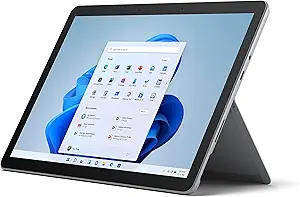
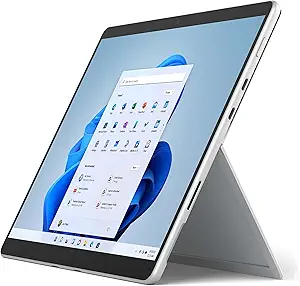
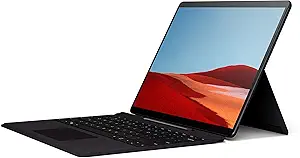
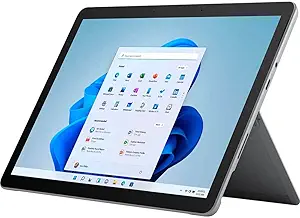
In stark contrast, Microsoft targets the premium productivity and enterprise segments with its Surface lineup, positioning its hardware at a substantially higher tier of investment. Devices like the Surface Pro and Surface Go feature premium magnesium alloys, precision kickstands, and fully uncompromised desktop operating systems, which inherently drives production costs into luxury territory. While a consumer can purchase several Amazon Fire tablets for the price of a single Surface Go entry model, Microsoft's pricing reflects a full-fledged PC replacement rather than a simple content-consumption slate. The trade-off is clear: Amazon offers unbeatable baseline affordability for casual consumption, whereas Microsoft demands high upfront capital to deliver professional-grade enterprise utility.
Battery Life
Amazon Fire tablets excel in power longevity due to their lower-tier silicon, lower-resolution panels, and lightweight mobile operating system, Fire OS. Because these devices are tuned specifically for passive activities like streaming video, reading e-books, and occasional web browsing, their ARM-based processors operate at minimal power draw. Users routinely achieve between 10 to 13 hours of continuous real-world use on modern Fire HD models. Furthermore, their standby battery drain is remarkably low, allowing a Fire tablet to sit idle for days without losing a critical percentage of charge, making it exceptionally reliable for travel or intermittent home use.
Microsoft Surface devices, conversely, face the demanding architectural challenge of powering full desktop-class Windows 11 on higher-wattage Intel or high-performance Qualcomm processors. While Qualcomm-powered variants like the Surface Pro 11 with Snapdragon X chips have significantly closed the efficiency gap, most Windows-based Surface tablets draw substantial current due to resource-heavy background processes, high-refresh displays, and multitasking workloads. Real-world battery life typically hovers between 7 to 10 hours for productivity tasks, often falling shorter under sustained professional software loads. While Microsoft offers sophisticated power management tools, Amazon retains the endurance advantage for prolonged, uninterrupted media playback.
Display
Amazon equips its Fire tablets with modest, functional displays tailored primarily for streaming video and reading text. Ranging from sub-HD resolutions on baseline models to standard 1080p IPS panels on the Fire HD 10 and Max 11, Amazon’s screens provide acceptable color saturation, decent viewing angles, and adequate brightness for indoor environments. However, these panels remain standard 60Hz displays with modest color gamut coverage, noticeable bezels, and basic anti-reflective coatings, making them strictly utilitarian screens designed for casual entertainment rather than visual fidelity or precision creative work.
Microsoft makes display technology a primary selling point across its Surface hardware via its proprietary PixelSense panels. Featuring distinct 3:2 aspect ratios optimized for vertical productivity, Microsoft's screens deliver exceptional pixel density (often exceeding 260 PPI), wide color gamuts (100% sRGB and DCI-P3 profiles), and high dynamic range capabilities. Premium Surface Pro models introduce dynamic 120Hz refresh rates and optional OLED technology, delivering fluid stylus tracking and deep contrast ratios. For digital artists, professionals reviewing high-resolution assets, or users demanding crisp text rendering, Microsoft’s displays operate in an entirely superior technological class compared to Amazon's budget panels.
Performance
Performance on Amazon Fire tablets is engineered strictly to handle day-to-day multimedia consumption, lightweight gaming, and web navigation. Powered by budget-tier MediaTek octa-core ARM processors paired with conservative RAM allocations (typically 2GB to 4GB), Fire OS provides a fluid enough experience for launching Prime Video, Netflix, or Kindle. However, performance degrades quickly when running intensive 3D games, multitasking heavily between browser tabs, or navigating complex applications. The absence of the Google Play Store out-of-the-box further limits software scope to lightweight applications optimized for Amazon's curated app store.
Microsoft delivers an entirely different tier of computing capability by treating its Surface tablets as full-fledged personal computers. Armed with multi-core Intel Core Ultra or Snapdragon X Elite processors paired with up to 32GB of LPDDR5x RAM and high-speed NVMe storage, a Surface tablet handles heavy multitasking, 4K video editing, CAD software, and large spreadsheets with ease. Running full Windows 11 gives users access to legacy x86/x64 desktop software suites and professional development environments. The computational headroom of Microsoft hardware dwarfs that of Amazon, establishing the Surface as a true workplace workhorse rather than a domestic media viewer.
Compare current retail pricing, active promotions, and verified stock availability directly from authorized stores: