

Amazon vs Huawei: Overview
Comparing Amazon and Huawei helps you determine which brand is best suited for your needs in Tablets. Both brands offer strong choices depending on your budget and key feature requirements.
Key Features & Comparison
Evaluate factors such as build quality, warranty, customer satisfaction, and total value before making your final purchase choice between Amazon and Huawei.
Affordability
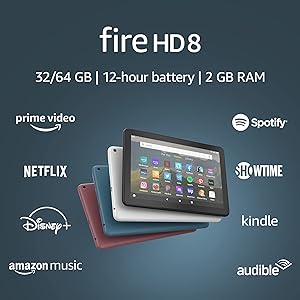
Amazon fundamentally dominates the budget tablet landscape by engineering devices with an aggressive loss-leader pricing strategy. Devices like the Fire 7, Fire HD 8, and Fire HD 10 are manufactured with lightweight, durable polycarbonate chassis and modest internal components, enabling entry-level price points that few competitors can match. Amazon offsets these razor-thin hardware margins by tightly integrating its ecosystem, serving lock-screen advertisements, and monetizing user engagement across Prime Video, Kindle, and Amazon retail. This makes Amazon tablets exceptionally cost-effective solutions for families, casual content streamers, and students seeking bare-bones utility without a significant financial commitment.
Huawei, by contrast, targets a broader pricing spectrum that extends from budget-conscious models to premium tier flagships, such as the MatePad SE up through the MatePad Pro line. While Huawei’s entry-level devices are priced slightly higher than equivalent Amazon hardware, they provide vastly superior physical craftsmanship, often utilizing lightweight aluminum-magnesium alloys and modern thin-bezel architectures. Huawei avoids ad-subsidized monetization models, delivering premium industrial design, stylus compatibility, and productivity-oriented desktop modes at prices that consistently undercut Apple and Samsung. For consumers willing to invest slightly beyond the rock-bottom budget tier, Huawei provides significantly higher raw hardware value per dollar spent.
Battery Life
Amazon tablets excel in passive power management, offering extended operational life that regularly meets or exceeds advertised figures of 10 to 13 hours. Because Fire tablets utilize energy-efficient, low-power system-on-chips (SoCs) and prioritize low-demand tasks like e-book rendering and local or cloud video streaming, their hardware draws minimal power. Standby battery drain on Amazon Fire OS is notably low, allowing a device to sit idle on a bedside table for days without requiring a recharge. However, Amazon cuts manufacturing costs significantly on recharging infrastructure, often capping wired charging speeds at a sluggish 9W to 15W, which results in frustratingly long replenishment times.
Huawei tackles battery engineering with a high-performance methodology, pairing larger capacity battery cells with advanced EMUI and HarmonyOS power management algorithms. While running demanding productivity suites, stylus input, or high-refresh-rate displays will deplete Huawei tablets faster under heavy workloads than an Amazon tablet running low-stress media tasks, Huawei dramatically outclasses Amazon in recharging technology. Featuring proprietary SuperCharge technology ranging from 22.5W up to 66W, Huawei tablets recover substantial battery reserves in minutes rather than hours. Additionally, select high-end MatePad models offer reverse wireless charging, allowing users to power accessories and smartphones on the go.
Display
Amazon Fire displays are strictly tuned for standard-definition and high-definition video consumption within tightly controlled price constraints. Lower-tier models continue to feature lower-resolution sub-Full HD panels, while the higher-end Fire HD 10 and Fire Max 11 utilize IPS LCD panels that top out around 1080p to 2K resolution. Color reproduction is generally tuned for basic sRGB coverage, and peak brightness typically hovers around 400 nits, which is sufficient for indoor media playback but struggles under direct sunlight. Furthermore, Amazon sticks to a standard 60Hz refresh rate across its lineup, prioritizing power savings and bill-of-materials cost over fluid UI animations or gaming fidelity.
Huawei treats display technology as a central selling point, incorporating cutting-edge screen engineering even within its mid-range product tiers. The MatePad family boasts high-resolution FullView displays, ranging from crisp 2K LCDs to stunning 2.8K and OLED panels with peak brightness levels often exceeding 600 nits. Huawei integrates 120Hz to 144Hz refresh rates, DCI-P3 wide color gamuts, and factory color calibration, catering directly to digital illustrators and visual media enthusiasts. Furthermore, Huawei frequently offers specialized anti-glare, paper-like matte glass treatments (such as their PaperMatte display technology) that significantly reduce eye strain and recreate a tactile, paper-like resistance for stylus writing.
Performance
Performance on Amazon Fire tablets is engineered primarily to facilitate media consumption, basic web browsing, and smart home control via Alexa. Powered primarily by entry-level MediaTek silicon paired with modest 2GB to 4GB RAM configurations, Fire OS is serviceable for navigating Amazon's curated app launcher and streaming services. However, technical trade-offs become starkly evident when multitasking or running demanding applications: app load times are perceptible, background processes are aggressively terminated, and 3D graphics rendering is minimal. Additionally, the lack of native Google Mobile Services (GMS) limits the out-of-the-box software library strictly to the Amazon Appstore, capping overall system versatility.
Huawei delivers high-performance mobile computing across its tablet lineup, equipping its hardware with capable Kirin or Qualcomm Snapdragon processors backed by 6GB to 12GB of high-speed RAM. This hardware disparity allows Huawei tablets to tackle demanding 3D gaming, multi-window split-screen productivity, 4K video editing, and complex digital art creation with zero stutter. HarmonyOS features sophisticated multitasking features, including PC-level desktop interfaces, floating app windows, and ultra-low-latency M-Pencil stylus support. The critical trade-off lies in software logistics: due to international trade restrictions, Huawei tablets operate without Google Mobile Services out of the box, requiring users to rely on Huawei’s AppGallery, Petal Search, or third-party virtualization environments to access their preferred apps.