
Amazon vs Apple: Overview
Comparing Amazon and Apple helps you determine which brand is best suited for your needs in Tablets. Both brands offer strong choices depending on your budget and key feature requirements.
Key Features & Comparison
Evaluate factors such as build quality, warranty, customer satisfaction, and total value before making your final purchase choice between Amazon and Apple.
Affordability
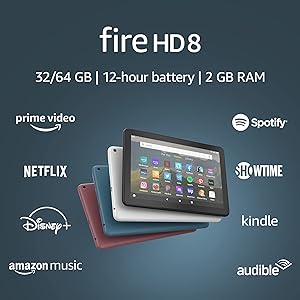
When evaluating affordability, Amazon and Apple occupy polar opposite ends of the tablet market. Amazon's Fire tablet lineup is engineered around an aggressive cost-to-value philosophy, functioning primarily as accessible digital consumption portals tightly linked to the Prime content ecosystem. By utilizing utilitarian plastic chassis designs, off-the-shelf system-on-chips, and optionally subsidizing hardware costs through lock-screen advertisements, Amazon manages to offer entry-level models like the Fire 7 and Fire HD 8 at double-digit price points, with top-tier models like the Fire Max 11 remaining well below mid-tier industry averages. This approach democratizes tablet access, making Amazon the undisputed leader for families, secondary household devices, and consumers seeking basic streaming or reading utilities on strict budgets.
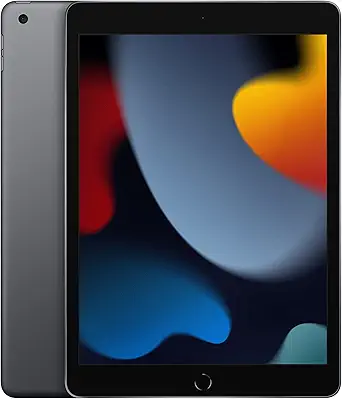
In stark contrast, Apple positions the iPad as a premium, long-term consumer investment that commands a substantial price premium across its entire portfolio. Even the base-model 10th-generation iPad typically costs three to four times more than Amazon's flagship offerings, while the iPad Air and iPad Pro escalate into luxury and professional tiers rivaling high-end laptops. However, Apple offsets this upfront financial barrier with unmatched depreciation resistance, a minimum of five to seven years of official iPadOS software support, and far superior construction featuring precision-machined recycled aluminum. For consumers, the trade-off hinges on initial cash outlay versus total lifecycle cost: Amazon delivers unbeatable near-term utility per dollar, while Apple provides exceptional sustained value and software longevity that outlasts multiple generations of budget hardware.
Battery Life
Both manufacturers deliver commendable battery endurance, yet their engineering teams resolve the power-consumption equation through fundamentally different design methodologies. Amazon Fire tablets benefit from low-power, modest hardware configurations, featuring energy-conservative MediaTek processors and lower-resolution displays that draw minimal wattage. Consequently, models like the Fire HD 10 easily achieve between 10 to 13 hours of continuous mixed-use media playback, reading, and light web browsing on a single charge. Because Fire OS lacks the complex multitasking overhead and background processes inherent to more powerful operating systems, Amazon devices boast exceptional standby longevity, often maintaining their charge for days when left idle between reading sessions.
Apple approaches battery optimization from a high-efficiency architecture standpoint, pairing dense lithium-polymer cells with custom Apple silicon engineered on advanced microarchitectures. Across the standard iPad, Mini, Air, and Pro lines, Apple consistently targets an industry-standard baseline of 10 hours of active web surfing or video playback over Wi-Fi. While Apple matches or slightly trails Amazon in raw continuous runtime during purely passive tasks like video streaming, it demonstrates superior dynamic power scaling under heavy computational loads such as 4K video rendering, 3D gaming, or Apple Pencil illustration. Furthermore, higher-end iPads benefit from faster USB-C Power Delivery protocols, allowing significantly quicker recharges compared to the comparatively slow charging cycles found across Amazon's budget-oriented power bricks.
Display
Display engineering represents one of the clearest dividing lines between Amazon's pragmatic panel implementations and Apple's industry-standard visual technologies. Amazon utilizes standard IPS LCD panels calibrated primarily for internal media streaming and e-reading. Resolutions generally span from basic 720p or 800p on smaller units up to 1080p and 2K (2000x1200) on the Fire HD 10 and Fire Max 11. While these screens provide adequate brightness, acceptable viewing angles, and punchy colors for casual video consumption, they typically omit advanced anti-reflective coatings, wide color gamuts, and laminated cover glass on the budget end. The resulting air gap on entry-level Fire models creates noticeable surface reflections and less direct touch responsiveness, which is acceptable for streaming in dim rooms but less ideal in bright outdoor environments.
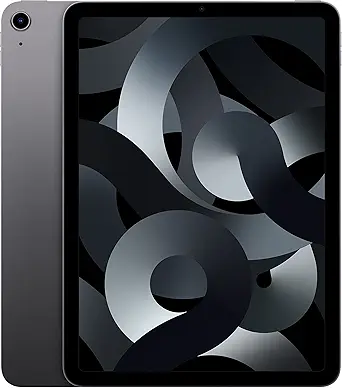
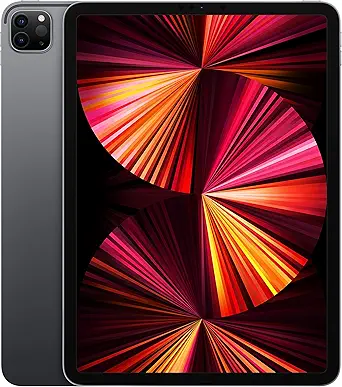
Apple treats display technology as a central pillar of user engagement, equipping every tier of iPad with visually superior screens. Across the spectrum—from the entry iPad to the Liquid Retina and revolutionary Tandem OLED Ultra Retina XDR displays found on the latest iPad Pro—Apple guarantees fully laminated panels, accurate P3 wide color reproduction, and industry-leading anti-reflective treatments. Technologies such as True Tone automatically calibrate color temperatures to ambient lighting, while the 120Hz ProMotion variable refresh rate on Pro models delivers fluid scrolling and ultra-low pen-tip latency for creative professionals. For digital artists, media connoisseurs, and users demanding peak color accuracy and optical clarity, Apple's display engineering outclasses Amazon's utilitarian panels in almost every measurable visual metric.
Performance
Under the hood, the performance divide between Amazon and Apple is expansive, reflecting entirely divergent intended use cases. Amazon equips its tablets with budget-to-midrange multi-core MediaTek processors, paired with modest allocations of 2GB to 4GB of RAM. Governed by Fire OS—a heavily customized, ad-integrated fork of Android—these components are intentionally calibrated for singular focus: launching media apps, browsing the web, operating smart-home dashboards, and running casual mobile games. When pushed beyond these boundaries into split-screen multitasking, graphically demanding 3D gaming, or rapid productivity workflows, Amazon tablets frequently exhibit micro-stutter, slow app-launch times, and aggressive background memory clearing, making them ill-suited for intensive computational workloads.
Apple, meanwhile, establishes the performance benchmark for the global tablet market by deploying desktop-grade silicon across its lineup. Utilizing proprietary A-series Bionic chips in entry-level units and bleeding-edge M-series (M2, M4) processors in the Air and Pro variants, iPads offer computational power that often eclipses traditional consumer laptops. Paired with the deeply optimized iPadOS ecosystem, Apple tablets effortlessly handle demanding real-time workflows, including multi-track 4K ProRes video editing in Final Cut Pro, complex digital audio production in Logic Pro, high-frame-rate AAA gaming, and frictionless split-screen multitasking with Stage Manager. While an Amazon tablet delivers perfectly competent performance for passive media consumption, Apple's engineering provides an unrivaled performance ceiling capable of sustained creative and professional productivity.