Acer vs Amazon: Overview
Comparing Acer and Amazon helps you determine which brand is best suited for your needs in Tablets. Both brands offer strong choices depending on your budget and key feature requirements.
Key Features & Comparison
Evaluate factors such as build quality, warranty, customer satisfaction, and total value before making your final purchase choice between Acer and Amazon.
Affordability
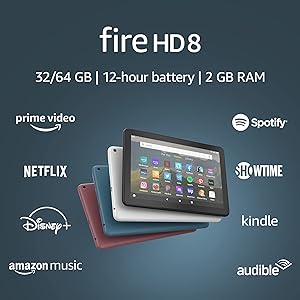
When evaluating affordability, Amazon holds a dominant and near-unbeatable position in the consumer tablet marketplace due to its loss-leader business model. The Amazon Fire tablet lineup is strategically priced well below typical hardware margins, aiming to recoup revenue through digital content sales, Kindle subscriptions, and Prime ecosystem integration. As a result, entry-level shoppers can secure functional devices like the Fire 7 or Fire HD 8 for a fraction of what traditional hardware manufacturers charge. While ad-supported 'lockscreen offers' further drive down initial acquisition costs, users who prefer an ad-free experience face an additional minor fee. Overall, Amazon's pricing approach democratizes access to media consumption devices, making them ideal for budget-conscious families, children, and students.
Acer approaches affordability through a traditional computing hardware lens, focusing on full-featured productivity rather than heavily subsidized retail portals. Tablets like the Acer Iconia and Enduro series reflect component manufacturing costs without reliance on backend ecosystem monetization. Consequently, an entry-level Acer tablet generally commands a higher MSRP than a comparable Amazon Fire tablet. However, Acer offsets this price premium by delivering unrestricted Android environments out of the box, complete with standard Google Mobile Services (GMS) and the Google Play Store, avoiding the hidden cost of sideloading software or dealing with platform walled gardens. For consumers seeking versatile hardware capable of broader utility beyond basic streaming and reading, Acer offers superior intrinsic hardware value despite the higher upfront financial commitment.
Battery Life
Amazon tablets excel remarkably in battery endurance, largely owing to a tightly controlled operating system and conservative hardware specifications. Fire OS utilizes aggressive background process management that prevents inactive applications from draining system reserves, which pairs effectively with power-efficient MediaTek processors. Furthermore, because Fire tablets are predominantly engineered around media streaming, e-reading, and casual browsing, their display backlights and processing cores rarely operate at high-draw thresholds for extended periods. Real-world usage frequently yields between 10 to 13 hours of continuous mixed-use operation on a single charge, allowing devices like the Fire HD 10 or Max 11 to easily outlast daily media sessions without prompting range anxiety.
Acer tablets deliver respectable yet comparatively modest battery performance, driven by different engineering priorities and higher-demand software overhead. Because Acer models run standard Android or, in rugged Enduro variants, support enterprise-grade GPS and industrial telemetry, the background resource consumption is naturally higher than Amazon's restricted platform. Acer devices typically provide between 7 to 9 hours of continuous active use depending on screen brightness and network activity. While Acer's thermal dissipation is robust and component degradation is minimal over sustained cycles, power optimization leans toward workstation stability rather than passive media longevity, meaning heavy users will find themselves reaching for the USB-C charging cable more frequently throughout a busy workday.
Display
In the display department, Amazon prioritizes durability and competent media fidelity suited for everyday indoor streaming. Lower-end models like the Fire 7 feature basic sub-HD resolutions, but step-up variants such as the Fire HD 10 and Fire Max 11 offer sharp 1080p and 2K IPS panels with commendable color accuracy, wide viewing angles, and certified low-blue-light emissions. Amazon deliberately tunes these panels for high-contrast video playback and legible digital typography to enhance Kindle reading. However, peak brightness levels across the Fire lineup remain relatively conservative, typically hovering around 400 nits, which can result in noticeable glare and compromised visibility when attempting to use the tablets outdoors or in intensely lit environments.
Acer adopts a more diversified and utilitarian strategy regarding panel engineering, tailoring its screens to specific operational niches. Consumer-oriented Iconia models present crisp Full HD displays that compete well in standard indoor environments, but Acer's engineering prowess truly surfaces in its specialized and rugged Enduro product lines. These tablets incorporate high-brightness displays capable of reaching up to 600 nits, paired with optical bonding and anti-reflective coatings designed to combat direct sunlight effectively. Additionally, Acer often integrates Corning Gorilla Glass with specialized wet-finger and glove-touch calibration, catering to field workers and active environments where touch responsiveness under adverse conditions is critical, albeit sometimes trading off the sleek edge-to-edge aesthetic found on media-centric consumer tablets.
Performance
Amazon Fire tablets are purposefully engineered with a narrow operational envelope in mind, relying on entry-level to mid-tier system-on-chips (SoCs) coupled with modest RAM allocations, often ranging between 2GB and 4GB. Within the confines of streaming Prime Video, browsing web pages via the Silk browser, and launching casual mobile games, the optimized Fire OS maintains smooth operation. However, demanding workflows quickly expose the platform's limitations. Heavy multitasking, tab-intensive web browsing, and 3D graphics rendering frequently result in UI stutter and app reloading, as aggressive memory management terminates background applications. For users whose expectations align purely with passive media consumption, the performance is adequate, but it offers minimal headroom for resource-intensive applications.
Acer provides a substantially more capable and versatile computing platform across its portfolio, utilizing more robust multi-core processors paired with higher RAM capacities to handle complex multitasking. Because Acer devices operate on standard, open-standard Android or Windows environments, they are capable of running heavy productivity suites, enterprise field tools, and demanding 3D software without encountering arbitrary platform bottlenecks. The hardware architecture features superior internal flash storage speeds and more capable graphical processing units, resulting in faster app installation times, snappier interface transitions, and reliable split-screen productivity. For power users needing a tool for content creation, local file manipulation, and unrestricted application execution, Acer’s engineering provides far greater capability and sustained system stability.