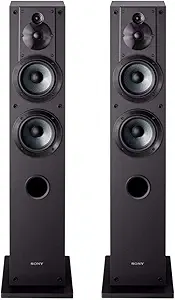
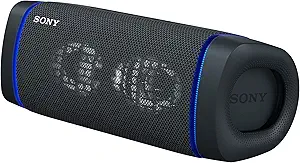
Sony vs Amazon: Overview & Brand Philosophy
When evaluating the modern loudspeaker landscape, few comparisons highlight the divergent evolution of consumer audio quite like Sony and Amazon. Sony represents the traditional audio vanguard, possessing nearly eight decades of acoustic engineering heritage. From developing the original Walkman to pioneering high-resolution audio formats like LDAC, Sony approaches the speaker market with an acoustic-first philosophy. Their product portfolio—spanning ultra-portable Bluetooth models, party speakers, and reference-grade soundbars—is designed to deliver musical fidelity, expansive dynamic range, and outdoor resilience.
In contrast, Amazon entered the speaker space from a software-first paradigm, fundamentally disrupting the industry with the introduction of the Echo smart speaker in 2014. Amazon’s brand philosophy does not prioritize pure acoustic mastery; instead, it positions the speaker as an ambient computing portal and smart home coordinator. Powered by its Alexa voice assistant, an Amazon speaker is engineered to act as a responsive digital hub that integrates voice control, home automation, and cloud-streamed audio into a single, accessible, and affordable piece of home hardware.
Ultimately, these two brands cater to fundamentally different consumer priorities. Sony engineers hardware meant to elevate the sensory experience of listening to music, whether at a desk, by the pool, or in an audiophile's listening room. Amazon designs ambient utility products meant to streamline daily routines, operate appliances, and effortlessly pull down low-complexity audio from the cloud via hands-free voice commands.
Key Differences & Technological Comparison
The technical divergence between Sony and Amazon speakers spans several core pillars: connectivity, acoustic architecture, processing, and intended operational environment.
In terms of acoustic engineering and driver technology, Sony holds a definitive technical lead. Sony's mid-tier and premium portable speakers frequently feature proprietary X-Balanced Speaker Units—non-circular diaphragms that maximize cone area to reduce distortion and increase sound pressure. Sony pairs these with passive dual-radiators and advanced DSP (Digital Signal Processing) engines, such as DSEE (Digital Sound Enhancement Engine), to restore high-frequency details lost in digital compression. Amazon's Echo lineup utilizes traditional circular drivers (such as down-firing woofers and directional tweeters). While high-end models like the Echo Studio leverage spatial processing and room-adaptive acoustic tuning via internal microphones, they prioritize room-filling dispersion over precise instrument separation and micro-detail resolution.
Connectivity protocols highlight an even sharper divide. Sony relies heavily on high-bandwidth point-to-point connections, such as Bluetooth 5.3, with widespread support for their proprietary LDAC codec, enabling wireless transmission of 24-bit/96kHz audio at up to 990 kbps. Sony speakers are autonomous, featuring onboard rechargeable lithium-ion batteries and ruggedized IP67 ratings for water and dust resistance. Conversely, Amazon Echo speakers rely fundamentally on Wi-Fi infrastructures (IEEE 802.11a/b/g/n/ac) to communicate directly with Amazon Web Services (AWS). Bluetooth on an Echo is treated as a secondary feature, primarily operating on low-bandwidth SBC or AAC codecs. Most Echo speakers are tethered to wall outlets, operating as permanent home fixtures with negligible weatherproofing.
On the smart capability front, Amazon completely outclasses Sony. Echo speakers integrate edge-processing machine learning chips (such as the AZ2 Neural Edge processor) designed to parse natural language instantly. Furthermore, modern full-sized Echo devices integrate Zigbee, Matter, and Thread radios, transforming the speaker into a central home automation bridge. While select premium Sony speakers support Google Assistant or Amazon Alexa, they rely on third-party integrations that lack the frictionless voice responsiveness and hardware-level smart home radios found natively inside the Echo ecosystem.
Pros & Cons Comparison
Sony Speakers
- Pro: Class-Leading Audio Quality: Superior bass response, rich midrange voicing, and support for high-resolution LDAC wireless playback.
- Pro: Portability and Rugged Build: Built with long-lasting rechargeable batteries, drop resistance, and high ingress protection (IP67 waterproof and dustproof).
- Pro: Advanced Companion Software: The Sony | Music Center app provides granular 5-band EQ customization and multi-speaker party linking (Party Connect).
- Con: Smart Features are Limited: Lacks robust voice assistant integration and cannot function as an independent smart home hub.
- Con: Premium Price Tag: Significantly higher cost per watt of output compared to mass-market smart speakers.
Amazon Speakers
- Pro: Industry-Leading Smart Integration: Native Alexa support provides unmatched voice control, home automation, and integration with third-party smart accessories.
- Pro: High Value-to-Cost Ratio: Highly competitive pricing, often sold near cost to onboard consumers into the Amazon/Prime ecosystem.
- Pro: Native Multi-Room Wi-Fi Audio: Seamless whole-home audio distribution over home Wi-Fi networks without requiring Bluetooth range proximity.
- Con: Fixed Placement Requirements: The vast majority of models require a constant AC mains connection and offer zero water or dust resistance.
- Con: Compressed Wireless Audio: Bluetooth functionality is secondary and lacks support for advanced, high-resolution audio codecs.
Performance, Durability & Value Analysis
From an acoustic performance and long-term durability perspective, Sony justifies its higher capital investment. Sony builds products to survive physical displacement: their portable lineups utilize shock-tested shockproof elastomer bumpers, rust-proof grilles, and waterproof seals that withstand direct submersions. In real-world playback, a Sony speaker maintains its tonal balance even at high sound pressure levels (SPL), whereas entry-level Echo models suffer from dynamic compression and bass distortion past 75% volume. Longevity with Sony is tied to physical hardware resilience; these devices will reliably push sound via Bluetooth or a 3.5mm auxiliary jack a decade from now, irrespective of changes in cloud software infrastructure.
Amazon, however, dominates the pure consumer value equation if measured by day-to-day functionality inside a home. The Echo Dot and standard Echo provide remarkable acoustic output relative to their physical footprint and price. Durability for Amazon speakers is strictly stationary: their fabric-wrapped enclosures are designed for nightstands, shelves, and countertops, and will deteriorate quickly if exposed to moisture, drops, or grease. Their technological lifespan is also linked to Amazon's continued cloud service and software support for legacy devices. For the consumer looking to build a multi-room, voice-activated radio and podcast system across several bedrooms on a moderate budget, Amazon delivers utility that Sony cannot match on a dollar-for-dollar basis.
Final Verdict: Which Brand Should You Choose?
Selecting between Sony and Amazon comes down to where you intend to listen and what primary job you expect the speaker to perform.
Choose Sony if: You are an active listener who values authentic sound quality, rich bass, and instrument separation above smart utilities. Sony is the undisputed choice for anyone who needs outdoor portability, pool-side durability, long battery life, and the ability to stream high-resolution audio files directly from a mobile device without requiring a home Wi-Fi network.
Choose Amazon if: Your primary goal is to enhance your indoor living environment with hands-free voice assistance, news briefings, smart lighting automation, and multi-room background audio. If you are already invested in the Alexa ecosystem, or want an affordable whole-home audio network that stays permanently plugged into your walls, Amazon provides an unbeatable blend of convenience and software-driven value.
Product Selection
When evaluating product selection in the speaker market, Sony and Amazon operate from fundamentally contrasting design philosophies, resulting in catalogs tailored to vastly different consumer priorities. Sony leverages its extensive acoustic heritage to provide an exceptionally broad and specialized portfolio, spanning rugged, ultra-portable Bluetooth units (such as the SRS-XB and ULT series), massive wheeled party speakers equipped with karaoke and instrument inputs, high-resolution spatial home audio systems (like the SRS-RA series), and specialized form factors such as wearable neckband speakers. In contrast, Amazon deliberately constrains its product matrix around the Echo ecosystem, categorizing its lineup not by diverse acoustic use cases, but by tiers of ambient smart home integration. From the compact Echo Pop and mainstream Echo Dot to the flagship Echo Studio and supplementary Echo Sub, Amazon’s catalog is tightly curated to deliver consistent voice-first interfaces and synchronized multi-room audio within residential environments.
The technical divergence between the two lineups highlights distinct engineering strengths and inherent practical trade-offs. Sony’s product diversity excels in mechanical and electro-acoustic versatility: the company develops specialized hardware variants featuring proprietary X-Balanced speaker units, dual passive radiators, IP66/IP67 ingress ratings for dust and water resistance, and robust battery architectures engineered for extreme mobility. Conversely, Amazon focuses its engineering selection on computational audio and networked convenience, prioritizing far-field microphone arrays, automated room-calibration acoustics, and built-in Zigbee and Matter smart-home controllers. However, this ecosystem-centric approach creates notable gaps in Amazon's catalog, which almost entirely excludes battery-powered, outdoor-ready, or ruggedized designs, effectively tethering the user to continuous mains power and a stable Wi-Fi network.
Ultimately, the breadth of Sony’s selection appeals to audio enthusiasts, outdoor adventurers, and event hosts who demand targeted acoustic solutions, standalone high-fidelity codecs like LDAC, and physical durability. Amazon’s selection is far more homogenous, prioritizing seamless accessibility, smart-assistant utility, and tiered affordability for indoor, whole-home audio deployments. Consumers seeking targeted performance—whether for poolside durability, high-SPL outdoor sound reinforcement, or bespoke desktop listening—will find Sony’s multifaceted catalog superior, whereas those looking for an affordable, cohesive, and automated domestic audio grid will find Amazon’s focused Echo lineup vastly more streamlined and cost-effective.
Affordability
From a sheer entry-level price point, Amazon commands a near-unbeatable advantage over Sony, largely due to fundamentally distinct business models. Amazon treats its Echo smart speaker lineup—ranging from the ultra-budget Echo Pop and Dot to the higher-end Echo Studio—as gateway hardware designed to funnel consumers into its retail, Prime, and Alexa ecosystems. Consequently, Amazon employs aggressive loss-leader pricing and frequent promotional discounting, offering multi-room audio capabilities, smart home hub integration, and voice-assisted functionality at price thresholds that traditional audio manufacturers cannot commercially sustain. In contrast, Sony operates on a classic consumer electronics hardware model where the product itself must generate profitability. Sony’s speaker portfolio, which encompasses the portable SRS-XB series, high-output X-series party speakers, and high-resolution home wireless units, carries noticeably higher price tags across equivalent physical size tiers, positioning Sony not as a budget champion, but as a performance-tier acoustic brand.
When analyzing the acoustic engineering and feature sets relative to cost, the trade-offs between the two brands become pronounced. Amazon delivers remarkable value if the primary purchasing criteria revolve around convenience, ambient background audio, and smart home automation. However, their budget enclosures often rely on compact, single full-range drivers supplemented by software-driven equalization, which can lead to compression and harmonic distortion at higher volumes. Sony commands a price premium by heavily investing in dedicated acoustic hardware, including proprietary X-Balanced Speaker Units, dual passive radiators, and robust digital sound enhancement engines (DSEE). Furthermore, Sony incorporates advanced audio transmission standards like the proprietary LDAC codec for high-resolution Bluetooth streaming, alongside high-grade ingress protection ratings (IP67 for dust and water resistance) and drop-tested ruggedization. Consumers paying more for Sony are directly subsidizing superior transducer design, mechanical acoustic optimization, and outdoor durability, whereas Amazon buyers are paying for compact processing nodes optimized for far-field microphone pickup and ambient utility.
Ultimately, determining the more "affordable" option depends on whether a consumer measures value through pure financial outlay or long-term acoustic return on investment. For budget-conscious buyers seeking an inexpensive, versatile audio node for kitchens, bedrooms, or smart-home voice control, Amazon is undeniably superior in upfront affordability and functional feature density per dollar. Conversely, for users who prioritize true high-fidelity sound reproduction, extended battery-powered portability, and robust, weatherproof chassis that withstand physical abuse, Sony’s higher price barrier is justified. Sony offers better hardware longevity without ecosystem lock-in or cloud obsolescence concerns, meaning its elevated upfront cost often translates to a more satisfying, enduring investment for dedicated music listening.
Quality/Durability
When assessing engineering quality and material durability, Sony and Amazon represent fundamentally different manufacturing philosophies driven by their target deployment environments. Sony brings over half a century of legacy audio craftsmanship to the table, emphasizing ruggedized, field-ready physical builds and specialized acoustic hardware. In models like their portable SRS series, Sony integrates heavy-duty, impact-resistant composite plastics, tear-resistant woven mesh, and rigorous ingress protection ratings—typically reaching IP67 for comprehensive dust and submersion resistance, along with rustproofing for marine conditions. Amazon, by contrast, engineers its Echo speaker lineup strictly for stationary, climate-controlled domestic settings. Echo devices feature attractive, minimalist industrial designs utilizing post-consumer recycled plastics and wrap-around acoustic fabrics that blend seamlessly into home décor, but they inherently lack environmental sealing, possessing no certified water or dust resistance (IPX0). While an Echo device can withstand years on a shelf without cosmetic wear, it remains exceptionally vulnerable to spills, dust accumulation, and accidental drops compared to Sony's shockproof enclosures.
Internally, the disparity in acoustic componentry and physical longevity becomes even more pronounced. Sony constructs its speakers with proprietary, heavy-gauge transducers, such as their non-circular X-Balanced Speaker Units, which utilize rigid cellular-reinforced mica diaphragms designed to withstand high excursion and mechanical fatigue over extended operational lifespans without voice-coil distortion or cone tearing. In their portable battery-driven offerings, Sony incorporates specialized Battery Care software algorithms to prevent overcharging and cyclic degradation, ensuring multi-year battery health. Amazon relies heavily on computational audio processing and digital signal processors (DSP) to push budget-friendly, standard-grade neodymium drivers beyond their natural physical weight class. While this engineering feat produces surprisingly full sound for the price point—particularly in the multi-directional Echo Studio—the physical drivers and power supplies are not built for intense acoustic strain over high-decibel thresholds. However, because most Echo units are tethered to mains power, they avoid the chemical battery degradation that will eventually limit the functional lifespan of cordless Sony models.
From a lifecycle and practical trade-off perspective, each brand offers durability tailored to distinct vulnerabilities. Sony excels in mechanical, environmental, and thermal longevity, making it the definitive choice for consumers who need hardware capable of surviving travel, outdoor abuse, moisture exposure, and rigorous real-world handling. Conversely, Amazon offers exceptional build tolerances and seamless finishes relative to its lower price point, providing high-value durability for stationary tabletop placement. The primary durability trade-off with Amazon is not structural wear from motion, but architectural longevity: an Amazon speaker’s operational life is intrinsically tied to continuous cloud server support, Wi-Fi component longevity, and smart-ecosystem updates, whereas Sony speakers—even their wireless Bluetooth variants—will continue to function as independent, rugged physical audio devices long after a smart ecosystem has evolved.
Sound Quality
From an acoustic engineering perspective, Sony and Amazon approach speaker development from fundamentally different design philosophies, resulting in a stark contrast in sound quality. Sony leverages decades of legacy high-fidelity audio experience, incorporating proprietary driver hardware such as its non-circular X-Balanced Speaker Units, mica-reinforced cellular (MRC) cones, and dual passive radiators. This focus on physical acoustic architecture produces a wider dynamic range, articulate transient response, and pristine instrument separation. In contrast, Amazon’s Echo lineup prioritizes smart functionality and voice intelligibility over pure acoustic performance. While models like the flagship Echo Studio feature a multi-driver array with computational room-adaptation technology, mainstream Echo speakers rely on single-point, omnidirectional drivers engineered primarily to emphasize mid-range frequencies for clear speech reproduction, often resulting in a comparatively compressed and flat soundstage during complex musical passages.
When analyzing frequency response and technical processing, Sony maintains a decisive advantage in both low-end impact and high-frequency resolution. Sony’s portable and home units utilize proprietary Digital Sound Enhancement Engine (DSEE) upscaling alongside support for high-bitrate codecs like LDAC, delivering deeper, controlled sub-bass via dedicated bass-enhancement profiles (such as ULT Power Sound or Extra Bass) without bleeding into the mid-range. Amazon counters with computational audio processing, relying on aggressive digital signal processing (DSP) to push maximum volume out of compact enclosures. While this keeps vocals forward and crisp, it frequently leads to bass distortion, unnatural midrange coloration, and rolled-off highs when pushed past moderate listening levels. Although Amazon integrates Dolby Atmos and spatial audio processing in its higher-tier hardware to simulate a broader presence, the virtualized imaging often lacks the precise stereo imaging and physical depth achieved natively by Sony’s acoustic enclosures.
The practical trade-offs between the two brands center on the balance between audiophile-grade fidelity and ambient smart utility. Amazon’s sound profile is intentionally tuned for hands-off convenience, creating a diffuse, 360-degree sound field ideal for background music, podcasts, and smart-assistant feedback throughout a home. However, listeners seeking dynamic headroom, detailed acoustic texture, and customizable equalization will find Amazon's audio output limiting. Sony provides granular EQ control via its companion apps and delivers the clarity, punch, and tonal balance demanded by critical listeners across various genres. Ultimately, while Amazon provides adequate, user-friendly audio for casual, multi-room smart ecosystems, Sony is unequivocally superior in acoustic refinement, tonal accuracy, and high-fidelity output.