Google vs Fitbit: Overview
Comparing Google and Fitbit helps you determine which brand is best suited for your needs in Smart Watch. Both brands offer strong choices depending on your budget and key feature requirements.
Key Features & Comparison
Evaluate factors such as build quality, warranty, customer satisfaction, and total value before making your final purchase choice between Google and Fitbit.
Battery Life
When evaluating endurance, Fitbit holds an indisputable engineering advantage over Google's flagship smartwatches. Fitbit devices, ranging from dedicated fitness bands like the Charge series to versatile wearables like the Versa and Sense, utilize highly efficient proprietary operating systems paired with low-power microcontrollers. This architecture allows Fitbit models to consistently deliver between 4 to 7 days of continuous operation on a single charge, even with background biometrics and sleep monitoring actively running. Consequently, Fitbit users enjoy uninterrupted multiday telemetry without the cognitive burden of calculating charging intervals into their daily routines.
In stark contrast, Google’s Pixel Watch lineup is powered by Wear OS, a computationally demanding mobile operating system running sophisticated application processors. Despite incremental hardware refinements and battery capacity increases, Google watches rarely exceed 24 to 36 hours of active use, especially with the Always-On Display and continuous GPS tracking enabled. This structural trade-off means Pixel Watch owners must adopt daily charging rituals, frequently relying on rapid top-ups before bed to facilitate sleep tracking. While Google offers superior computing power and screen fluidity, it fundamentally sacrifices the multi-day autonomy that remains Fitbit’s operational hallmark.
Build Quality & Durability
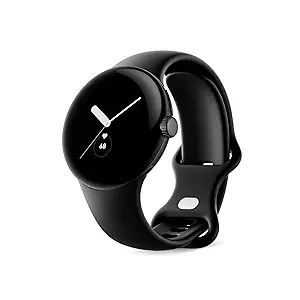
Google approaches smartwatch craftsmanship from a luxury industrial design perspective, producing wearables that resemble high-end mechanical timepieces. The Pixel Watch series features a distinctive, pebble-like domed aesthetic engineered from 100% recycled stainless steel or custom aerospace-grade aluminum, paired with custom-molded 3D Corning Gorilla Glass. The seamless integration of a tactile, haptic-feedback rotary crown and custom band-attachment mechanism underscores Google’s emphasis on premium aesthetics. While this curved crystal dome provides an ultra-refined visual profile, its exposed perimeter leaves the glass somewhat vulnerable to direct edge impacts, despite a robust 5 ATM water resistance rating that comfortably supports shallow-water swimming.
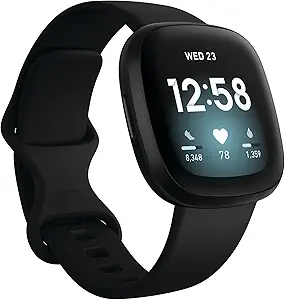
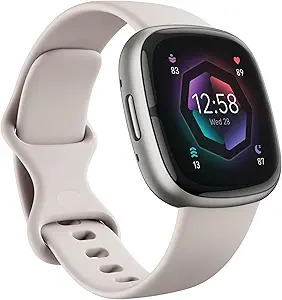
Fitbit focuses on utilitarian ergonomics and athletic durability, resulting in designs optimized for endurance and sustained physical activity. Flagship models like the Sense 2 and Versa 4 feature lightweight, squircle-shaped aluminum chassis with flatter screen profiles, while activity trackers like the Charge 6 leverage reinforced resin and aluminum housings. By recessing the display glass or utilizing broader bezels, Fitbit devices offer better natural protection against accidental knocks during intense workouts. Both brands adhere to 50-meter water-resistance standards, but Fitbit's functional styling prioritizes survivability and lightweight comfort, whereas Google delivers a visually arresting, jewelry-grade accessory that demands a slightly more cautious wrist presence.
Health & Fitness Tracking
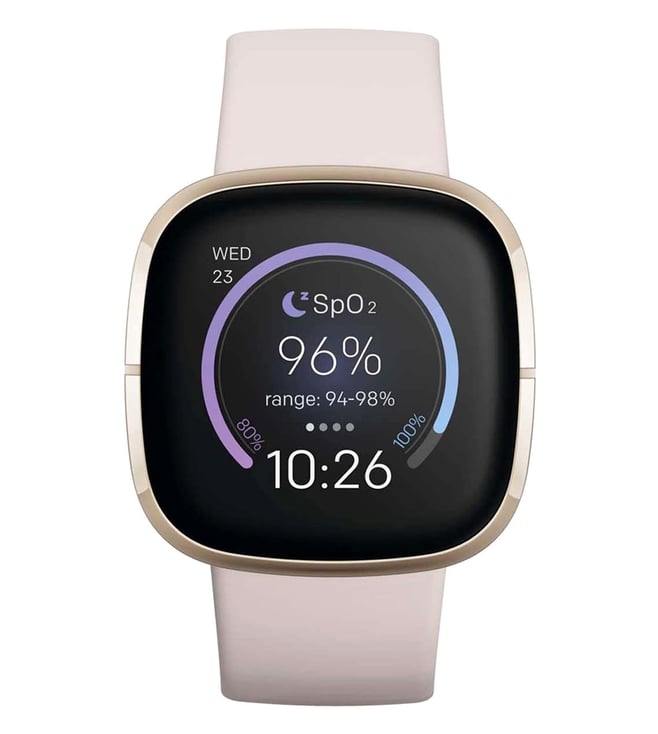
The relationship between Google and Fitbit in physiological tracking is uniquely symbiotic, as Google acquired Fitbit to serve as the algorithmic backbone for its health platform. As a result, both ecosystems leverage identical advanced sensor suites for tracking optical heart rate, blood oxygen saturation (SpO2), skin temperature variations, and electrodermal activity (cEDA) for stress detection. Google’s Pixel Watch lineup utilizes multi-path heart rate sensors powered by deep-learning artificial intelligence to deliver remarkable instantaneous accuracy, particularly during rapid-cadence fluctuations in high-intensity interval training (HIIT), seamlessly feeding this data directly into the companion Fitbit application.
However, Fitbit devices retain an edge in comprehensive, non-intrusive longitudinal health monitoring largely due to their superior battery longevity. Continuous overnight vitals, sleep stage architectures, heart rate variability (HRV) trends, and sleep apnea indications yield far more reliable statistical insights when monitored across full uninterrupted weeks without missed tracking nights. Furthermore, while the Pixel Watch focuses heavily on real-time biometric precision during dynamic workouts, Fitbit's native UI surfaces holistic readiness metrics, stress management scores, and passive irregular heart rhythm notifications more seamlessly without necessitating third-party app installations or draining critical operational reserves.
Smart Features & Connectivity
In the smart features and ecosystem integration category, Google completely outclasses Fitbit, operating as a genuine wrist-worn computing platform. Running Wear OS, the Pixel Watch provides rich, two-way interactive notifications, voice-dictated messaging, standalone Google Wallet NFC transactions, and precise turn-by-turn navigation via Google Maps. Google Assistant integration is exceptionally responsive, executing home automation commands and complex inquiries directly from the wrist. Moreover, Google’s access to the Google Play Store unlocks thousands of standalone third-party applications, ranging from Spotify offline caching to specialized athletic suites like Strava, backed by optional LTE connectivity for phone-free independence.
Conversely, Fitbit’s modern offerings have seen their smart functionality deliberately streamlined, positioning them closer to enhanced fitness trackers than authentic smartwatches. While modern devices incorporate basic Google tools such as Google Maps directions and Google Wallet, they lack an open application ecosystem, advanced voice assistant interactions, and true multi-tasking capabilities. Interactive capabilities are mostly restricted to canned message replies on Android devices, with virtually no support for third-party app downloads or standalone cellular autonomy. For users requiring deep productivity tools, seamless voice synthesis, and true communication autonomy from their smartphone, Google represents a vastly more versatile connected platform.
Compare current retail pricing, active promotions, and verified stock availability directly from authorized stores: