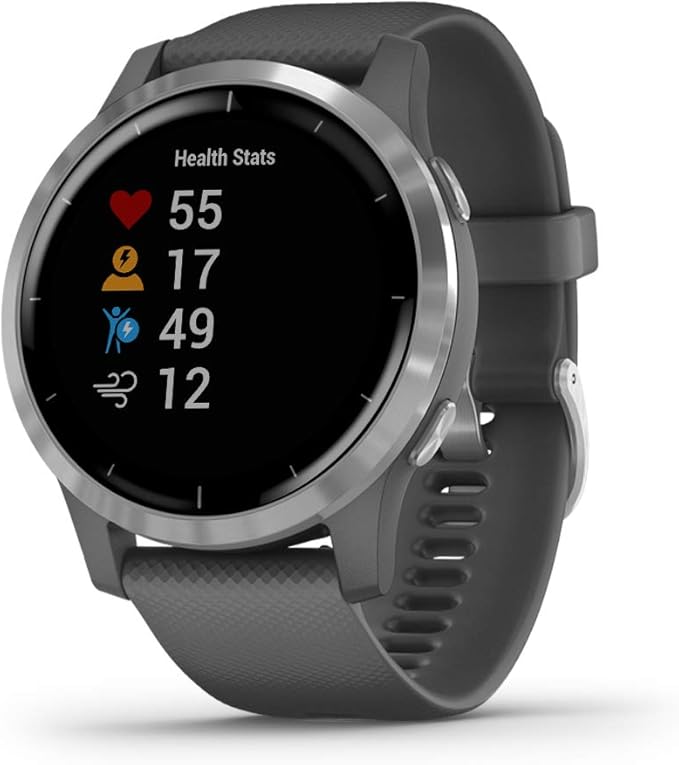
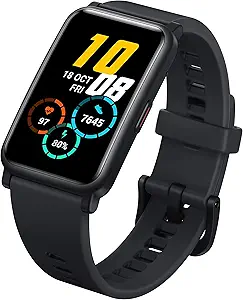
Garmin vs Honor: Overview
Comparing Garmin and Honor helps you determine which brand is best suited for your needs in Smart Watch. Both brands offer strong choices depending on your budget and key feature requirements.
Key Features & Comparison
Evaluate factors such as build quality, warranty, customer satisfaction, and total value before making your final purchase choice between Garmin and Honor.
Battery Life
Garmin is globally renowned for its exceptional battery architecture, engineering its wearables to sustain continuous multi-day usage under heavy sensor loads. Through the widespread use of transflective Memory-in-Pixel (MIP) displays, proprietary low-draw chipsets, and solar harvesting technology (Power Glass), Garmin devices frequently deliver runtimes ranging from a week to over a month in standard smartwatch mode. Crucially, Garmin excels in active tracking endurance, offering detailed multi-band GNSS tracking that can persist for 30 to 80+ hours on flagship models like the Fenix or Enduro lines. This sustained output ensures that endurance athletes and backcountry hikers can rely on continuous metric logging without needing frequent recharging stops or external power banks.
Honor approaches battery life through high-efficiency companion chipsets paired with software-level power throttling, commonly seen in its MagicWatch and Watch GS series. Utilizing vibrant AMOLED displays, Honor wearables achieve remarkable idle efficiency, often delivering between 10 to 14 days of typical use on a single charge. However, Honor's energy conservation relies heavily on aggressive background process management and lower sensor sampling frequencies during non-workout intervals. When continuously utilizing full GPS tracking, Honor devices deplete substantially faster than Garmin's performance-oriented lines, making Honor exceptional for casual daily wear and moderate fitness enthusiasts, but less capable for extreme, multi-day outdoor tracking.
Build Quality & Durability
Garmin constructs its wearables with a utilitarian, field-tested philosophy aimed at surviving extreme environmental conditions. Higher-end models feature ruggedized fiber-reinforced polymer casings, titanium or DLC-coated bezels, and scratch-resistant sapphire crystal lenses. Certified to military standards (MIL-STD-810) for thermal, shock, and water resistance up to 10 ATM or even 100 meters, Garmin smartwatches are designed to withstand heavy impacts, deep water immersion, and rapid temperature fluctuations. The tactile, knurled physical buttons are deliberately engineered for reliable operation with thick gloves or wet hands, underscoring Garmin's dedication to functional survivability over sheer aesthetic minimalism.
Honor prioritizes a balance of contemporary lifestyle aesthetics and robust materials, offering devices with stainless steel cases, ceramic backings, and curved glass finishes. While rugged iterations like the Honor Watch GS Pro adopt a more fortified, shock-resistant composite shell certified against MIL-STD-810G metrics, the broader portfolio leans toward sleek, urban designs with 5 ATM water resistance. These finishes resist everyday scratches and moderate exposure to the elements, making them ideal for the gym, swimming pools, and office settings. However, Honor's reliance on primary touchscreen navigation presents usability challenges in heavy rain or sub-zero conditions compared to Garmin's specialized mechanical tactile layout.
Health & Fitness Tracking
Garmin represents the gold standard in deep physiological modeling and athletic performance analytics. Incorporating proprietary Elevate optical heart rate sensors alongside advanced algorithms licensed from Firstbeat Analytics, Garmin offers deep insights into HRV (Heart Rate Variability), VO2 Max, Training Load, Training Readiness, and Body Battery energy monitoring. The platform supports advanced running dynamics, power output metrics without external pods, and structured workout executions directly synced to comprehensive platforms like Garmin Connect. The ecosystem treats health tracking with medical-grade precision and athletic rigor, tailoring recovery advice based on cumulative physiological strain rather than basic movement thresholds.
Honor delivers a capable, consumer-friendly suite of health tracking metrics powered by Huawei-derived TruSeen and TruSleep sensor technologies. It excels in day-to-day wellness monitoring, including precise continuous heart rate tracking, accurate blood oxygen (SpO2) alerts, stress detection, and granular sleep staging that pinpoints REM, light, and deep sleep cycles. While Honor tracks dozens of workout profiles with clear post-workout summaries in the Honor Health app, it lacks the deep, sport-specific analytical depth found in Garmin. For casual runners, gym-goers, and general fitness tracking, Honor provides clear and actionable data, but it does not match Garmin's predictive athletic modeling or third-party sensor integration.
Smart Features & Connectivity
Garmin approaches smart features through an athletic-first utility lens, emphasizing offline convenience and ecosystem independence. Many models provide built-in offline music storage compatible with Spotify, Deezer, and Amazon Music, alongside Garmin Pay for contactless transactions and comprehensive onboard topographic mapping that operates entirely without cellular connectivity. The Connect IQ store allows users to install data fields, widgets, and dedicated sport apps, though it lacks the polished interface and fluid interactive animations of mainstream consumer platforms. Notification handling is straightforward, with Android users receiving canned quick-reply options, while iOS users remain limited to view-only notifications due to platform restrictions.
Honor focuses on delivering a connected lifestyle experience optimized for everyday smartphone companions. Featuring integrated speakers and microphones, compatible Honor models allow for Bluetooth voice calling directly from the wrist, paired with rich, responsive notifications that display beautifully on their high-pixel-density AMOLED touchscreens. Basic voice assistant capabilities and seamless interoperability with Android (specifically Honor's MagicOS) make daily productivity intuitive. However, Honor suffers from ecosystem limitations, such as a lack of comprehensive third-party application support outside of China and restricted offline mapping tools, positioning it primarily as a sleek communication companion rather than an autonomous data workstation.