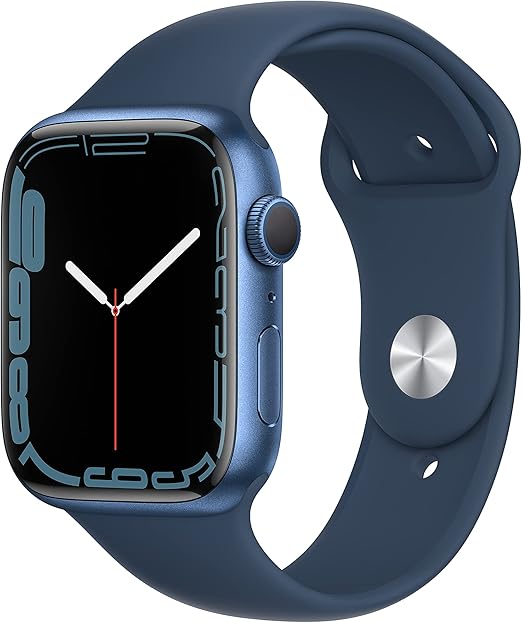
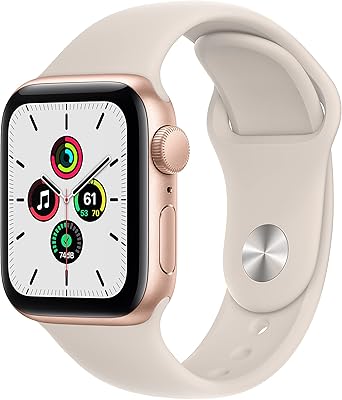
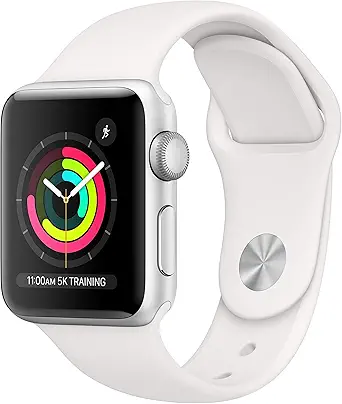
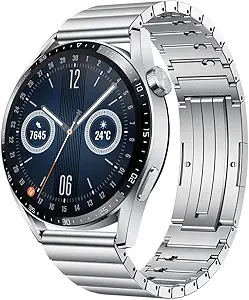
Apple vs Huawei: Overview
Comparing Apple and Huawei helps you determine which brand is best suited for your needs in Smart Watch. Both brands offer strong choices depending on your budget and key feature requirements.
Key Features & Comparison
Evaluate factors such as build quality, warranty, customer satisfaction, and total value before making your final purchase choice between Apple and Huawei.
Battery Life
Battery endurance represents the most stark architectural and operational divergence between Apple and Huawei smartwatches. Apple adopts a full-fledged computer-on-the-wrist philosophy with watchOS, powering power-hungry micro-OLED displays, fluid 60Hz animations, continuous background processing, and sophisticated dual-core architectures. Consequently, mainstream models like the Apple Watch Series 9 or Ultra 2 yield roughly 18 to 36 hours of real-world use under standard workloads, extending to around 72 hours solely on the Ultra 2 in targeted low-power modes. This creates an unavoidable daily charging cycle for mainstream users, forcing reliance on rapid fast-charging pucks to seamlessly capture overnight sleep metrics and daytime activity tracking without disruption.
Conversely, Huawei approaches battery life from an embedded operating system standpoint, leveraging ultra-efficient dual-chipset architectures running on lightweight RTOS or HarmonyOS iterations. Flagships like the Huawei Watch GT 4 and Watch 4 Pro routinely deliver between 7 to 14 days of typical usage on a single charge, even with continuous heart rate, SpO2 monitoring, and periodic GPS-tracked workouts activated. Huawei achieves this remarkable efficiency by aggressively throttling background application refresh, employing optimized display refresh controllers, and utilizing secondary low-power co-processors for sensor polling. For consumers prioritizing multi-day endurance for endurance athletics, expeditions, or simply avoiding charge anxiety, Huawei holds an undisputed technical advantage over Apple's energy-intensive design.
Build Quality & Durability
Both Apple and Huawei invest heavily in premium materials, yet their structural executions cater to distinct aesthetic and functional ideals. Apple leans toward ergonomic refinement and minimalist elegance, utilizing aerospace-grade aluminum, high-polish stainless steel, and aerospace-grade titanium in the Ultra lineup. The Apple Watch showcases impeccably tight tolerances, featuring custom Ion-X glass on entry tiers and remarkably clear sapphire crystal over OLED matrices on elevated trims. The Apple Watch Ultra pushes engineering further with a raised bezel design, MIL-STD 810H environmental testing compliance, and a dedicated 100-meter water resistance rating with an integrated depth gauge certified for recreational scuba diving down to 40 meters via EN13319 standards.
Huawei mirrors this high-end structural commitment by adopting traditional horological forms, presenting classic circular cases engineered with sophisticated aerospace-grade titanium alloys, nanocrystal ceramics, and high-strength sapphire glass faces. Models like the Huawei Watch Ultimate push industrial metallurgic frontiers by utilizing zirconium-based liquid metal, a material significantly harder and more corrosion-resistant than conventional titanium alloys, offering 100-meter water resistance capable of true technical diving up to 100 meters. While Apple excels in rectangular ergonomic integration and flawless precision finishing across its straps and chassis seams, Huawei captures the imagination of traditional watch enthusiasts who desire rugged, mechanically authentic designs that endure extreme environments without showing structural wear.
Health & Fitness Tracking
In biometric tracking, Apple sets the industry benchmark for medical-grade accuracy, algorithmic validation, and peer-reviewed clinical reliability. Powered by advanced optical heart sensors, electrical cardiac sensors (ECG), temperature sensors for retrospective ovulation estimates, and fall/crash detection gyroscopes, the Apple Watch provides exceptionally reliable biometric datasets. Its heart rate tracking under high-intensity interval training (HIIT) exhibits minimal latency and rarely drops cadence locks, while its sleep stage algorithms are closely calibrated against polysomnography gold standards. Apple pairs this precision with an intuitive three-ring activity interface and rich native integration with Apple Health, offering transparent raw data exports that cardiologists and healthcare providers broadly trust.
Huawei counters with its proprietary TruSeen and TruSport biometric engines, which excel in multi-channel optical sensor configurations that incorporate multi-spectral arrays to minimize signal degradation caused by skin tone variations or motion artifacts. Huawei devices offer comprehensive health suites including ECG, continuous arterial stiffness detection, peripheral temperature sensing, and continuous SpO2 logging, frequently backed by regional regulatory health clearances. On the fitness front, Huawei provides exceptionally robust native running metrics—including training load, recovery time, running ability index (RAI), and VO2 Max calculations—without requiring third-party subscriptions. However, while Huawei offers an exhaustive array of raw telemetry out of the box, Apple holds the advantage in erratic-movement heart rate accuracy and third-party medical software validation.
Smart Features & Connectivity
Smart features and software ecosystem synergy represent Apple’s absolute stronghold. Powered by watchOS and tightly integrated with the Apple hardware ecosystem, the Apple Watch functions virtually as an autonomous smart node. It offers rich, actionable notifications, full on-screen QWERTY and voice-to-text dictation, direct two-way calling over integrated LTE, seamless Apple Pay tokenization via NFC, and Siri on-device processing. Most crucially, Apple boasts the most expansive native third-party smartwatch ecosystem in existence, allowing users to run standalone native applications for navigation, productivity, streaming audio playback from Spotify or Apple Music, and smart-home manipulation via Apple HomeKit without tethering bottlenecks.
Huawei’s smart feature capabilities, while functionally competent, are heavily shaped and somewhat constrained by platform politics and ecosystem boundaries. The watch experience varies dramatically depending on whether the companion device is an Android, iOS, or Huawei HarmonyOS handset. While Huawei provides seamless notification mirroring, bluetooth call handling, and localized audio playback, third-party application support remains limited through the Huawei AppGallery. Voice assistant integration is largely inert when tethered to non-Huawei smartphones, and contactless mobile payments through NFC face regional banking friction outside of China and select global territories. Huawei delivers exceptional independent timekeeping and fitness metrics, but Apple provides a vastly superior, truly cohesive ambient computing experience.