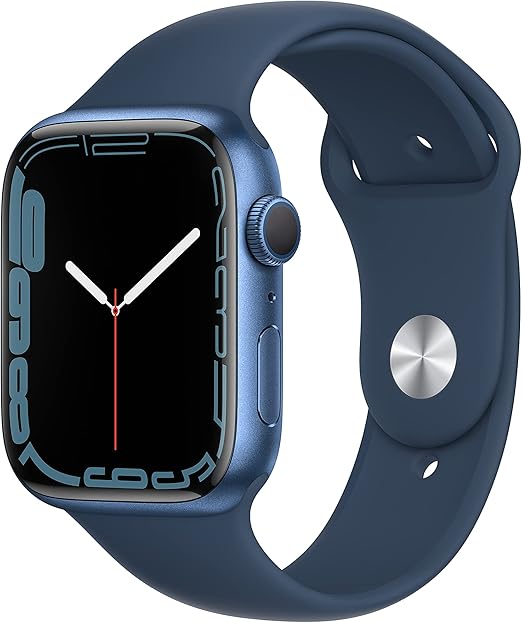
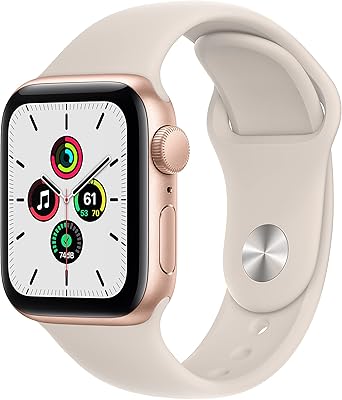
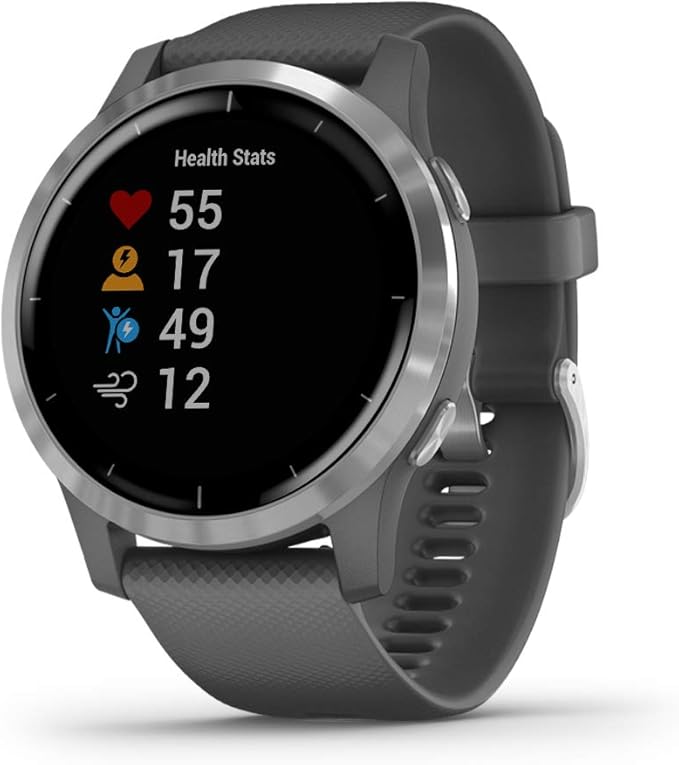
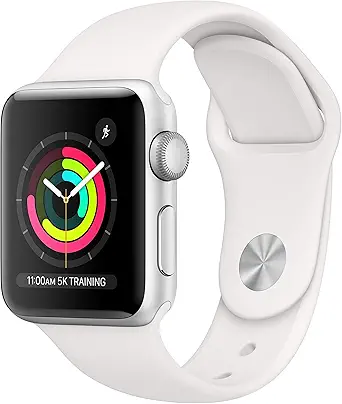
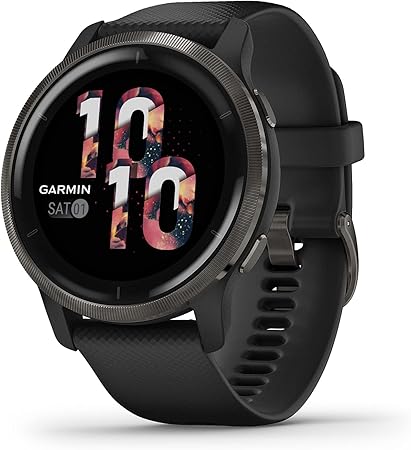
Apple vs Garmin: Overview
Comparing Apple and Garmin helps you determine which brand is best suited for your needs in Smart Watch. Both brands offer strong choices depending on your budget and key feature requirements.
Key Features & Comparison
Evaluate factors such as build quality, warranty, customer satisfaction, and total value before making your final purchase choice between Apple and Garmin.
Battery Life
Battery performance represents the most stark architectural and operational divergence between Apple and Garmin. Apple designs its watches as full-scale wearable computers powered by watchOS, driving high-resolution OLED displays, continuous background app refreshes, and intensive two-way communication. Consequently, mainstream Apple Watches (such as the Series 9 and 10) require daily charging, typically offering 18 to 36 hours under moderate usage, while the higher-capacity Apple Watch Ultra pushes this threshold to roughly 60 to 72 hours in low-power modes. For users embedded in an urban routine, charging a device once per day while showering or working at a desk is manageable, but it remains a persistent vulnerability for multi-day expeditions, long-haul travel, or continuous sleep tracking without disciplined power routines.
In contrast, Garmin approaches battery endurance from an embedded systems perspective, optimizing its custom RTOS (Real-Time Operating System) and hardware for maximum energy conservation. Utilizing power-efficient Memory-in-Pixel (MIP) transflective displays—or efficiently tuned AMOLED panels—Garmin devices routinely achieve operational spans measured in weeks rather than hours. Models in the Fēnix, Enduro, and Forerunner series often deliver between 7 to 30+ days of standard smartwatch use and dozens of hours of continuous multiband GNSS tracking, augmented in select variants by integrated solar charging arrays (Power Sapphire). For ultra-endurance athletes, backcountry adventurers, or consumers fatigued by daily charging rituals, Garmin provides unmatched, anxiety-free battery longevity that Apple's power-dense architecture cannot currently match.
Build Quality & Durability
When evaluating structural integrity and material craftsmanship, Apple presents a refined, jewel-like aesthetic that seamlessly bridges the gap between modern luxury and high-performance engineering. Standard Apple Watches utilize recycled aluminum or polished stainless steel with curved Ion-X or sapphire crystal glass, engineered with tight tolerances and WR50 water resistance suitable for surface water activities. The Apple Watch Ultra significantly elevates this threshold by employing an aerospace-grade titanium chassis with a raised bezel to shield the flat sapphire crystal, reinforced ceramic backing, and dual-frequency MIL-STD-810H certifications alongside EN13319 compliance for recreational scuba diving down to 40 meters. However, even with the Ultra's ruggedization, the predominance of exposed glass and refined surface finishes leaves standard models vulnerable to scratches, shattered displays, and cosmetic scuffs in punishing outdoor environments.
Garmin engineers its devices with an unapologetic emphasis on field survivability and utilitarian resilience. Garmin's premium lineups, such as the Fēnix, Tactix, and Epix series, feature fiber-reinforced polymer cases flanked by forged titanium or DLC-coated stainless steel bezels and case backs, designed to absorb high-impact shocks that would fracture unreinforced designs. Their recessed lenses, protected by scratch-resistant Sapphire or Gorilla Glass, are fundamentally shielded against direct contact with rock faces, trail debris, and abrasive grit. Most outdoor-oriented Garmin devices boast 100-meter (10 ATM) water ratings, broad thermal tolerances, and mechanical button controls that ensure full operational reliability in freezing temperatures, heavy rain, or when wearing thick gloves—conditions where capacitive touchscreens typically fail.
Health & Fitness Tracking
Apple approaches health tracking through a holistic, preventive medical lens, backed by rigorous clinical validations and intuitive data presentation. Its devices feature an extensive suite of FDA-cleared biometric sensors, including an electrical heart sensor for on-demand ECG generation, irregular rhythm notifications, blood oxygen estimation (subject to regional regulatory statuses), and dual-sensor temperature tracking calibrated for retrospective ovulation estimation. In fitness, Apple's watchOS excels at tracking baseline daily activity through its iconic Activity Rings and offers precise workout metrics for general gym-goers, runners, and casual swimmers. However, while Apple Health aggregates vast amounts of physiological data, it historically leaves deep athletic interpretation to third-party software, offering relatively basic native training load analysis and recovery metrics compared to specialized sports wearables.
Garmin, conversely, is an industry-leading athletic platform engineered primarily for comprehensive physiological performance analysis and structured training. While Garmin provides standard biometric metrics such as continuous heart rate, pulse oximetry, and sleep tracking, its true technical superiority lies in its proprietary algorithmic synthesis powered by Firstbeat Analytics. Garmin processes heart rate variability (HRV), sleep staging, and activity history into actionable metrics like Training Readiness, Body Battery, Acute-to-Chronic Workload Ratio, and Real-Time Stamina. Furthermore, Garmin caters to multisport athletes with deep sensor compatibility (native ANT+ and Bluetooth power meters, footpods, chest straps), advanced running dynamics, adaptive coaching plans, and full navigation suites featuring onboard topographical maps, leaving Apple behind in terms of native analytical depth for serious endurance athletes.
Smart Features & Connectivity
Apple stands unchallenged in the domain of connected smart functionality, providing the most seamless, polished extension of a smartphone ecosystem available today. Because watchOS is intimately integrated with iOS, Apple Watch users enjoy robust capabilities including fully actionable push notifications, direct voice dictation or on-screen QWERTY text replies, rich multimedia handling, and deep integration with Apple Pay. The ecosystem's App Store offers thousands of standalone native applications, from productivity tools and smart home controllers via HomeKit to streaming services and transit passes. Paired with optional standalone cellular (LTE/UMTS) connectivity, family setup capabilities, seamless audio switching via AirPods, and an omnipresent Siri voice assistant, the Apple Watch functions virtually as an independent wrist-worn communicator that completely eclipses dedicated fitness trackers in everyday convenience.
Garmin treats connected smart features as a secondary, auxiliary utility intended to keep athletes connected without distracting from core performance tracking. While Garmin devices provide essential modern amenities—such as mirror notifications from both Android and iOS devices, NFC contactless payments via Garmin Pay, and offline music storage for Spotify, Deezer, and Amazon Music—the operational experience is noticeably more utilitarian. Users paired with an iPhone cannot natively reply to messages due to iOS platform restrictions, voice integration is generally limited to higher-end models with basic voice assistant pass-through, and the Connect IQ app store is primarily populated by watch faces, data fields, and specialized widgets rather than comprehensive third-party software. Consequently, consumers prioritizing modern digital concierge services and seamless communication will find Garmin's smart feature layer considerably more constrained than Apple's expansive ecosystem.