Apple vs Honor: Overview
Comparing Apple and Honor helps you determine which brand is best suited for your needs in Smart Watch. Both brands offer strong choices depending on your budget and key feature requirements.
Key Features & Comparison
Evaluate factors such as build quality, warranty, customer satisfaction, and total value before making your final purchase choice between Apple and Honor.
Battery Life
Battery performance represents the most stark divergence in engineering philosophy between Apple and Honor. Apple's standard Watch Series operates under an intensive architecture, running a full-featured micro-OS (watchOS) that consistently demands frequent charging cycles. Typical models like the Series 9 or 10 yield roughly 18 to 24 hours of standard usage, extending to 36 hours only when severely constrained by Low Power Mode. Even the ruggedized Apple Watch Ultra tops out at around 60 to 72 hours under moderate conditions. This necessitates a rigid daily charging habit, typically integrated into bedtime or morning routines, which can frustrate users who prioritize continuous sleep tracking without interruptions.
In contrast, Honor leverages highly optimized, energy-efficient real-time operating systems (RTOS) combined with dual-chipset architectures, enabling their smartwatches—such as the Watch GS and Watch 4 series—to deliver exceptional longevity. Honor devices consistently achieve between 10 and 14 days of typical use on a single charge, and even power-hungry configurations with continuous GPS tracking or cellular standby can operate for several days without depletion. This dramatic endurance makes Honor a vastly superior choice for endurance athletes, frequent travelers, and users averse to daily cable management, trading Apple's high-demand computing overhead for uninterrupted week-long utility.
Build Quality & Durability
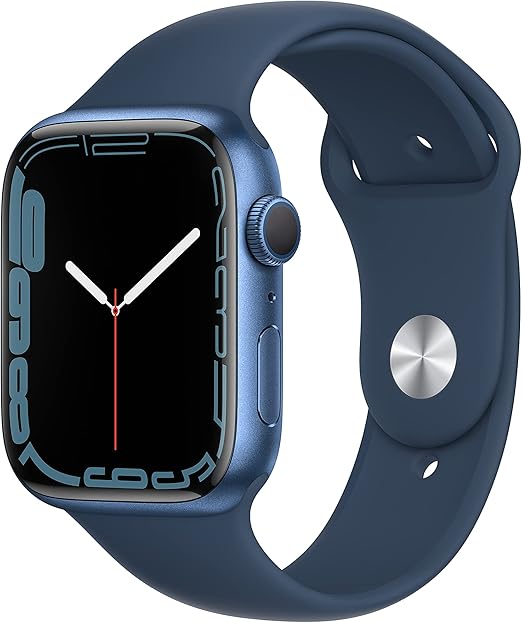
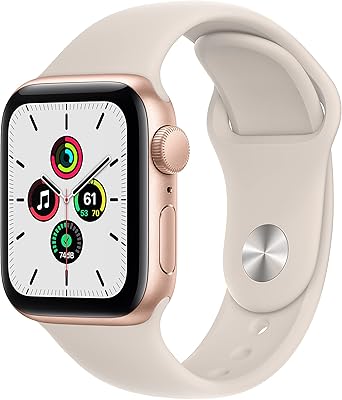
Apple sets an industry benchmark for industrial design, precision engineering, and premium material integration. From lightweight recycled aerospace-grade aluminum to high-grade stainless steel and aerospace-grade titanium in the Ultra line, Apple watches exhibit near-flawless manufacturing tolerances. Sapphire crystal displays on the premium and Ultra variants offer virtually scratch-proof durability, while the proprietary Ion-X glass on entry-level models provides commendable impact resistance. Water resistance ratings range from standard 50-meter WR50 depth to 100 meters on the Ultra, complemented by IP6X dust resistance and EN13319 dive certification, ensuring the hardware withstands everything from daily urban bumps to extreme underwater environments.
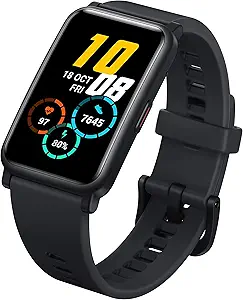
Honor takes a pragmatic yet stylish approach to construction, often mimicking traditional chronographs with round dials, rotating crowns, and clean bezels. Premium offerings, such as the Watch GS Pro, utilize rugged polycarbonate reinforced with stainless steel bezels, engineered specifically to pass stringent military-grade MIL-STD-810G durability tests against thermal shock, humidity, and salt spray. Consumer-oriented lifestyle models often feature lightweight aluminum alloys and tempered curved glass. While Honor delivers impressive structural resilience that rivals outdoor tactical watches, its display glass coatings are typically more prone to micro-scratches compared to Apple’s sapphire crystal, and the tactile refinement of its crowns and haptic motors lacks Apple’s state-of-the-art haptic precision.
Health & Fitness Tracking
Apple operates as a medical-grade regulatory pioneer in the consumer wearable space, backing its sensor suite with extensive clinical validation and FDA clearances. The Apple Watch integrates optical heart sensors, an electrical heart sensor for ECG generation, blood oxygen monitoring capabilities (subject to regional regulatory availability), and dual-temperature sensors for precise ovulatory cycle retrospective estimates. Its algorithms excel in passive safety diagnostics, such as atrial fibrillation (AFib) detection, severe fall detection, and high-g crash detection. For athletic training, watchOS offers deep metrics including running power, heart rate zones, stride length, and vertical oscillation, making it an extraordinarily rigorous tool for both personal wellness and clinical oversight.
Honor counters with comprehensive, accessible bio-tracking powered by proprietary sensor hubs like TruSeen and TruSleep algorithms (refined through its technical lineage and independent R&D). Honor wearables deliver robust 24/7 continuous heart rate monitoring, SpO2 tracking, stress analysis, and sleep staging that details REM, light, deep sleep, and breathing quality. Fitness enthusiasts benefit from over 100 dedicated workout modes with automated exercise recognition and integrated multi-constellation GNSS for precise route tracking. However, Honor generally lacks the third-party medical certifications and advanced diagnostic safety protocols (such as ECG regulatory clearance in Western markets or car crash telemetry) that distinguish Apple, making Honor ideal for general conditioning and recovery rather than preventative medical monitoring.
Smart Features & Connectivity
In terms of intelligent computing, third-party software breadth, and cohesive ecosystem integration, Apple remains unmatched. The Apple Watch acts as a true standalone wrist computer, running watchOS with full access to an expansive App Store housing thousands of native applications. Users enjoy fluid, contextual interactivity via Siri, offline music caching across various platforms, rich actionable notifications, full keyboard text replies, and seamless contactless transactions through Apple Pay. Cellular LTE models deliver completely untethered telephony and data streaming. Furthermore, its synergy with the broader Apple ecosystem—such as automatically unlocking MacBooks, operating as an iPhone camera viewfinder, and leveraging Precision Finding via Ultra Wideband—delivers an unrivaled connected experience.
Honor provides a significantly more streamlined, tethered smart feature set focused on daily convenience rather than complex autonomous computing. While recent models feature eSIM capabilities for independent calling in select markets, the third-party application ecosystem on Honor's MagicOS is markedly limited, offering few independent utilities compared to watchOS. Notifications are largely read-only or limited to quick canned responses on paired Android devices, and voice assistant functionality requires tethering to an Honor smartphone for full utility. Additionally, iOS users pairing with an Honor watch face substantial feature limitations due to platform restrictions. While Honor covers essential notifications, Bluetooth calling, and music controls reliably, it functions primarily as an accessory dashboard rather than Apple's fully realized wrist-bound computing platform.