Google vs Apple: Overview & Brand Philosophy
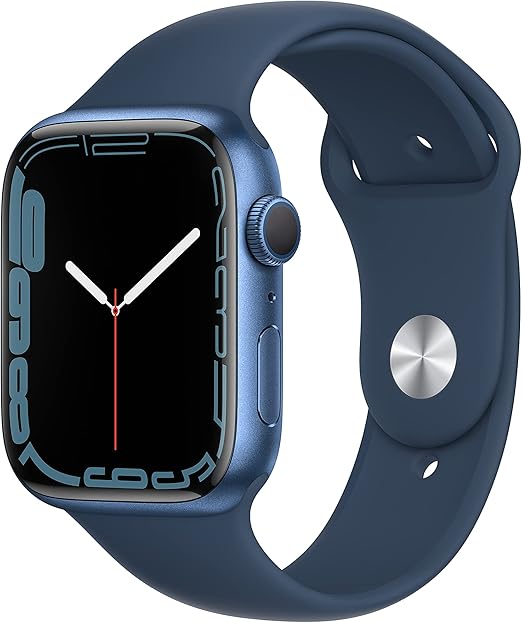
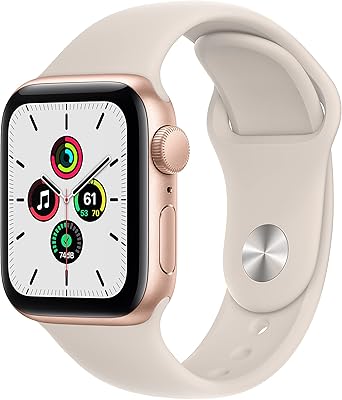
The smartwatch market represents one of the most personal frontiers in consumer technology, sitting directly against the skin to track our biology, organize our days, and manage our digital connectivity. In this space, Apple and Google embody fundamentally different evolutionary trajectories. Apple entered the segment early with the launch of the original Apple Watch in 2015, systematically refining its vision over a decade to establish what is indisputably the market-dominant platform. Apple’s philosophy treats the Apple Watch as an indispensable guardian of health and a seamless extension of the iOS walled garden, prioritizing deep vertical integration where custom silicon, proprietary sensors, and watchOS operate in frictionless harmony.
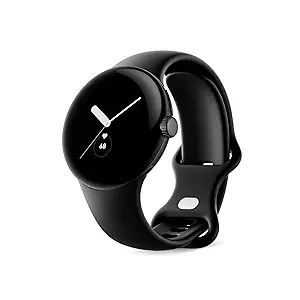
Google arrived considerably later to proprietary first-party hardware with the Pixel Watch in 2022, despite having powered third-party wearables for years via Wear OS (formerly Android Wear). Google’s wearable philosophy is rooted in ambient computing, algorithmic intelligence, and cross-platform flexibility. By acquiring Fitbit in 2021, Google merged industry-leading health tracking metrics with the power of Google Assistant and the sprawling Android ecosystem. Rather than viewing the smartwatch as a miniature computing terminal, Google approaches it as an elegant, glanceable conduit for actionable health insights and proactive artificial intelligence.
Both brands command enormous technical talent and manufacturing clout, yet their strategic priorities yield starkly distinct user experiences. Apple’s mature, feature-dense ecosystem focuses on comprehensive lifestyle and emergency medical integration. Google, conversely, champions minimalist industrial design, predictive intelligence, and deeply holistic wellness tracking. Choosing between them is rarely just about wristwear mechanics; it is fundamentally an evaluation of how you wish your digital and physical health to be monitored, processed, and presented.
Key Differences & Technological Comparison
The philosophical divide between Google and Apple manifests distinctly across four critical hardware and software pillars:
Design Architecture and Aesthetics
Apple adheres strictly to a rounded rectangular aesthetic (squircle), maximizing screen real estate for typography, rich data complications, and interactive UI elements. Constructed using recycled aluminum, polished stainless steel, or aerospace-grade titanium in the Ultra line, Apple Watches utilize robust sapphire crystal or Ion-X glass depending on the tier. Conversely, Google embraces a classical horological silhouette with a completely circular, domed glass aesthetic. The Pixel Watch features a seamless, pebble-like design that waterfalls off the wrist, using recycled stainless steel exclusively for its chassis. While Google’s design is universally praised for its understated, jewel-like elegance, the exposed curved glass makes it inherently more vulnerable to edge impacts compared to Apple’s protected or flat-screened variants.
Operating System and Ecosystem Lock-in
Platform compatibility remains the most definitive technical dividing line. Apple Watch runs watchOS, an operating system that requires an iPhone for activation and full functionality. There is zero interoperability with Android devices. In contrast, Google’s Pixel Watch runs clean Wear OS, which is engineered exclusively for the Android ecosystem (Android 10.0 and above). It cannot be paired with an iOS device. Apple’s watchOS features a richer third-party application ecosystem with superior offline capabilities, rich native apps, and deep hand-off features with macOS and iPadOS. Google’s Wear OS relies heavily on native Google services—such as Maps, Calendar, Wallet, and YouTube Music—delivering a fluid, context-aware notification experience powered by superior voice-to-text algorithms.
Biometrics and Health Tracking Suites
Biometric tracking strategies highlight significant mechanical divergences. Apple utilizes proprietary, FDA-cleared sensors that power an advanced Electrocardiogram (ECG), blood oxygen monitoring (subject to legal and regional availability), sleep tracking, and optical heart-rate arrays fine-tuned for high-intensity interval training. Apple’s Health app acts as a local, highly secure repository capable of consolidating clinical records. Google offloads the vast majority of its health architecture to the integrated Fitbit platform. Google excels in continuous electrodermal activity (cEDA) tracking for real-time stress detection and continuous skin temperature analysis. Fitbit’s Daily Readiness Score and sleep stage algorithms are often regarded by clinical researchers as more intuitive and actionable for recovery management than Apple's native sleep suite, although certain advanced Fitbit insights remain gated behind a monthly Fitbit Premium subscription.
Battery Efficiency and Charging Mechanics
Power management remains an operational challenge for both full-featured computing wearables. Apple manages standard single-day battery longevity across its mainstream Series models (roughly 18 to 24 hours of standard use), but scales dramatically with the Apple Watch Ultra series, which reliably achieves 48 to 72 hours under mixed workloads. Google’s Pixel Watch lineup delivers a true 24-hour battery lifecycle with the Always-On Display activated, though it lacks an "Ultra" equivalent for multi-day backcountry tracking. Both rely on proprietary magnetic inductive pucks for charging, but Apple has optimized its fast-charging protocols to replenish roughly 80% capacity in 45 minutes, slightly outpacing Google in power delivery turnarounds.
Pros & Cons Comparison
Apple Smart Watches
- Pro: Industry-Leading App Ecosystem: Vast catalog of mature, high-performance third-party applications that operate reliably without host-phone intervention.
- Pro: Class-Leading Hardware Diversity: Multiple size variants, extensive finish selections, and the ruggedized Apple Watch Ultra line for extreme endurance athletes.
- Pro: Comprehensive Safety Architecture: Robust, real-world-tested safety innovations including Fall Detection, Crash Detection, and Emergency SOS via satellite (via iPhone link).
- Pro: Flawless iPhone Synergy: Unrivaled continuity, actionable notifications, Apple Pay fluidity, and seamless authentication across Apple devices.
- Con: Total Platform Exclusivity: Zero compatibility with Android smartphones, preventing platform migration without replacing the watch.
- Con: Battery Bottleneck on Standard Models: Mainstream models require daily charging routines, creating friction for continuous sleep tracking.
Google Smart Watches
- Pro: Stunning Industrial Minimalism: Visually striking circular domed display that closely emulates luxury mechanical watch styling.
- Pro: Deep Fitbit Integration: Industry-standard sleep stage analysis, readiness metrics, and continuous stress tracking through specialized sensors.
- Pro: Superior Virtual Assistant: Google Assistant delivers significantly faster, more accurate natural language voice processing and query handling than Siri.
- Pro: Open Android Interoperability: Pairs fluidly across the entire modern Android landscape, not restricted solely to Google Pixel smartphones.
- Con: Exposed Glass Durability: The domed, edge-to-edge glass structure possesses zero bezel protection, increasing vulnerability to direct impacts.
- Con: Paywalled Health Features: Certain long-term historical trends and deep health analytics require an ongoing monthly Fitbit Premium subscription.
- Con: Limited Hardware Matrix: Fewer case size options, absence of an ultra-rugged outdoor configuration, and smaller third-party accessory market.
Performance, Durability & Value Analysis
Evaluating long-term performance and durability reveals divergent engineering outcomes. Apple’s custom S-series silicon provides computational overhead that routinely delivers buttery-smooth 60fps animations, instantaneous app launches, and software update support for five or more years. Durability on base aluminum models is respectable, but the flat sapphire display designs of the stainless steel and Ultra variants stand as the benchmark for physical resilience in the lifestyle category. Google’s silicon strategy has stabilized with modern Qualcomm and custom coprocessor architectures, closing previous processing lags and providing responsive UI performance. However, from a structural durability standpoint, Google's continuous curved glass surface is inherently at higher risk of catastrophic shattering when subjected to lateral strikes against doorframes or hard gym equipment, potentially shortening the physical lifespan for active users.
From a financial and value perspective, both brands demand premium capital, but the long-term cost structures differ. Apple’s entry points are diverse: the budget-friendly Apple Watch SE lowers the barrier of entry, the standard flagship series hits the industry median, and the Ultra commands a high price tag matched by premium materials and high resale value. Google positions its Pixel Watch competitively against Apple's standard series, offering a full stainless steel case at prices where Apple typically sells aluminum. However, Google’s value proposition is slightly degraded by the monetization of its health suite; after an initial trial, locking comprehensive wellness reports and Daily Readiness Scores behind a Fitbit Premium subscription adds an ongoing total cost of ownership that Apple does not impose for native health tracking.
Final Verdict: Which Brand Should You Choose?
The decision between Google and Apple in the smartwatch category ultimately resolves into a practical assessment of your current smartphone operating system, aesthetic preferences, and athletic demands:
Choose Apple if: You are an iPhone user. The Apple Watch is objectively the most complete, polished, and capable lifestyle smartwatch on the market today. It is particularly recommended for those who prioritize a mature third-party app ecosystem, advanced emergency safety features, robust build durability options, and sports tracking that seamlessly integrates into the broader iOS environment. Furthermore, endurance athletes and outdoor adventurers should look squarely at the Apple Watch Ultra, a tier of product that Google currently does not match.
Choose Google if: You use an Android smartphone and prioritize elegant design alongside actionable wellness recovery. The Pixel Watch is the premier smart wearable for Android users who value a classic circular watch profile, top-tier sleep tracking via Fitbit, and the superior contextual utility of Google Assistant and Google Maps. For users seeking an intelligent, unobtrusive lifestyle companion that tracks wellness and manages notifications with zero clutter, Google presents a compelling, beautifully realized solution.
Battery Life
When evaluating battery life between Apple and Google smartwatches, consumers are examining two divergent philosophies within the premium wearable space. Apple's standard lineup, represented by the Apple Watch Series 9 and Series 10, adheres to an "all-day" battery profile engineered around an 18-hour benchmark under typical use conditions. While the Apple Watch Ultra series fundamentally elevates this threshold to roughly 36 to 72 hours via a substantially larger chassis and specialized Low Power Modes, the mainline Apple models heavily rely on watchOS's meticulous power management to ensure the device lasts from morning until bedtime. Conversely, Google has steadily matured the energy efficiency of its Pixel Watch lineup. The Pixel Watch 3 has addressed the longevity pitfalls of its predecessors by implementing dual-chip architecture—pairing a high-performance Qualcomm SW5100 with a low-energy Cortex-M33 co-processor. This hybrid setup dynamically delegates micro-tasks and display refreshes to the low-power chip, reliably yielding 24 to 36 hours of real-world uptime on a single charge with the Always-On Display enabled.
From an engineering and charging standpoint, both brands present distinct technical strengths accompanied by practical compromises. Apple excels in predictability and ecosystem-level telemetry; watchOS seamlessly optimizes display refresh rates down to 1Hz and offers granular control over which background processes are suspended in Low Power Mode, retaining critical health tracking while stretching longevity. Additionally, Apple’s fast-charging pucks can replenish a dead Series 10 to 80% in approximately 30 minutes, mitigating the friction of its sub-24-hour baseline. Google leverages its responsive Wear OS platform to dynamically scale display brightness between 1 nit and 2,000 nits, which plays a pivotal role in conserving milliamps throughout the day. However, Google’s hardware lacks a true ultra-endurance equivalent to Apple's Ultra tier, and extended GPS tracking—such as long-distance running or multi-hour navigation—still exerts a heavier relative drain on the Pixel Watch’s smaller-capacity cells than on Apple's larger-format offerings.
Ultimately, the practical trade-off between Apple and Google regarding battery longevity hinges on the specific model tier and charging cadence. If comparing standard flagship models, Google's Pixel Watch 3 edges out the standard Apple Watch by providing enough continuous overhead to effortlessly track sleep without requiring an immediate evening top-up. However, Apple holds the definitive technical ceiling across the broader product category thanks to the Apple Watch Ultra, which delivers genuine multi-day autonomy for extreme-use scenarios. For daily use, while Google offers slightly longer standard operational windows between charges, Apple's exceptionally rapid recharge cycles and the endurance of its Ultra variants provide a more versatile hardware spectrum for diverse consumer routines.
Build Quality & Durability
When evaluating build quality and durability, Apple sets an industry benchmark through diverse material tiers and advanced structural engineering. The standard Apple Watch Series models feature aerospace-grade aluminum or premium polished stainless steel, while the specialized Apple Watch Ultra elevates ruggedness with an aerospace-grade titanium chassis, a raised bezel that guards the flat sapphire crystal face, and MIL-STD 810H military certification. The standard models rely on Ion-X glass (aluminum) or scratch-resistant sapphire (stainless steel), backed by WR50 water resistance and IP6X dust resistance. The Ultra model pushes aquatic durability further with a 100-meter water resistance rating and EN13319 certification for recreational scuba diving, reflecting exceptional tolerances and sealing mechanics that reliably withstand severe environments, impacts, and temperature fluctuations.
Google approaches design with an emphasis on minimalist, organic aesthetics, utilizing 100% recycled aluminum housings across its Pixel Watch lineup. However, this distinct domed silhouette introduces notable durability trade-offs. The proprietary custom 3D Corning Gorilla Glass 5 curves seamlessly over the watch edges, leaving the display entirely exposed without any protective metal lip or bezel to absorb lateral impacts. While the engineering is cohesive and features a reassuring tactile haptic crown, the structural design makes the watch far more vulnerable to edge-shattering knocks and scratches in daily active use. Google matches Apple's core baseline with a 5 ATM (50-meter) water rating and an IP68 dust and water resistance standard, rendering it safe for shallow swimming and daily exposure, but it lacks the ultra-ruggedized military-spec testing or high-depth immersion capabilities seen in Apple’s higher-end portfolio.
Ultimately, the practical trade-offs come down to specialized material choices versus single-form versatility. Apple offers a broader durability spectrum, accommodating both refined urban use and extreme outdoor sports via sapphire glass and reinforced titanium, though this comes at a steep price premium. Google delivers a smooth, jewelry-like unibody construction that excels in everyday comfort, but its reliance on exposed Gorilla Glass and the absence of premium sapphire or heavy-duty outdoor variants makes it inherently more fragile under strenuous physical activities.
Health & Fitness Tracking
When evaluating health and fitness tracking, Apple and Google take distinct architectural approaches driven by their respective ecosystems and proprietary sensor arrays. Apple's modern Series and Ultra smartwatches leverage a custom multi-path photoplethysmography (PPG) optical heart sensor, electrical heart sensor (ECG), blood oxygen monitoring (market dependent), and high-precision dual-frequency GPS. The engineering prowess of watchOS shines in active physical performance tracking, offering ultra-low latency heart-rate zone alerts, advanced running metrics such as ground contact time and stride length, and FDA-cleared AFib history monitoring. Apple prioritizes actionable, granular workout data and medical-grade diagnostics, bolstered by a secure on-device processing pipeline that preserves data privacy without sacrificing instantaneous feedback during high-intensity training.
Google, anchored by its Pixel Watch hardware, outsources its wellness intelligence to its deeply integrated Fitbit infrastructure. Google relies on a multi-path sensor package paired with sophisticated machine learning algorithms that excel primarily in passive, holistic biometric monitoring. The Pixel Watch sets a high technical benchmark for continuous heart rate tracking, passive stress detection via a continuous electrodermal activity (cEDA) sensor, and nuanced sleep staging. Rather than solely presenting raw technical readouts, Google’s platform excels at translating complex biometrics into accessible readiness, stress, and sleep scores. This makes Google’s platform substantially more intuitive for users focused on macro-level recovery, sleep hygiene, and daily lifestyle optimization rather than pinpoint athletic analytics.
The practical trade-offs between the two platforms center on algorithmic philosophy and subscription economics. Apple delivers a comprehensive suite of advanced athletic and diagnostic tools completely free of paywalls, leaving recovery synthesis largely up to the user or third-party apps via HealthKit. Conversely, while Google's passive monitoring and stress architecture offer superior baseline lifestyle insights, unlocking the full potential of its historical trends and detailed readiness metrics requires an ongoing Fitbit Premium subscription. Ultimately, Apple holds the technical edge for serious athletes and users demanding precise, real-time performance tracking and independent data ownership, whereas Google provides an industry-leading, AI-driven wellness companion better suited for passive health tracking and recovery awareness.
Smart Features & Connectivity
When evaluating smart features and connectivity, the Apple Watch operates as the gold standard of holistic ecosystem integration, largely driven by Apple’s proprietary silicon and the deep maturity of watchOS. Apple’s technical strength lies in its frictionless communication between the watch and the broader iOS environment. Features like offline Siri execution via the S-series SIP, ultra-wideband (UWB) precision finding via the U2 chip, and sophisticated cellular handoffs ensure rapid, dependable connectivity. Apple's app ecosystem is exceptionally broad and high-performing, offering standalone watch apps with native processing that run independently of the iPhone. Moreover, Apple Pay remains the most widely supported and reliable contactless payment implementation, while advanced capabilities like Family Setup allow cellular-enabled models to function as standalone communication nodes for non-iPhone users, showcasing unmatched engineering synergy within Apple’s hardware boundaries.
Google’s approach via Wear OS on the Pixel Watch represents a formidable, AI-forward alternative that leverages Google's unparalleled cloud intelligence and ambient computing infrastructure. Google’s standout smart feature is Google Assistant, which routinely outperforms Siri in complex contextual queries, voice recognition accuracy, and third-party smart home orchestration through Google Home. Connectivity is equally robust with fast-pairing Bluetooth, steady dual-band Wi-Fi, and resilient 4G LTE options that integrate seamlessly across the Android landscape. While Google has rapidly closed the gap by integrating essential apps like Google Maps—offering stellar turn-by-turn navigation directly on the wrist—and Google Wallet, its third-party app ecosystem still lacks the sheer depth and native optimization found in watchOS. Furthermore, cross-device handoffs, while smooth with Pixel smartphones, are not as universally unified across non-Google Android devices.
Ultimately, the practical trade-offs come down to ecosystem alignment and the philosophical divide between contextual intelligence and seamless hardware integration. Apple delivers superior local performance, broader independent app availability, and bleeding-edge local hardware connectivity like precision directional tracking, but it maintains a strictly walled garden that is entirely non-viable for Android users. Google delivers the smarter voice assistant, superior predictive capabilities, and wider cellular compatibility with the global Android platform, but it trades off some offline computational autonomy and legacy app support. Consumers embedded in the iOS landscape will find Apple's connectivity and smart execution virtually flawless, while those anchored in the Google services suite will benefit from the Pixel Watch's superior ambient intelligence and cloud-driven utility.