In the ever-evolving landscape of kitchen appliances, refrigerators stand as stalwarts of culinary preservation and convenience.
Among the leading and key players in this arena are Samsung and Frigidaire. Both offer diverse range of products for various needs but they differ in terms of pricing and advanced features.
In this comparative analysis, we'll delve into the realms of Samsung and Frigidaire refrigerators, exploring their unique features, performance attributes, and overall suitability for modern households.
Features
In terms of feature sets, Samsung is an undisputed heavyweight that frequently pioneers industry-wide trends. Its marquee Family Hub platform transforms the refrigerator into a central kitchen command module, complete with internal cameras for grocery monitoring, digital inventory tracking, recipe management, and calendar integration. Beyond digital novelties, Samsung incorporates practical mechanical conveniences such as the Beverage Center—which hides an autofill water pitcher and standard dispenser behind a sleek outer panel—and dual ice makers that produce both standard cubes and smaller Ice Bites. The FlexZone compartment further demonstrates their engineering versatility by allowing users to toggle select zones between deep freezing and soft chilling at the push of a button.
Frigidaire takes a more grounded, functional approach to innovation, targeting everyday kitchen organization and food longevity rather than digital connectivity. Hallmarks of Frigidaire’s engineering include the CrispSeal Plus crisper drawers, which utilize advanced ethylene-filtering filters and automatic humidity controls to dramatically extend produce freshness. Their SpaceWise organizational system incorporates sliding half-shelves, expandable door bins, and versatile flip-up storage tailored for tall or awkward containers. While Frigidaire offers basic Wi-Fi connectivity and dual ice options on select higher-tier Gallery models, its primary engineering focus remains dedicated to tactile convenience, durable mechanical levers, and effective filtration systems rather than expansive software integration.
Performance
Performance benchmarks reveal distinct technical philosophies between Samsung's multi-evaporator architectures and Frigidaire's balanced thermodynamic cooling loops. Samsung employs Twin Cooling Plus (and Triple Cooling in flagship configurations), which utilizes independent evaporators and fans for the fresh food and freezer compartments. This structural separation prevents cross-compartment odor transfer and preserves optimal humidity levels in the refrigerator while maintaining dry, sub-zero conditions in the freezer to minimize freezer burn. While these systems achieve impressive temperature stability when operating properly, their operational reliance on complex inverter compressors and digital sensors makes them more sensitive to fluctuating ambient kitchen temperatures and electrical irregularities.
Frigidaire counters with its proprietary EvenTemp and TwinTech cooling platforms, engineered to optimize airflow across every shelf using strategically placed multi-port ducting. These systems excel at rapid temperature recovery after extended door openings, delivering consistent, uniform thermal distribution from top to bottom. Frigidaire's variable-speed compressors, while sometimes audibly louder than Samsung’s ultra-quiet digital inverters, are engineered with rugged simplicity, translating to high resilience against mechanical wear and easier field diagnostics. For users whose primary performance metric is predictable cooling consistency, robust defrost cycles, and resilient components, Frigidaire offers a remarkably stable and proven thermodynamic platform.
Design
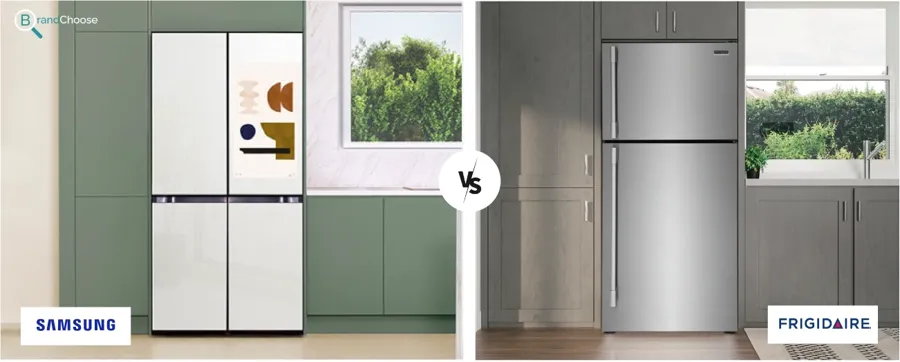
Samsung has fundamentally transformed appliance aesthetics, treating the refrigerator as an architectural focal point rather than a purely functional box. This design philosophy is epitomized by their Bespoke collection, which allows homeowners to customize interchangeable door panels in varied glass and steel textures, ranging from muted matte tones to bold, vibrant accents. Samsung models frequently incorporate pocket handles, ultra-flat door profiles, and counter-depth footprints that blend seamlessly into custom cabinetry. Inside, high-end touches such as metal cooling plates on the rear interior wall, recessed LED illumination, and hidden water dispensers reinforce an undeniably modern, minimalist, and upscale visual identity.
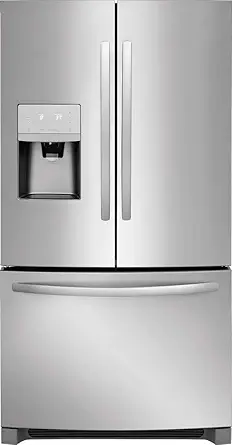
Frigidaire embraces a more traditional, industrial design language that leans into professional kitchen aesthetics. Its signature Smudge-Proof stainless steel finish is widely regarded as one of the most effective and resilient coatings on the market, resisting fingerprints and cleaning with minimal effort compared to glossier alternatives. Frigidaire's aesthetic is characterized by robust, tubular handles, visible external dispensers, and practical shelf layouts designed for heavy utility. While the Frigidaire Professional line captures an attractive commercial look with heavy-duty knobs and bold branding, it avoids the hyper-minimalist, furniture-like integration of Samsung's Bespoke line, focusing instead on rugged, timeless utility that integrates comfortably into classic kitchen layouts.
Conclusion
Frigidaire keeps things functional, reliable, and budget-conscious. It's ideal for households that just need a fridge that works—without extra features, steep prices, or complicated tech.
Samsung, on the other hand, is for those who want the fridge of the future. Smart home integration, touchscreen controls, and stylish design come standard—but you’ll need to pay for the privilege.
So the real question is: are you looking for basic brilliance or connected luxury?
Compare current retail pricing, active promotions, and verified stock availability directly from authorized stores: