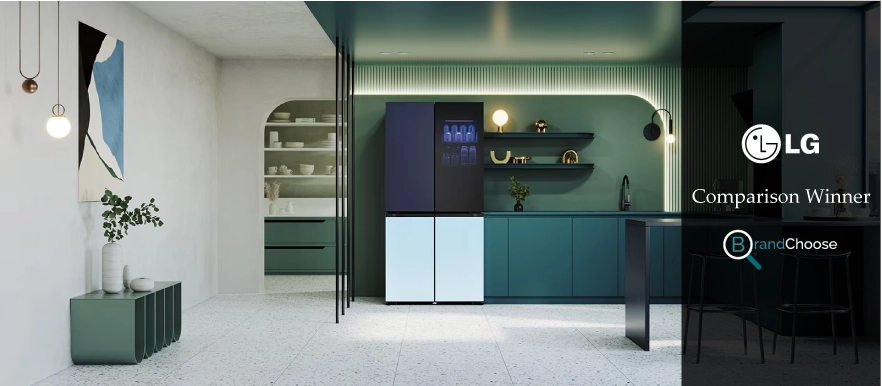
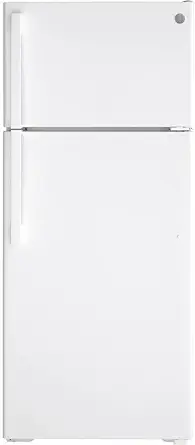
When choosing a refrigerator, two leading brands to check out are LG and GE Appliances. LG offers sleek designs and cutting-edge smart tech, while GE balances classic reliability with a modern twist. Both brands offer full lineups, from French-door flagships to top-freezer basics, but they differ in delivering innovation, usability, and long-term value.
If you're torn between LG’s futuristic flair and GE’s dependable heritage, this deep-dive comparison will help you decide which fits your home better.
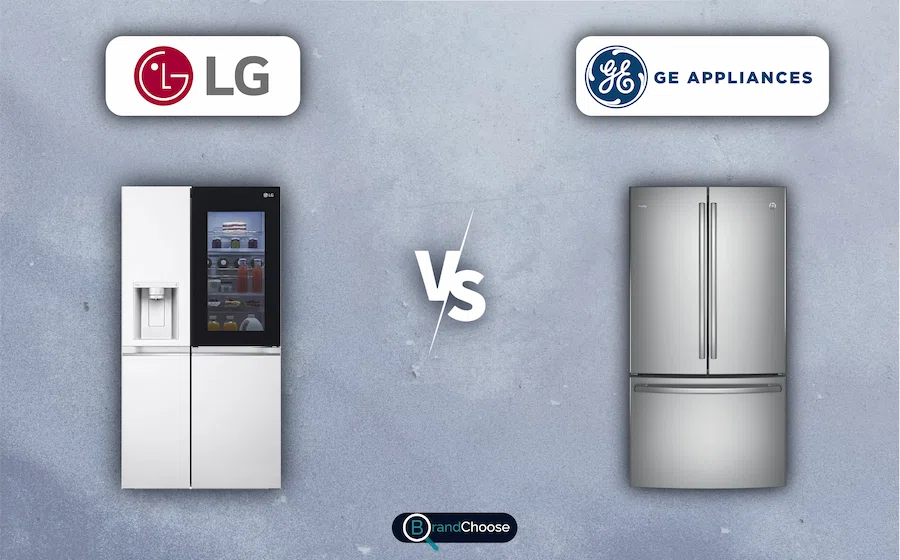
Features
When evaluating the feature ecosystems of LG and GE refrigerators, the distinction lies largely between lifestyle-forward digital innovation and utilitarian, workflow-driven engineering. LG consistently positions itself at the cutting edge of consumer technology, heavily investing in modern convenience and aesthetic features. Its flagship models boast the InstaView door-in-door design, which illuminates the interior with two knocks to minimize cold air loss, and the Craft Ice system, which automatically produces slow-melting spherical ice for premium entertaining. Furthermore, LG’s dual-evaporator systems paired with Door Cooling+ deliver targeted airflow that keeps door bins noticeably colder than conventional designs. On the technological front, LG integrates its robust ThinQ smart platform, offering intuitive remote diagnostics, proactive customer care alerts, and smart home integration that appeals to modern, tech-centric households.
Conversely, GE approaches features through the lens of practical, culinary-focused engineering designed to streamline daily kitchen tasks. Rather than focusing on transparent panels or novelty ice, GE prioritizes utilitarian conveniences such as the Hands-Free Autofill dispenser, which uses pull-out sensors to fill any glass or pitcher with filtered water automatically. GE’s internal layout engineering is exceptionally flexible, frequently utilizing the Quick Space retractable shelf to easily accommodate tall items, along with deep, full-width temperature-controlled deli drawers that feature specific pre-set modes for proteins, beverages, and produce. Advanced models also incorporate integrated Keurig K-Cup brewing systems and industry-leading water filtration systems, like the RPWFE filter, which is uniquely certified to reduce trace pharmaceuticals alongside standard lead and cysts.
The practical trade-offs between the two brands ultimately reflect differing consumer priorities: novelty and connected-home automation versus mechanical reliability and daily utility. While LG's feature set offers undeniable curb appeal and genuine temperature-management benefits, complex components like the spherical ice maker and extensive electronic sensor arrays present higher probabilities of long-term mechanical failure and costly service visits. GE’s features, though perhaps less visually flashy, emphasize robust functionality, superior in-door water filtration, and physical shelf adaptability that holds up well under heavy, everyday family use. Consumers seeking an ultra-modern, entertaining-focused appliance will gravitate toward LG’s expansive tech suite, while those prioritizing low-friction, high-utility food preservation will find GE’s feature lineup more dependable.
Performance
When evaluating core refrigeration performance, LG prioritizes high-tech climate precision driven by its proprietary Inverter Linear Compressor and Smart Cooling Plus architecture. LG models excel at maintaining steady internal temperatures with minimal variance, which is critical for extending the shelf life of fresh produce. Technologies like Door Cooling+ direct targeted cascades of cold air toward door bins—traditionally the warmest zone in a refrigerator—ensuring rapid recovery after the door is opened. Additionally, LG’s linear compressor design operates with fewer friction points, resulting in whisper-quiet running decibels and exceptional energy efficiency. However, this engineering choice has historically sparked debates regarding long-term component durability and sensitivity to electrical fluctuations compared to traditional reciprocating systems.
In contrast, GE builds its performance profile around rugged mechanical dependability, airflow redundancy, and rapid temperature management. Utilizing their TwinChill dual-evaporator system, GE segregates the airflow between the fresh food and freezer compartments. This prevents odor transfer and ensures optimal humidity levels for crisper drawers while maintaining dry, frost-inhibiting air in the freezer. While GE units may register slightly higher operational noise levels than LG, their traditional reciprocating compressors are renowned for handling high ambient heat and frequent duty cycles with robust resilience. GE also distinguishes itself with functional performance innovations, such as the Turbo Cool and Turbo Freeze settings, which rapidly blast cold air to offset the temperature spike from loading room-temperature groceries.
Ultimately, the practical trade-off in performance comes down to microclimate refinement versus mechanical resilience. LG provides superior static temperature consistency, advanced multi-air flow distribution, and sophisticated specialty features like Craft Ice, making it the preferred performer for tech-forward households prioritizing food preservation precision and near-silent operation. GE, backed by its commercial heritage, delivers a workhorse cooling profile optimized for fast thermal recovery, superior frost prevention, and robust daily reliability. Consumers seeking cutting-edge thermal uniformity will lean toward LG, while those prioritizing heavy-duty airflow management and dual-evaporator compartmentalization will find GE the more pragmatic performer.
Design
When evaluating the design philosophy of LG versus GE in the refrigerator category, the contrast lies primarily between cutting-edge, tech-forward aesthetics and time-tested, utilitarian craftsmanship. LG approaches refrigeration design through a modern lens, emphasizing sleek, seamless integration and contemporary high-tech features. Their engineering is characterized by ultra-smooth stainless and black stainless finishes that boast superior fingerprint resistance, low-profile pocket handles, and the visually striking InstaView "knock-on" glass panels. LG has also mastered space optimization through innovations like the Slim SpacePlus ice system, which builds the icemaker directly into the door to free up top-shelf storage. In contrast, GE prioritizes a more traditional, robust American aesthetic built around rugged durability. GE refrigerators often feature substantial, commercial-style handles, contoured doors, and thicker, highly durable exterior panels that project a sense of structural permanence, appealing to homeowners who favor classic, professional-grade kitchen styling over hyper-modern minimalism.
Internally, the ergonomic layout and material choices of both brands reflect their overarching design goals. LG’s interiors feature refined, bright LED illumination, metallic back-wall accents (found in their Door Cooling+ and Linear Cooling platforms), and highly modular split-folding shelving engineered to accommodate taller items without sacrificing surrounding surface area. Conversely, GE places heavy emphasis on functional, spill-proof engineering. GE's interior glass shelves feature raised hydro-phobic edges designed to contain liquids, while their storage bins and door gallons are cast from noticeably heavier, impact-resistant plastics. Additionally, GE’s engineering shines in utility-driven spatial features, such as the drop-down tray in French-door models that tucks away when not in use and dedicated humidity zones calibrated for precise produce preservation, trading LG's visual finesse for pragmatic, day-to-day usability.
The practical trade-offs regarding design come down to lifestyle integration and design adaptability. LG’s design ecosystem—further enhanced by luxury-leaning iterations like the zero-clearance, panel-less Studio series and customizable MoodUP panels—is ideally suited for open-concept, modern kitchen environments where the refrigerator serves as a visual centerpiece. However, the reliance on sensitive touch-panels and intricate door-in-door mechanics introduces more complex potential points of physical wear. GE provides a broader spectrum of design sub-brands (ranging from core GE and GE Profile to high-end Café with customizable hardware and Monogram for luxury integration). While GE’s core designs can sometimes feel slightly dated or bulkier compared to LG’s ultra-streamlined profiles, GE’s hardware choices, tactile controls, and straightforward mechanical layouts consistently offer superior long-term ergonomic resilience and universal aesthetic cohesion across diverse kitchen decors.
Conclusion
LG and GE both rank among the best refrigerator brands in 2025, but your perfect fit depends on what matters most to you. Choose LG for innovation and energy-saving tech. Choose GE for durability, flexibility, and affordability. There’s no wrong answer here, either way you're getting a trusted name backed by years of performance.