MSI vs CyberpowerPC: Overview
Comparing MSI and CyberpowerPC helps you determine which brand is best suited for your needs in Prebuilt PC. Both brands offer strong choices depending on your budget and key feature requirements.
Key Features & Comparison
Evaluate factors such as build quality, warranty, customer satisfaction, and total value before making your final purchase choice between MSI and CyberpowerPC.
Features
MSI’s prebuilt machines are characterized by deeply integrated, brand-exclusive engineering features that set them apart from standard boutique builds. High-end MSI systems frequently incorporate advanced proprietary features such as the 'HMI' (Human Machine Interface) smart dial on select chassis, integrated diagnostic OLED displays, specialized multi-chamber cooling layouts (Silent Storm Cooling), and deep integration with the MSI Center utility for fine-grained sensor monitoring and ambient optimization. Furthermore, MSI’s motherboard and GPU pairings unlock unified firmware management and proprietary overclocking profiles out of the box. The trade-off is that some compact models utilize custom risers or proprietary chassis dimensions, which can limit third-party component drop-ins down the road.
CyberpowerPC leans into feature versatility, prioritizing standard industry interfaces, broad peripheral compatibility, and unrestricted BIOS environments. Because they build within standardized ATX, Micro-ATX, and Mini-ITX cases using standard retail motherboards (frequently from brands like ASUS, ASRock, or Gigabyte alongside MSI), users benefit from unhindered hardware expansions, standard clearance for oversized triple-fan GPUs, and standard power delivery connectors. CyberpowerPC systems frequently include broad RGB ecosystem support with standard ARGB headers and physical controller switches. While they lack the bespoke, luxury integrated dashboard hardware found on MSI’s flagship machines, CyberpowerPC offers superior transparent customizability, providing pure, standard desktop features with minimal proprietary lock-in.
Performance
Performance execution between the two brands highlights a contrast between engineered thermal control and raw component brute-forcing. MSI invests heavily in targeted thermal engineering, utilizing custom fan curves, directional baffling, and dedicated liquid-cooling loops engineered precisely for specific chassis volumes. This deliberate thermal strategy allows MSI prebuilts to maintain sustained boost clocks on high-TDP Intel Core i7/i9 or AMD Ryzen 9 processors without aggressive acoustic spikes. Their proprietary graphics cards come with factory overclocks that perform reliably within the acoustic envelopes set by the system's chassis, resulting in exceptionally stable frame times, lower thermal throttling risks, and low noise-to-performance ratios under heavy workstation or gaming loads.
CyberpowerPC counters by offering aggressive component specifications at accessible price tiers, frequently offering higher-tier GPUs and unlocked CPUs at lower price points than similarly configured tier-one OEMs. Raw in-game frame rates and synthetic compute benchmarks in CyberpowerPC desktops are outstanding because they leverage unconstrained, high-wattage desktop platforms. However, thermal performance and acoustics can be more volatile; depending on the chassis selected—particularly budget cases with solid front acrylic panels rather than high-airflow mesh—internal temperatures can run warmer, occasionally causing fans to spin aggressively to sustain GPU boost states. When configured with high-airflow cases and quality liquid coolers, CyberpowerPC delivers uncompromised peak frame rates that match or exceed custom DIY builds.
Design
From an aesthetic and industrial design standpoint, MSI pursues an aggressive, futuristic design language often infused with sharp geometric angles, matte-black metallic finishes, and bespoke exterior accents. Their engineering team frequently challenges standard form factors, producing ultra-slim consoles like the MEG Trident X that pack flagship components into living-room-friendly profiles, alongside towering, multi-faceted chassis like the Aegis series. MSI’s exterior styling is polished and unmistakably bespoke, creating a cohesive visual signature where internal heatsinks, GPU brackets, and exterior shell lines complement each other, backed by sophisticated Mystic Light RGB distribution.
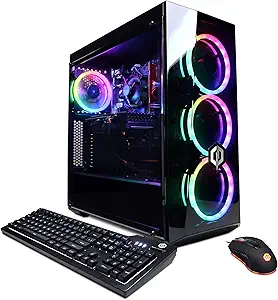
CyberpowerPC adheres to the modern PC gaming zeitgeist, emphasizing panoramic tempered-glass showcases, dual-chamber fishbowl designs, and brilliant interior RGB lighting. Rather than developing radical, proprietary chassis silhouettes, CyberpowerPC utilizes widely admired enthusiast chassis designs that proudly display the internal components on a desk. This approach results in a clean, highly accessible layout that appeals to purists who value interior cable management, visible liquid-cooling reservoirs, and standard component alignment. While MSI’s design communicates industrial, specialized product engineering, CyberpowerPC’s aesthetic delivers the vibrant, showpiece spectacle of a modern showcase gaming rig.