MSI vs Ibuypower: Overview
Comparing MSI and Ibuypower helps you determine which brand is best suited for your needs in Prebuilt PC. Both brands offer strong choices depending on your budget and key feature requirements.
Key Features & Comparison
Evaluate factors such as build quality, warranty, customer satisfaction, and total value before making your final purchase choice between MSI and Ibuypower.
Features
In terms of component ecosystems and software integration, MSI provides an intricately tailored user experience driven by its proprietary utility, MSI Center. Because MSI designs the motherboard, GPU, and ambient controllers natively, their systems boast synchronized telemetry, AI-driven fan optimization via Frozr AI, and deeply integrated Mystic Light RGB control out of the box. Additionally, higher-tier MSI configurations (like the MEG Trident or Infinite series) often introduce unique industrial features, such as integrated OLED touchscreen displays on the chassis, high-grade PCIe Gen 5 routing, and cutting-edge networking features including Wi-Fi 7 and 2.5G/10G Ethernet ports backed by dedicated LAN managers.
iBUYPOWER focuses on feature practicality and standardization rather than custom-silicon ecosystem software. While they incorporate addressable RGB and digital interfaces like their iconic Snowblind LCD side-panel display or Hyte chassis collaborations, their motherboard and utility support vary depending on the partner board used (often pairing with ASRock, ASUS, or MSI themselves). This means iBUYPOWER relies less on a singular, monolithic software suite and more on standard BIOS architectures and universal peripheral configurations. For power users, the absence of deeply locked, proprietary chassis pinouts or custom front-panel headers makes iBUYPOWER units inherently more modder-friendly and adaptable over time.
Performance
From a raw computing perspective, both brands configure their systems with identical flagship CPUs from Intel and AMD alongside NVIDIA GeForce RTX or AMD Radeon GPUs, but thermal management dictates sustained performance. MSI's engineering prowess shines in bespoke thermal architectures, notably their Silent Storm Cooling technology, which isolates the CPU, GPU, and power supply into independent thermodynamic chambers. By separating these high-wattage components and employing vapor chambers or custom AIO liquid loops, MSI rigs frequently maintain lower sustained junction temperatures during extended gaming and multi-threaded rendering workloads, mitigating acoustic footprint and thermal throttling.
iBUYPOWER delivers competitive peak performance, often matching or slightly exceeding MSI in short-burst benchmarks due to uncapped baseline power limits on popular retail motherboards. However, thermal consistency can fluctuate depending on the specific chassis tier chosen; budget-oriented iBUYPOWER cases with solid front acrylic panels can run warmer under heavy loads compared to their high-airflow mesh variants. While their custom-branded AIO liquid coolers capably handle mainstream gaming demands, enthusiastic overclockers and heavy production professionals will find that MSI’s premium lineups generally offer cleaner transient response, more robust VRM cooling, and tighter memory sub-timings right out of the box.
Design
The aesthetic and industrial design language of these two manufacturers targets contrasting visual sensibilities. MSI leans heavily into an aggressive, futuristic, and distinctly "gamer-centric" design philosophy. Their flagship desktops, such as the compact, console-style Trident series or the monolithic Aegis lineup, feature sharp angular facets, asymmetrical geometric venting, and embedded addressable lighting zones. MSI excels at engineering sleek Small Form Factor (SFF) chassis that pack desktop-tier hardware into ultra-compact volumes, showcasing high-level mechanical engineering at the expense of standardized internal layouts.
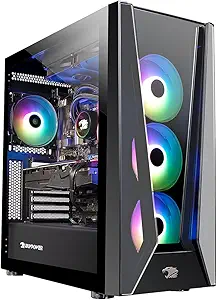
iBUYPOWER embraces a more conventional, enthusiast-style ATX desktop layout that prioritizes clean minimalism, dual tempered glass panels, and expansive internal visibility. Their systems champion classic clean cable management, spacious interiors for unobstructed airflow, and broad component visibility designed to showcase vibrant interior RGB setups. By standardizing around conventional ATX/Micro-ATX standards and partnering with chassis innovators like Hyte, iBUYPOWER produces desktops that look like hand-crafted custom builds. This traditional structural design ensures that consumers enjoy standard clearances, easy dust filter maintenance, and effortless access for swapping components without navigating cramped internal brackets.