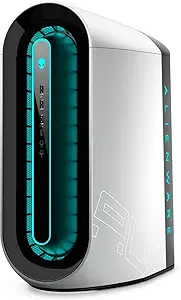
Dell vs Corsair: Overview
Comparing Dell and Corsair helps you determine which brand is best suited for your needs in Prebuilt PC. Both brands offer strong choices depending on your budget and key feature requirements.
Key Features & Comparison
Evaluate factors such as build quality, warranty, customer satisfaction, and total value before making your final purchase choice between Dell and Corsair.
Features
In terms of ecosystem integration and hardware features, Corsair holds a decisive advantage through its cohesive unified component architecture. Most Corsair prebuilts are outfitted with high-tier Corsair components throughout—spanning DDR5 Vengeance memory, RMx-series gold-rated power supplies, high-performance NVMe storage, and Hydro Series liquid coolers. All of these subsystems are seamlessly orchestrated via Corsair’s iCUE software, providing industry-leading control over thermal profiles, pump curves, and addressable RGB lighting. Furthermore, because Corsair adheres strictly to standard ATX, Micro-ATX, and Mini-ITX standards, consumers gain boundless upgrade paths without worrying about proprietary form factors or restrictive front-panel connectors.
Dell’s feature set is geared toward functional simplicity, IT-friendly deployment, and integrated proprietary control. Systems like the Alienware Aurora utilize the Alienware Command Center for performance tuning and lighting control, while Inspiron desktop models strip away enthusiast extras in favor of utilitarian office connectivity and simple multi-monitor support. However, Dell frequently limits the technical enthusiast by locking down firmware and utilizing proprietary motherboards with non-standard power pinouts (like 12V-only systems) and non-standard chassis screw-patterns. While Dell includes useful conveniences like robust front-panel I/O configurations and optional pre-configured enterprise service plans, it fails to match Corsair’s modularity and comprehensive feature flexibility.
Performance
Performance delivery highlights significant architectural contrasts between Dell’s proprietary engineering and Corsair’s component-centric cooling capabilities. Corsair consistently extracts the maximum sustained clock speeds from its high-end Intel, AMD, and NVIDIA hardware due to unrestricted airflow designs and top-tier closed-loop liquid coolers. In demanding synthetic loads and sustained gaming sessions, Corsair systems like the Vengeance tower or the liquid-cooled Corsair One show minimal thermal throttling, maintaining high boost frequencies alongside low acoustic output. The brand's use of high-speed memory with tuned XMP/EXPO profiles ensures that bandwidth-sensitive modern CPUs deliver peak frame rates and computational performance right out of the box.
Dell delivers capable day-to-day and gaming performance, but thermal headroom can be a point of friction depending on the specific model. Mainstream Dell desktops often use basic aluminum heat sinks and restrictive air channels that result in higher fan noise and earlier thermal throttling under prolonged creative workloads or high-end gaming. While Alienware models have pivoted to improved liquid cooling in redesigns like the Aurora R16, thermal throttling thresholds and VRM temperatures often lag behind the open-chassis airflow paradigms found in Corsair cases like the 4000D or 5000D. Dell systems still provide great bursts of speed for standard consumer tasks, but Corsair takes the lead for sustained multi-threaded rendering and high-refresh-rate gaming stability.
Design
Aesthetic appeal and industrial design represent divergent paths for these two brands. Corsair leans heavily into modern enthusiast styling, characterized by sleek tempered glass panels, brushed aluminum accents, and meticulously routed internal cabling. The Corsair One showcases world-class micro-architecture with its ultra-compact vertical aluminum tower, dual liquid-cooling loops, and subtle ambient lighting, presenting an executive-class aesthetic that fits equally well in a design studio or a gaming battle station. Corsair’s mid-towers emphasize functional elegance, maximizing mesh intake configurations for airflow while maintaining clean, showcase-worthy geometry.
Dell’s design philosophy ranges from utilitarian minimalism in its standard business desktops to aggressive, sci-fi-inspired concepts in its Alienware division. Standard Dell desktops are designed to be compact, unobtrusive plastic-and-steel enclosures that fade into an office backdrop. Alienware systems, conversely, focus on bold statement pieces with sculpted outer shells and futuristic presence. However, Dell’s designs are often criticized for their reliance on thick plastic exteriors over stamped steel chassis and tightly packed internal configurations that complicate servicing. Corsair captures the advantage in both premium tactile materials and functional thermal engineering, delivering an aesthetic that feels noticeably more refined and durable.